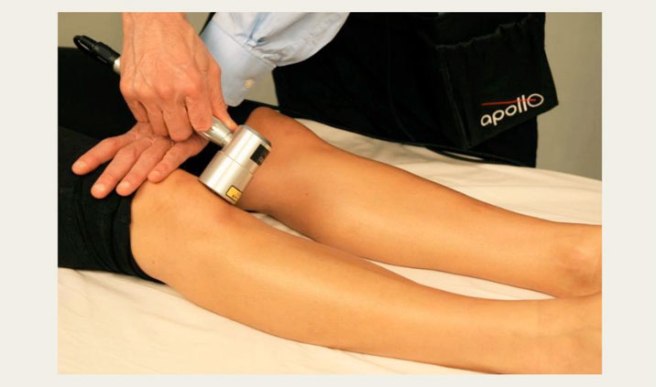
How Does Laser Work? 

Over 2000 published research studies demonstrate:

• Laser therapy improves blood flow and lymphatic drainage
• Laser therapy has a strengthening effect on tissue repair
• It is an effective means of relief for many pain syndromes
• It can improve immune response
• Enhanced nerve regeneration & function
• Increased microcirculation & vasodilation
• Increased lymphatic flow
• Increased collagen production
• Increases the speed, quality and tensile strength of tissue repair
• Reduced inflammation
• Enhanced angiogenesis (creation of new blood vessels)


Call us today for more information about Class IV laser therapy and how it can help you!


knee-apollo-image-716


Trigger points.

Trigger points are knots of contracted muscle or connective tissue that form as a result of overload stress. Once formed these points will produce pain, refered pain, weakness, and stiffness. Trigger points can also mimic other conditions such as Carple tunnel syndrome and sciatica. Trigger points will on go away on their own, they must be manually released.

Trigger points in the trapezius muscle.

The trapezius muscle is a large diamond shaped muscle located in your back. This muscle is often overloaded due to poor sitting posture or excessive exercise. When this occurs trigger points will form. These points can cause back, neck, and shoulder pain. Trigger points in the upper traps are a leading cause of headache.

Trigger points in the gluteus Maximus muscle.

The gluteus Maximus muscle makes up your buttock. It’s is a powerful hip extensor and thus used heavily during activities such as walking, running, and climbing up stairs. Most atheletes abuse this muscle. When overworked trigger points will form, and these points will cause pain to be felt in the hip, sacrum and the as well as deep in the gluteal area. Litterally a pain in the butt!! Trigger points won’t release on their own and require interventions like trigger point massage.

MRI Truths & Myths

Arthritis

Low back pain is a very common complaint. In fact, it’s the #1 reason for doctor visits in the United States! The economic burden of LBP on the working class is astronomical. Most people can’t afford to be off work for one day, much less a week, month, or more! Because of the popularity of hospital-based TV dramas over the past two decades, many people think getting an MRI of their back can help their doctor fix their lower back problem. Is this a good idea? Let’s take a look!

Patients will often bring in a CD that has an MRI of their lower back to a doctor of chiropractic and ask the ultimate question, “….can you fix me?” Or, worse, “…I think I need surgery.” Sure, it’s quite amazing how an MRI can “slice” through the spine and show bone, soft tissues, disks, muscles, nerves, the spinal cord, and more! Since the low back bears approximately 2/3 of our body’s weight, you can frequently find MANY ABNORMALITIES in a person over 40-50 years old. In fact, it would be quite odd NOT to see things like disk degeneration, disk bulges, joint arthritis, spur formation, etc.!

Hence, the “downside” of having ALL this information is the struggle to determine which finding on the MRI has clinical significance. In other words, where is the LBP coming from? Is it that degenerative disk, bulged disk, herniated disk, or the narrowed canal where the nerve travels? Interestingly, in a recent review of more than 3,200 cases of acute low back pain, those who had an MRI scan performed earlier in their care had a WORSE outcome, more surgery, and higher costs compared with those who didn’t succumb to the temptation of requesting an MRI!

This is not to say MRI, CT scans, and x-rays are not important, as they effectively show conditions like subtle fractures and dangerous conditions like cancer. But for LBP, MRI is often misleading. This is because the primary cause of LBP is “functional” NOT “structural,” so it’s EASY to get railroaded into thinking whatever shows up on that MRI has to be the problem.

Here is how we know this, when we take 1,000 people WITHOUT low back pain between ages 30 and 60 (male or female) and perform an MRI on their lower back, we will find up to 53% will have PAINLESS disk bulges in one or more lumbar disks. Moreover, we will find up to 30% will have partial disk herniations, and up to 18% will have an extruded disk (one that has herniated ALL the way out). Yet, these people are PAIN FREE and never knew they had disk “derangement” (since they have no LBP). When combining all of these possible disk problems together, several studies report that between 57% and 64% of the general population has some type of disk problem without ANY BACK PAIN!

Hence, when a patient with a simple sprain/strain and localized LBP presents with an MRI showing a disk problem, it usually ONLY CONFUSES the patient (and frequently the doctor), as that disk problem is usually not the problem causing the pain!  So DON’T have an MRI UNLESS a surgical treatment decision depends on its findings. That is weakness, numbness, and non-resolving LBP in spite of 4-6 weeks of non-surgical care or unless there is weakness in bowel or bladder control. Remember, the majority of back pain sufferers DO NOT need surgery!

We realize you have a choice in whom you consider for your health care provision and we sincerely appreciate your trust in choosing our service for those needs.  If you, a friend, or family member requires care for back pain, we would be honored to render our services.

2 Critical Steps to Resolving Ankle Sprains

Efficient treatment of ankle sprains continues well after the pain subsides.  While the majority of inversion (lateral) ankle sprains heal relatively quickly, up to 1/3 of patients, continue to note symptoms at one year, and up to 25% report pain, instability, crepitus, weakness, stiffness, or swelling at three years. (1) Re-injury is frequent, with rates reaching almost 75% in sports, like basketball. (2) Successful management of ankle sprains and prevention of re-injury are predicated on a couple of fundamental principles.

Management of ankle inversion sprains requires two steps; each is equally important.

  • The first step entails the evaluation and treatment of acute pain.
  • The second step involves preventing subsequent sprains – and new research validates the importance of chiropractic care to improve clinical outcomes in these recalcitrant cases.


STEP 1—Move for Pain Relief

Early return to activity for acute inversion sprains is supported by the literature.  Exercises and treatments that promote joint motion and early return to weight bearing for acute ankle sprains have proven more effective than immobilization.  While grade III sprains (ligament rupture) may require immobilization, grade I and II ankle sprains should forego complete immobilization and instead focus on regaining full range of motion. In fact, early rehab and return to weight bearing will increase ankle range of motion, decrease pain, and reduce swelling sooner than immobilization.

In a study by Linde et al., 150 patients with inversion ankle sprains were treated with early motion and weight bearing. After one month, 90% of the patients treated with early motion and weight bearing demonstrated pain-free gait and 97% had increased work ability. (3) Early mobility exercises would typically include:

These four exercises promote balance and range of motion – specifically dorsiflexion, which is a key contributor to ankle injury. Patients who have lost an average of 11 degrees of dorsiflexion are five times more likely to suffer lateral ankle sprains. (4)

In office care should also include mobilization and manipulation for restoring function. Joint mobilization has been shown to decrease pain, increase dorsiflexion, and improve ankle function. (5) IASTM or transverse friction massage to the affected ligament may help mobilize scar tissue and increase pliability. Myofascial release may help release tightness or adhesions in the gastroc and soleus. (Side note: The FAKTR concept seamlessly incorporates all of these tools to produce top-tier outcomes.)

Knowing when to treat and when to refer is critical. Whitman’s clinical prediction rule identifies four variables to predict the success of manipulation and exercise for the treatment of inversion ankle sprains. (6) The presence of three out of four of the following variables predict greater than a 95% success rate for manual therapy and exercise:

  • Symptoms worse when standing
  • Symptoms worse in the evening
  • Navicular drop greater than 5 mm
  • Distal tibiofibular joint hypomobility


STEP 2- Prevent Re-injury

The second step is shorter and easier than the first.  The most crucial variable in the successful prevention of future ankle sprains is improving BALANCE. Balance training reduces the incidence of ankle sprains and increases dynamic neuromuscular control, postural sway, and joint position sense in athletes. (7) A study by de Vasconcelos et al. (2018) found that balance training reduced the incidence of ankle sprains by 38% compared with the control group.  (7)

Two of the most common exercises used for balance and proprioception include the single-leg stance exercise and Veles.  A simple explanation stressing the importance of balance training may be necessary to promote patient compliance.

Finally, encourage your patients start walking “normal” as soon as possible. As evidence-based chiropractors, we need to return patients back to their normal gait as soon as tolerable. Patients with foot and ankle pain will often favor a supinated gait in order to unload the soft tissues of the foot and arch in favor of their bony architecture on the lateral foot. The lateral column of the foot affords stability but at the expense of a very inefficient gait. Over an extended period, these patients may develop a Tailor’s bunion, i.e. 5th metatarsal head bursitis. However, in the case of ankle sprains, a rapid increase in activity may overload the metatarsal fast enough to cause a Jones Fracture. Return to normal gait will minimize these compensations.


Lumbar Radiculopathy? That sounds ridiculous!

Your nervous system is basically a big electrical circuit. Your spinal cord transmits all of the electrical nerve impulses between your brain and lower back. From there, individual nerves emerge from your spine then travel to supply sensation and movement to a specific area of your buttock, legs and/or feet. This allows you to move and feel sensations like touch, heat, cold and pain. Anything that

interferes with this transmission can cause problems.

You have been diagnosed with a “Lumbar Radiculopathy”. This means that one or more of the nerves emerging from your lower back has become irritated or possibly pinched. This often results in pain, numbness or tingling in the specific area of your leg that is supplied by the irritated nerve. The term “Sciatica” is often used to describe this condition, because most (but not all) “lumbar radiculopathies” involve the sciatic nerve which supplies the back & outside of your thigh and calf. Symptoms of a lumbar radiculopathy may vary from a dull ache to a constant severe sharp shooting pain. Your symptoms are likely aggravated by certain positions or movements.

To solve this problem, we will treat the source of your nerve irritation. It is important for you to follow your treatment plan closely and be sure to tell us immediately if you experience any progression of your leg pain, numbness or weakness.

Lumbar Degenerative Spondylolisthesis

Your lumbar spine (low back) is made up of five individual vertebra stacked on top of a bone called the sacrum. To allow for flexibility and movement, there is a cushion or “disc” in between each level. As we age, our discs and joints can wear and become thinner from a process called arthritis. This leads to additional changes, including loosening of the ligaments that hold your vertebra in place.

The term “degenerative lumbar spondylolisthesis” means that one of your vertebra has shifted forward on top of the one below as a result of arthritis and loosening ligaments. The condition usually comes on after age 50 and affects women six times more frequently than men. Degenerative spondylolisthesis occurs most commonly at your second lowest spinal level. (L4-5)

Sometimes, spondylolisthesis develops silently, but most patients report episodes of back pain that have occurred for many years. Patients often report increased pain when standing or when rising from a sitting position. Pain tends to increase throughout the day. If your nerve openings have become narrowed, the nerves may be pinched, and you may experience pain radiating into your legs. Leg symptoms that shift from side to side are characteristic of degenerative spondylolisthesis. Leg pain and tingling are fairly common, but be sure to tell your doctor if you notice more significant symptoms, like leg numbness, heaviness, weakness, loss of bowel or bladder function, or impotence.

Studies have shown no advantage for surgery over conservative care for most cases of degenerative spondylolisthesis. Approximately one-third of patients will experience progression of symptoms over time, and only 10-15% will ever need surgery to correct the problem. Fortunately, the majority of patients will benefit from treatment and exercises to help stabilize their spine.

You will need to perform your exercises consistently for sustained improvement. You should also try to add some type of aerobic exercise to your daily routine. Stationary cycling is a very good choice, and other options include water walking and swimming. Avoid wearing high heels. You may find some benefit for your arthritic symptoms by taking 1500mg of Glucosamine Sulfate each day. Using a hot pack for 10-15 minutes directly over your lower back may provide some benefit.

A Modern Spine Ailment

Some great information from Spine-Health.com and Dr. Steven Shoshany DC


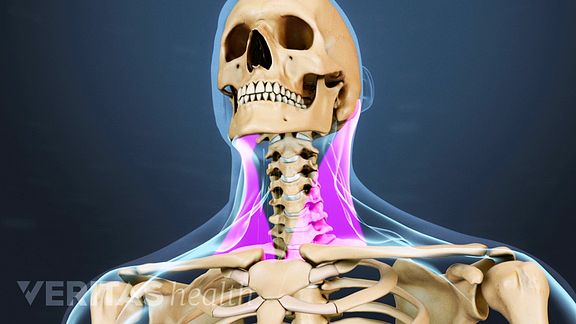
Text neck is the term used to describe the neck pain and damage sustained from looking down at your cell phone, tablet, or other wireless devices too frequently and for too long.

Text Neck

Using a mobile device often can lead to poor posture and symptoms of text neck.
Watch:
Text Neck Treatment Video<spanclass=”div-video-link”></spanclass=”div-video-link”>

And it seems increasingly common. Recently, a patient came in to my practice complaining of severe upper back pain. He woke up and was experiencing severe, acute, upper back muscle strain. I told him I believe the pain is due to the hours he was spending hunched over his cell phone. Diagnosis: Text neck.

See All About Upper Back Pain

Of course, this posture of bending your neck to look down does not occur only when texting. For years, we’ve all looked down to read. The problem with texting is that it adds one more activity that causes us to look down—and people tend to do it for much longer periods. It is especially concerning because young, growing children could possibly cause permanent damage to their cervical spines that could lead to lifelong neck pain.

See Cervical Spine Anatomy and Neck Pain

What are the symptoms associated with text neck?

Text neck most commonly causes neck pain and soreness. In addition, looking down at your cell phone too much each day can lead to:

    • Upper back pain ranging from a chronic, nagging pain to sharp, severe upper back muscle spasms.
    • Shoulder pain and tightness, possibly resulting in painful shoulder muscle spasm.
    • If a cervical nerve becomes pinched, pain and possibly neurological symptoms can radiate down your arm and into your hand.

See What Is Cervical Radiculopathy?

I believe, as some studies suggest, text neck may possibly lead to chronic problems due to early onset of arthritis in the neck.

See Facet Joint Osteoarthritis


How common is text neck?

A recent study shows that 79% of the population between the ages 18 and 44 have their cell phones with them almost all the time—with only 2 hours of their waking day spent without their cell phone on hand.1

See Causes of Upper Back Pain

How is text neck treated?

First, prevention is key. Here are several pieces of advice for preventing the development or advancement of text neck:

    • Hold your cell phone at eye level as much as possible. The same holds true for all screens—laptops and tablets should also be positioned so the screen is at eye level and you don’t have to bend your head forward or look down to view it.

See Ten Tips for Improving Posture and Ergonomics

    • Take frequent breaks from your phone and laptop throughout the day. For example, set a timer or alarm that reminds you to get up and walk around every 20 to 30 minutes.
    • If you work in an office, make sure your screen is set up so that when you look at it you are looking forward, with your head positioned squarely in line with your shoulders and spine.

See Ergonomics of the Office and Workplace: An Overview

The bottom line is to avoid looking down with your head bent forward for extended periods throughout the day. Spend a whole day being mindful of your posture—is your head bent forward when you drive? When you watch TV? Any prolonged period when your head is looking down is a time when you are putting excessive strain on your neck.

See Office Chair, Posture, and Driving Ergonomics

Text Neck

Keeping the neck straight and your phone at eye level can help prevent text neck.
Watch:
Neck Strains and Sprains Video

Next, rehabilitation is important.

    • Many people don’t know this, but you need to have strong core muscles—the abdominal and lower back muscles—to support your upper body, including your neck. Your core muscles usually do not get enough exercise during normal daily activities, so you need to do specific exercises to target these muscles.

See Core Body Strength Exercises

    • You also need strong and flexible muscles the neck to minimize strain on your cervical spine and help support the weight of your head. Again, your neck will not get sufficient stretching and strengthening during normal daily activities, so it is best to learn specific neck exercises with the help of a health professional.

See Neck Stretches

Some people will also benefit from a more comprehensive treatment plan, such as a combination of manual adjustments, massage therapy, and cold laser therapy.

Learn more:


https://www.spine-health.com/blog/modern-spine-ailment-text-neck