Recovery Strategies for Playing Two to Three Rounds of Golf a Week

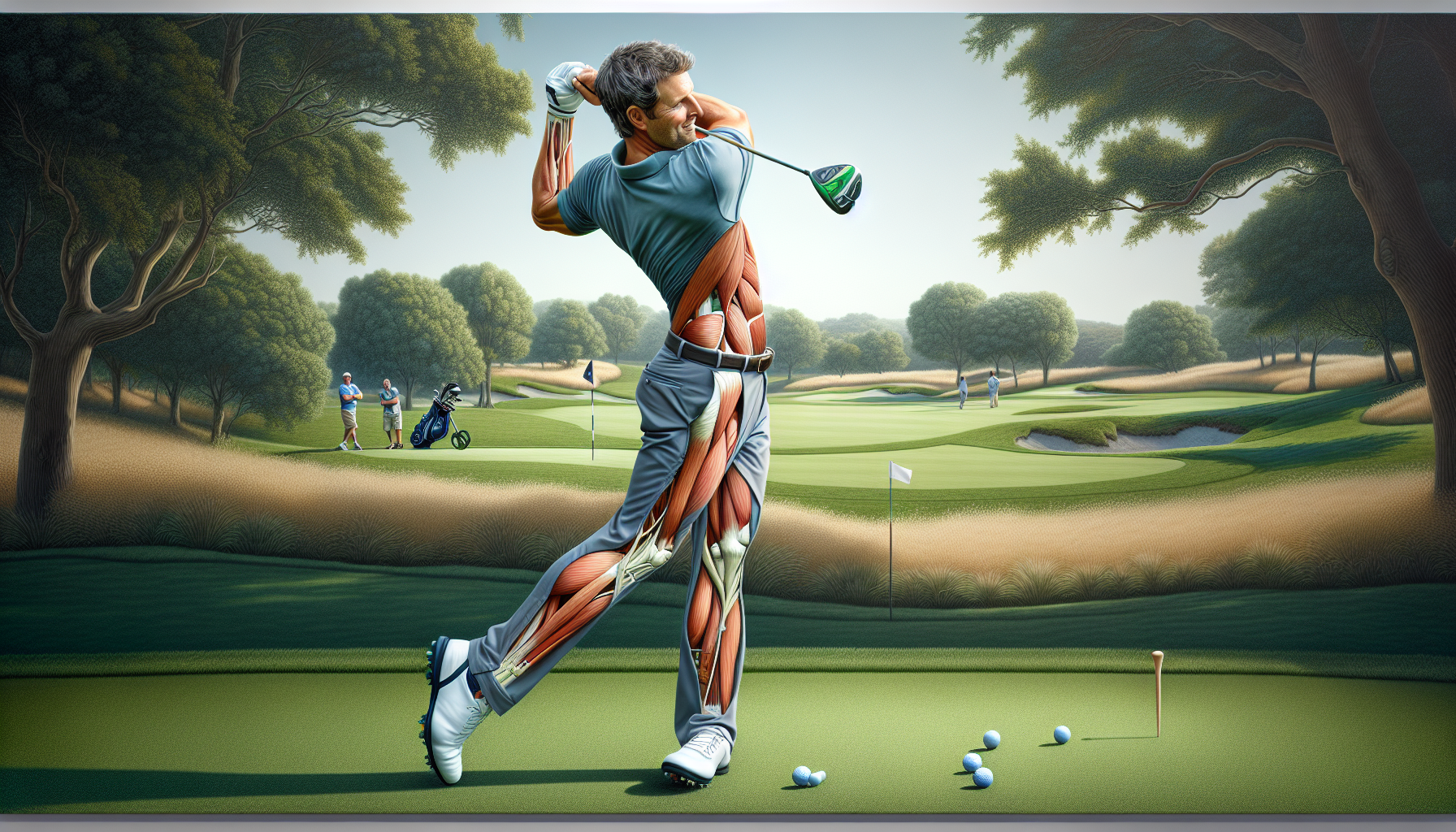
For the dedicated golfer, maximizing performance means more than just hitting the range. The physical load of playing two to three rounds a week adds significant strain to the back, hips, and joints. Implementing structured recovery strategies is just as important as perfecting your swing mechanics.

Managing the Physical Load

Balancing frequent rounds of golf alongside a standard gym routine—such as a three-day lifting split—requires careful load management. The repetitive rotational force of the golf swing takes a toll, especially when utilizing heavier, stiff-flex steel shafts, like 120-gram X-flex models, which demand more physical exertion to load properly. Spacing out your heavy gym days from your tee times ensures your muscles have time to repair.

Tracking Performance as a Recovery Metric

Monitoring technical performance data is not just for improving your handicap; it is an excellent tool for tracking recovery. If you utilize a launch monitor for indoor practice, keep an eye on your baseline metrics. A sudden, unexplained drop in clubhead speed or ball speed often points to physical fatigue or inadequate muscle recovery rather than a sudden mechanical flaw.

Proactive Tissue Management

Walking 18 holes multiple times a week demands a lot from your lower body. Proactive recovery should include:

  • Hydration: Maintaining fluid levels to keep tissues pliable and reduce cramping.
  • Mobility Work: Focusing on hip internal and external rotation, as well as thoracic spine mobility, on your non-playing days.
  • Active Recovery: Engaging in light, low-impact movement (like walking or cycling) on off-days to promote blood flow without adding stress to the joints.

Ignoring early signs of stiffness can lead to compensatory swing habits, which often result in overuse injuries in the lower back or elbows.

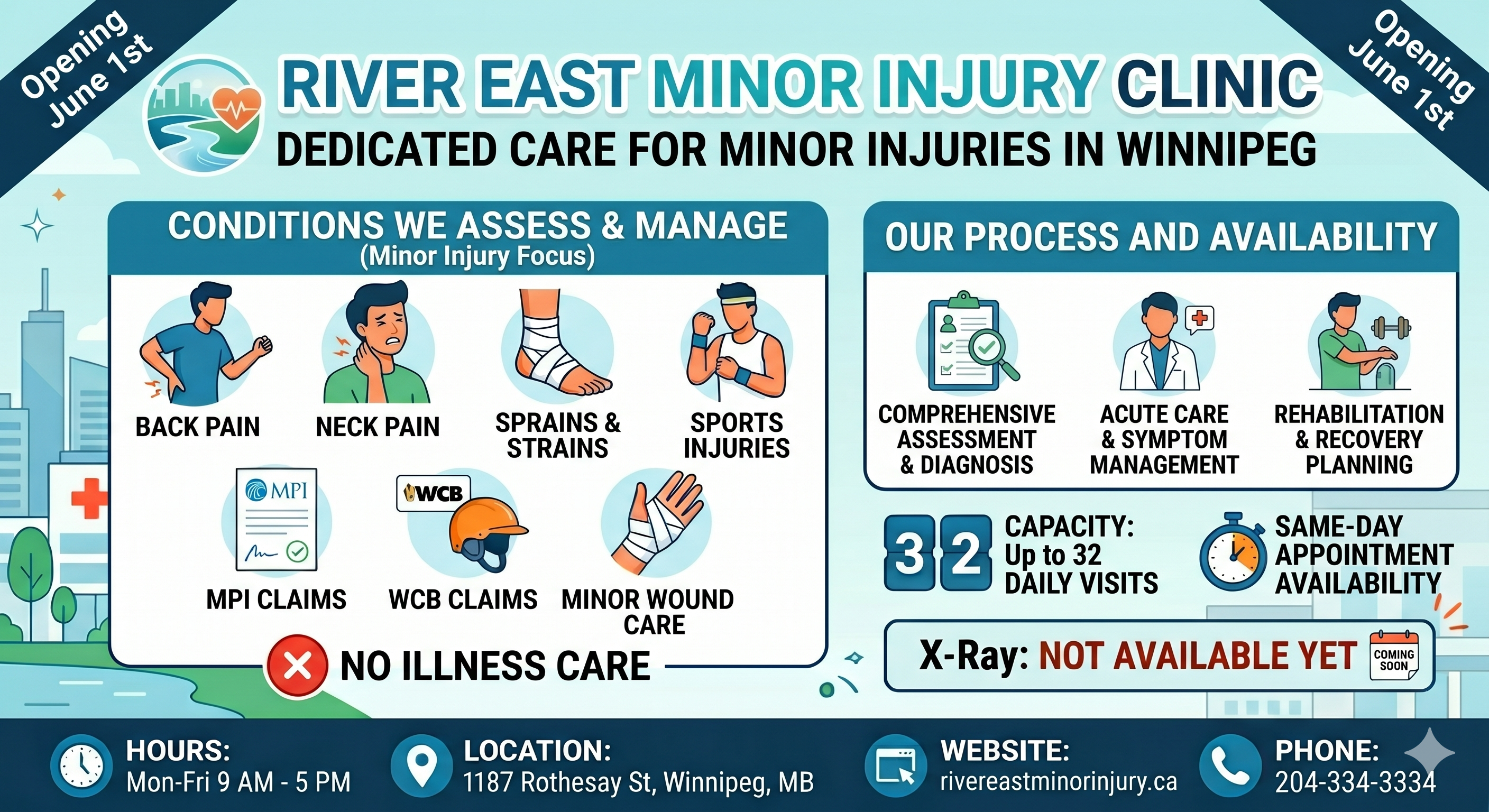
Keep your body course-ready. If a nagging strain is impacting your game, River East Minor Injury Clinic can help you address it before it sidelines your season.

  • Booking: Same-day or next-day appointments are available.
  • Location: 1187 Rothesay Street, Winnipeg, MB.
  • Schedule Online: Visit our website portal to book your assessment today. https://www.rivereastminorinjury.ca
How Same-Day Booking Works at River East Minor Injury Clinic

When you sustain a minor injury—whether it is a rolled ankle on a morning run, a strained lower back from lifting, or a wrist injury from a weekend tournament—prompt care is essential. However, the prospect of waiting for hours in a crowded, uncomfortable clinic waiting room often deters people from seeking the immediate professional assessment they need.

At River East Minor Injury Clinic, we have implemented a streamlined, scheduled approach to minor injury care. Here is exactly how our same-day and next-day booking system works.

The Shift from “Walk-In” to “Scheduled” Care

Traditional walk-in models are designed to triage a massive variety of unpredictable health concerns, from minor illnesses to severe infections. Because we exclusively treat minor physical injuries—and do not treat illnesses like the flu or chronic medical conditions—we can accurately predict our clinical flow.

By utilizing a dedicated online scheduling system, we eliminate the uncertainty of the waiting room. You receive a guaranteed appointment time, allowing you to rest comfortably at home until it is time to be seen by our team.

Step-by-Step: Securing Your Appointment

  1. Visit Our Online Portal: Head to our website at http://www.rivereastminorinjury.ca. Our booking platform is accessible 24/7 from your smartphone or computer.
  2. Select Your Time: Choose from our available same-day or next-day appointment slots that fit your schedule.
  3. Provide Preliminary Details: You will be prompted to fill out a brief, secure intake form detailing the nature of your injury. This allows our clinical team to prepare for your specific needs before you even arrive.
  4. Receive Confirmation: Once booked, you will receive a clear confirmation of your time and directions to our facility.

What to Expect When You Arrive

When you arrive at 1191 Rothesay Street for your scheduled appointment, our goal is to move you directly into the assessment phase.

You will be evaluated by our multidisciplinary team, which may include registered nursing assessment, physiotherapy, and chiropractic care. Because your time is reserved exclusively for you, our practitioners can conduct a thorough, unhurried physical examination. We will explain your diagnosis clearly, discuss the evidence-based treatment options available, and work with you to develop a customized recovery plan.

Efficient Care for an Active Community

An unexpected sprain or minor fracture disrupts your daily life. The process of getting it assessed should not cause further frustration. By offering convenient same-day online booking, River East Minor Injury Clinic ensures that Winnipeg residents have access to prompt, professional musculoskeletal care exactly when they need it most.

What Exactly is a “Minor” Injury?

Minor Injury Care In Winnipeg

Whether you are stepping awkwardly off a curb, tweaking your lower back on the golf course, or rolling an ankle during a weekend hockey game, sudden physical setbacks happen. When they do, you are often left wondering: Is this an emergency, or is it something I can just walk off?

At River East Minor Injury Clinic, we aim to bridge the gap between standard home care and the hospital emergency room. To help you make the best decision for your health, let us break down exactly what constitutes a “minor” injury and explore the key differences between two of the most common issues we treat: sprains and strains.

Defining a “Minor” Injury

In the medical field, a minor injury refers to a non-life-threatening physical trauma that involves the musculoskeletal system—meaning your bones, joints, muscles, ligaments, and tendons. These are the acute injuries that cause immediate pain and limit your mobility, but do not require complex emergency interventions like surgery or advanced trauma care.

Examples of minor injuries include:

  • Sprains and strains
  • Minor fractures (possibly broken bones that have not pierced the skin)
  • Sports-related joint injuries
  • Workplace or Motor Vehicle Accidents

What is NOT a minor injury? It is equally important to understand what a minor injury clinic does not handle. We are exclusively dedicated to physical injuries. We do not treat illnesses. If you are experiencing symptoms like a fever, cough, cold, flu, or an infection, you should seek care from your primary care provider, an urgent care centre, or a minor illness clinic.

Sprains vs. Strains: What is the Difference?

People often use the words “sprain” and “strain” interchangeably, but they actually refer to damage to two entirely different types of soft tissue in the body.

The Sprain (Ligament Damage)

A sprain occurs when you stretch or tear a ligament. Ligaments are the tough, fibrous bands of tissue that connect bone to bone, acting as the stabilizing anchors for your joints.

  • How it happens: Sprains typically occur from sudden twisting motions, pivoting, or landing awkwardly. The classic example is a rolled ankle, but wrist and knee sprains are also incredibly common.
  • Symptoms: You will generally experience immediate pain, localized swelling, bruising, and a noticeable restricted range of motion. You might even hear a “pop” at the moment of injury.

The Strain (Muscle or Tendon Damage)

A strain, on the other hand, involves the stretching or tearing of a muscle or a tendon. Tendons are the thick cords of tissue that connect your muscles to your bones.

  • How it happens: Strains are often the result of sudden, heavy lifting, overstretching, or explosive movements. Pulling a hamstring while sprinting or throwing out your lower back while doing yard work are classic strains.
  • Symptoms: Strains are characterized by muscle spasms, cramping, weakness in the affected area, swelling, and sharp pain when attempting to move the muscle.

Why You Shouldn’t “Just Walk It Off”

When a sprain or strain happens, the standard advice is often to apply ice and rest. While the R.I.C.E. method (Rest, Ice, Compression, Elevation) is a great first step, trying to tough out a musculoskeletal injury without professional assessment can lead to long-term issues.

Without a proper diagnosis, you might be walking on a minor fracture disguised as a sprain, or you might develop compensatory movement habits that lead to chronic joint instability. Getting a prompt, professional assessment allows you to understand the exact nature of the damage and begin a targeted recovery plan immediately.

Same Day or Next Day Care

River East Minor Injury Clinic was designed to provide you with rapid, professional care on your schedule.

Our Nurse Practitioner is here to assess, diagnose, and treat your sprains and strains efficiently. We offer scheduled same-day and next-day appointments, meaning you get the focused care you need exactly when you need it, with zero walk-in waiting.

Ready to start your recovery? 📍 Find us at: 1191 Rothesay Street, Winnipeg

⏰ Hours: Monday to Friday, 9:00 AM – 5:00 PM

💻 Book online: Secure your appointment today at http://www.rivereastminorinjury.ca

River East Minor Injury Is Now Open!

River East Minor Injury Clinic is officially open!

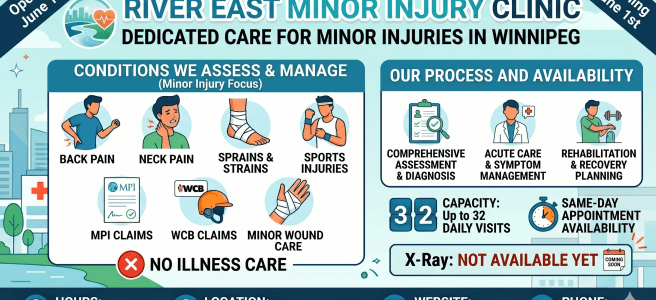
We provide dedicated, multidisciplinary assessment and treatment for minor physical injuries. If you have experienced a recent sprain, strain, minor fracture, or sports-related injury, our team of healthcare professionals is here to help you begin your recovery.

What we treat:

  • Sprains and strains
  • Minor fractures
  • Sports and activity injuries
  • Workplace and Motor Vehicle Injuries

What we do not treat: (Please visit your primary care provider, an emergency room, or a minor illness clinic for the following)

  • Coughs, colds, or flu
  • Fevers or infections
  • Chronic health conditions or illnesses

To ensure you receive timely care without the uncertainty of walk-in wait times, we offer scheduled same-day and next-day appointments.

📍 Location: 1187 Rothesay Street, Winnipeg

💻 Booking: Secure your appointment online at www.rivereastminorinjury.ca

⏰ Hours: Monday to Friday, 9:00 AM – 5:00 PM

#Winnipeg #WinnipegHealth #RiverEastMinorInjuryClinic #NorthKildonan #WinnipegSports #ManitobaHealth #WinnipegLocal

River East Chiropractic: Expertise in Hip Muscle Strengthening

The role of hip muscles in maintaining leg alignment during movement cannot be overstated. Among these muscles, the gluteus medius stands out for its crucial stabilizing function during activities such as walking, running, and squatting. Positioned on the side of the hip, the gluteus medius plays a pivotal role in stabilizing the pelvis and preventing unwanted movements of the leg.

When you raise one leg, the opposite gluteus medius muscle must contract to counterbalance the body’s tendency to tip in the direction of the lifted leg. Similarly, when standing on a bent leg, the gluteus medius works to prevent the knee from collapsing inward, a position known as “knock knee” or “valgus.”

Weakness in the gluteus medius can lead to various problems. For instance, it allows the pelvis to drop and the knee to cave inward during walking or running, placing excessive strain on the hip and knee joints. This misalignment can cause the kneecap to rub against the thigh bone, resulting in irritation and potentially leading to arthritis over time. Moreover, walking or running with a knock knee posture can stress the ligaments around the knee, increasing the risk of sprains. Additionally, this misalignment can affect the foot arch, contributing to conditions like plantar fasciitis. Furthermore, weak hip muscles can lead to a forward pelvic tilt, which in turn can cause a swayback posture and contribute to lower back pain. Notably, hip muscle weakness appears to be more prevalent in females, particularly among athletes.

Certain activities can exacerbate hip abductor weakness and should be avoided, such as standing with excessive weight on one hip, sitting cross-legged, or sleeping in a side-lying position that stretches the hip abductors. Individuals with fallen arches may benefit from arch supports or orthotics to provide additional support. Furthermore, addressing obesity through diet and exercise can reduce stress on the hip muscles and improve overall musculoskeletal health.

Strength training is the cornerstone of treatment for hip abductor weakness. Building strength in these muscles not only helps prevent injuries but also enhances overall stability and function. Individuals with stronger hip muscles are less likely to experience hip and knee problems associated with weakness and misalignment.

At River East Chiropractic, we recognize the importance of addressing hip abductor weakness as part of a comprehensive approach to musculoskeletal health. Our facility boasts a full gym equipped with state-of-the-art equipment and experienced trainers who specialize in addressing conditions like upper crossed syndrome and hip muscle weakness. Our trainers work closely with patients to develop personalized strength training programs tailored to their specific needs and goals. Through targeted exercises and guidance on proper form and technique, we help individuals strengthen their hip muscles and improve overall stability and alignment.

In addition to strength training, chiropractic care can complement efforts to address hip abductor weakness. Chiropractors are trained to assess and treat musculoskeletal imbalances, including those affecting the hips and pelvis. Through manual adjustments and therapeutic techniques, chiropractors can help restore proper alignment and function to the pelvis and spine, reducing strain on the hip muscles and promoting optimal musculoskeletal health.

By incorporating strength training, chiropractic care, and lifestyle modifications, individuals can effectively manage hip abductor weakness and reduce the risk of associated musculoskeletal problems. With the support of our skilled team at River East Chiropractic, patients can achieve improved function, reduced pain, and a higher quality of life

Understanding Knee Sprains and Ligament Injuries: Grades, Symptoms, and Treatment

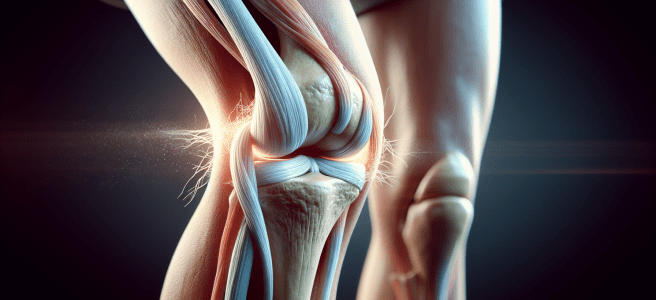
“Ligaments” are made up of many individual fibers running parallel to each other and bundled to form a strong fibrous band. These fibrous bands hold your bones together. Just like a rope, when a ligament is stretched too far, it begins to fray or tear. “Sprain” is the term used to describe this tearing of ligament fibers.

Sprains are graded by the amount of damage to the ligament fibers. A Grade I sprain means the ligament has been painfully stretched, but no fibers have been torn. A Grade II sprain means some, but not all of the ligamentous fibers, have been torn. A Grade III sprain means that all of the ligamentous fibers have been torn, and the ligament no longer has the ability to protect the joint. Knee sprains commonly involve one or more of your knee’s ligaments including: the medial collateral, lateral collateral, anterior cruciate, and posterior cruciate.

Most knee sprains begin as the result of a sudden stop, twist, or blow from the side or front. Some patients recall a “pop” or “snap” at the time of injury. Knee sprains cause pain and swelling within the joint. Your knee may be tender to touch, and some patients report a sensation of “giving way” or difficulty walking.

Most knee sprains can be successfully managed without surgery but will require some work on your part. Initially, a period of rest may be necessary in order to help you heal. Mild Grade I sprains may return to activity in a couple of days, while more severe injuries may take six weeks or longer to recover. You can help reduce swelling by elevating your knee and using an ACE wrap for compression. Applying ice or ice massage for 10 minutes each hour may help relieve swelling. Depending upon the severity of your sprain, you may need to wear a knee brace to help protect you from further injury. If walking is painful, crutches may be necessary.

Kneecap Pain

Patellofemoral syndrome is an irritation of the articular surface between the kneecap and the femur, your thigh bone, that causes pain under and around the kneecap.

Climbing stairs, running and walking for a prolonged period of time often increases pain. Pain can also be felt after sitting for a long time or squatting.

Patellofemoral pain is more prevalent among young women than men, and more prevalent in the active population.

Patellofemoral syndrome can cause, but is not limited to, pain at the front of the knee, difficulty with weight-bearing and squatting and sometimes swelling. Pain can also irradiate under and around the knee. Creaking or grinding sensations can occur during physical activity.

Treatment of Patellofemoral Syndrome consists of Class IV Laser Therapy, management of any biomechanics stresses in the area and exercise rehabilitation to address any weaknesses that can be putting undue stress on the area. 

#LaserTherapy
#KneeInjuries
#Winnipeg
#Chiropractic
#SportsInjury
#Athlete

Pain on the inside of the knee?

Pes anserine bursitis is the irritation of the bursa on the inside of the tibia, near the knee joint. This bony area constitutes an insertion zone for three muscles: the sartorius, the gracilis and the semitendinosus.

Sports and activities that require these muscles to be repeatedly contracted or stretched while running, hiking, or any other extended activity can cause irritation of the bursa and sometimes inflammation. Pes anserine bursitis may be associated with an injury to the tendons in that area. It can occur as a result of trauma directly to the knee. Muscle imbalance in the hip or knee may also contribute to the onset of symptoms.

Pes anserine bursitis can produce, but is not limited to pain on the inside of the knee, localized edema due to swelling of the bursa and reduced mobility in the knee. Symptoms are usually worse while running, walking on a sloping surface and climbing stairs.

Treatment of hamstring injuries consists of Class IV Laser Therapy, management of any biomechanics stresses in the area and exercise rehabilitation to address any weaknesses that can be putting undue stress on the area. 

#LaserTherapy
#KneeInjuries
#Winnipeg
#Chiropractic
#LegInjury

Contact us for treatment in Winnipeg

Find and Follow us on Twitter and Instagram

Jumper’s Knee

Patellar tendinitis, also known as jumper’s knee, is an injury that usually occurs when the patellar tendon is subjected to significant repetitive or prolonged overload. This overload causes irritation of the tendon and it can become painful.

This condition mainly affects people who perform activities involving jumping, running, or speeding.

Typically, this injury occurs during a period where training intensity and/or volume has been increased too quickly with inadequate recovery.

The patellar tendon is the main structure involved in this condition. This tendon is a band of connective tissue whose function is to attach the lower part of the patella to the tibia. It is tensed when thigh muscles, such as the quadriceps, contract during activity, or in positions where the knee is bent.

Patellar tendinopathy can produce, but is not limited to, pain in the front of the knee, difficulty in weight bearing and squatting, and swelling.

Treatment of jumper’s knee consists of Class IV Laser Therapy, management of any biomechanics stresses in the area and exercise rehabilitation to address any weaknesses that can be putting undue stress on the area. 

#LaserTherapy
#KneeInjuries
#Winnipeg
#Chiropractic
#SportsInjury
#Athlete

Patellar Bursitis

Patellar bursitis is the irritation of the bursa in the front of the knee, just below the kneecap. It is covered by the patellar tendon that connects the kneecap to the tibia.

Sports and activities that require the quadriceps muscles to be repeatedly contracted or stretched while running, hiking, or any other extended activity can cause irritation of the bursa and sometimes inflammation. Patellar bursitis may also occur as a result of trauma directly to the knee.

Patellar bursitis can produce, but is not limited to, pain in the front of the knee, localized edema due to swelling of the bursa and reduced mobility in the knee. Symptoms are usually worse while running, walking on a sloping surface, climbing and descending stairs, and squatting.

Suffering with knee pain? Contact us for treatment in Winnipeg

Find and Follow us on Twitter and Instagram!