MRI Truths & Myths

Arthritis

Low back pain is a very common complaint. In fact, it’s the #1 reason for doctor visits in the United States! The economic burden of LBP on the working class is astronomical. Most people can’t afford to be off work for one day, much less a week, month, or more! Because of the popularity of hospital-based TV dramas over the past two decades, many people think getting an MRI of their back can help their doctor fix their lower back problem. Is this a good idea? Let’s take a look!

Patients will often bring in a CD that has an MRI of their lower back to a doctor of chiropractic and ask the ultimate question, “….can you fix me?” Or, worse, “…I think I need surgery.” Sure, it’s quite amazing how an MRI can “slice” through the spine and show bone, soft tissues, disks, muscles, nerves, the spinal cord, and more! Since the low back bears approximately 2/3 of our body’s weight, you can frequently find MANY ABNORMALITIES in a person over 40-50 years old. In fact, it would be quite odd NOT to see things like disk degeneration, disk bulges, joint arthritis, spur formation, etc.!

Hence, the “downside” of having ALL this information is the struggle to determine which finding on the MRI has clinical significance. In other words, where is the LBP coming from? Is it that degenerative disk, bulged disk, herniated disk, or the narrowed canal where the nerve travels? Interestingly, in a recent review of more than 3,200 cases of acute low back pain, those who had an MRI scan performed earlier in their care had a WORSE outcome, more surgery, and higher costs compared with those who didn’t succumb to the temptation of requesting an MRI!

This is not to say MRI, CT scans, and x-rays are not important, as they effectively show conditions like subtle fractures and dangerous conditions like cancer. But for LBP, MRI is often misleading. This is because the primary cause of LBP is “functional” NOT “structural,” so it’s EASY to get railroaded into thinking whatever shows up on that MRI has to be the problem.

Here is how we know this, when we take 1,000 people WITHOUT low back pain between ages 30 and 60 (male or female) and perform an MRI on their lower back, we will find up to 53% will have PAINLESS disk bulges in one or more lumbar disks. Moreover, we will find up to 30% will have partial disk herniations, and up to 18% will have an extruded disk (one that has herniated ALL the way out). Yet, these people are PAIN FREE and never knew they had disk “derangement” (since they have no LBP). When combining all of these possible disk problems together, several studies report that between 57% and 64% of the general population has some type of disk problem without ANY BACK PAIN!

Hence, when a patient with a simple sprain/strain and localized LBP presents with an MRI showing a disk problem, it usually ONLY CONFUSES the patient (and frequently the doctor), as that disk problem is usually not the problem causing the pain!  So DON’T have an MRI UNLESS a surgical treatment decision depends on its findings. That is weakness, numbness, and non-resolving LBP in spite of 4-6 weeks of non-surgical care or unless there is weakness in bowel or bladder control. Remember, the majority of back pain sufferers DO NOT need surgery!

We realize you have a choice in whom you consider for your health care provision and we sincerely appreciate your trust in choosing our service for those needs.  If you, a friend, or family member requires care for back pain, we would be honored to render our services.

Trigger point massage

Session Description


A treatment with Bryan is very user friendly. And, no, you don’t have to remove any clothing. However, bringing a t-shirt and a pair of shorts or sweats is recommended.


The first time you come for a treatment you will be asked to fill out a Client History form. Bryan will go over the information you provide, asking for more detail and discussing the type of pain you are having and its location.


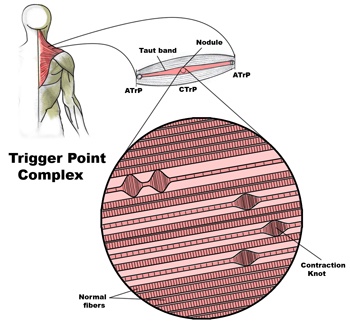
The treatment itself involves locating the Trigger Points in the muscle or soft tissue and applying a deep focused pressure to the Point. This will reproduce the pain and the referral pattern that is characteristic of that pain.


The treatment will be uncomfortable at first, but as the Trigger Points release, the pain will decrease. The pressure will always be adjusted to your tolerance level. If, at any time, you feel too uncomfortable you can ask Bryan to ease off a bit.


Depending on your specific problem, Bryan may also use some stretching and / or range-of-motion techniques, as needed.


After treatment, it is usually recommended that the client apply moist heat to the area treated.


What to expect from a trigger point massage

ession Description


A treatment with Bryan is very user friendly. And, no, you don’t have to remove any clothing. However, bringing a t-shirt and a pair of shorts or sweats is recommended.


The first time you come for a treatment you will be asked to fill out a Client History form. Bryan will go over the information you provide, asking for more detail and discussing the type of pain you are having and its location.


The treatment itself involves locating the Trigger Points in the muscle or soft tissue and applying a deep focused pressure to the Point. This will reproduce the pain and the referral pattern that is characteristic of that pain.


The treatment will be uncomfortable at first, but as the Trigger Points release, the pain will decrease. The pressure will always be adjusted to your tolerance level. If, at any time, you feel too uncomfortable you can ask Bryan to ease off a bit.


Depending on your specific problem, Bryan may also use some stretching and / or range-of-motion techniques, as needed.


After treatment, it is usually recommended that the client apply moist heat to the area treated.


Trigger points

Trigger Points in muscle and other soft tissue are one of the most common causes of a wide variety of pain and dysfunction, including (but not limited to):


• Achy persistent pain
• Severe local pain
• Arm / leg pain
• Back pain
• Radiating pain
• Weakness
• Stiffness

• Pain resulting from a medical condition, such as
– Migraines
– Sciatica
– TMJ dysfunctions
– Arthritis
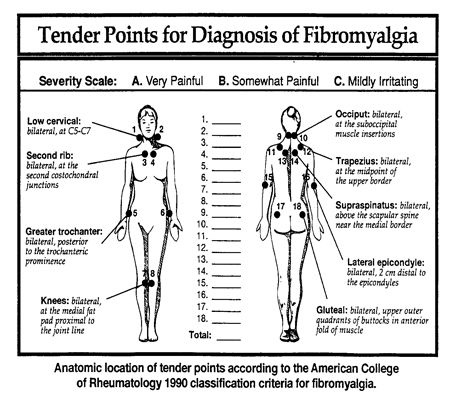
– Fibromyalgia
– Carpal tunnel syndrome
– Soft tissue injuries
– And more…

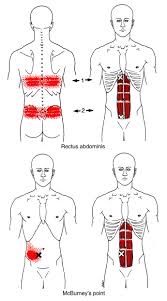
Trigger points in the Rectus Abdominis muscle.

The rectus abdominis is you “six pack” muscle. It originates on the pubic bone and inserts on the costal cartilage of ribs 5-7, and the xiphoid process of the sternum. It’s main actions are to flex and rotate the spine, as well as increase the intra-abdominal pressure. Trigger points in this muscle refer pain into the mid and lower back. This muscle is tight in people who slouch and have a posteriorly rotated pelvis. An anteriorly rotated pelvis can be corrected by strengthening this muscle.

Trigger points in the sternocleidomastoid muscle.

The Sternocleidomastoid muscle is a strap like muscle in your neck. It originates on the manubrium and medial clavicle. It inserts on the mastoid process of the temporal bone, and the superior nuchal line. This muscle acts alone to rotate the face to the opposite side and lift it two rod the ceiling. Together they flex the head and neck. Trigger points in sternal division of this muscle refer pain to the cheek and along the supraorbital ridge. The lowest points refer down to the sternum. The highest points refer to the occipital ridge and vertex of the head. Trigger points in the costal division refer to the into the forehead. The most superior trigger points refer into the ear, and can postural dizziness.

Trigger points in the trapezius muscle.

The trapezius muscle is a large diamond shaped muscle that travels from the neck to the mid back. It originates on the nuchal ligament, and the spinous processes of C6-T12. It has its insertion on the scapular spine, acromion process, and distal clavicle. The upper fibres of this muscle work to elevate the shoulder, and rotate the glenoid fossa upwards. The lower fibres assist this motion, and the middle fibres are strong adductors of the scapula. This is the number one muscle in the body tp get trigger points. Trigger points in the lateral upper edge refer pain in the lateral neck and temples, a common cause of headaches. Points in the middle and lower fibres refer pain into the posterior neck and shoulder.

Trigger points in the Tensor Fasciae Latae muscle.

The Tensor Fasciae Latae muscle is located at the front of the hip. It originates on the iliac crest and inserts into the iliotibial band. This muscle acts to assist hip flexion, abduction, and medial rotation. Trigger points in this muscle will refer pain down the lateral aspect of the leg, and into the greater trochanter. Trigger points can also mimic symptoms of trochanteric bursitis.

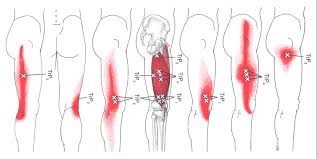
Trigger points in the vastus Lateralis

The vastus lateralis muscle is one of the quadriceps muscles of the thigh. It originates on the greater trochanter, intertrochanteric line, and linea aspera of the femur. It inserts on the Patella via the quadriceps tendon and tibial tuberosity via the patellar ligament. It’s main function is to extend the knee. Trigger points in this muscle refer pain all along the lateral thigh and into the lateral knee.