CTS Exercises?

CTS Stretch

Carpal Tunnel Syndrome (CTS) is the leading cause of numbness to the middle three fingers and thumb and affects millions of Americans each year. There are MANY potential causes of CTS, and these causes can be unclear or multi-factorial. We have discussed the importance of night splints and what chiropractic can do for CTS in the recent past. This month, let’s look at what YOU can do for CTS.
“Self-help” concepts are VERY important as they empower YOU to gain control of your condition’s signs and symptoms, thus placing less reliance on those of us who manage (in this case) CTS. There is a time for “PRICE” or, Protect, Rest, Ice, Compress, Elevate, such as when most activities make symptoms worse. This is the time for splinting, reducing activities of daily living (which sometimes includes work restrictions), and the use of ice cupping or massage. Patients should initiate movement or exercise-based approaches as soon as such activities can be tolerated. Here are four different exercises you can do:
1. Fist / “Bear Claw” / Open Wide Hand: This is a three-step exercise, and you can start or stop on any of the three “steps.” A. FIST:  Make a fist and squeeze as tightly as tolerated; B. BEAR CLAW: Starting from the fist position (A), open only the palm of the hand (keep your thumb and fingers bent but straighten the big knuckle joints at the base of the fingers); C. OPEN WIDE: Straighten and spread ALL your finger joints by opening up your hand as much as possible and feel for a good stretch in the palm. HOLD each position for one to five seconds (vary the “speed” of moving between the three positions – fast, medium, and slow; emphasize what feels best if you have a preference). Repeat five to ten times or until your hands feel looser.
2. “Church Steeple”: Place your hands together in front of you (“prayer position”) touching the pads of the thumbs and all four fingertips together and spread your fingers as wide as possible. Next, separate your palms as far as you can while applying pressure against your finger/thumb tips and repeat. Alter the speed and number of repetitions until your hands feel stretched out.
3. “Shake and Flick”: Simply shake your hands as if you just washed them and you’re shaking the water off to “air dry” them. Again, alter the speed and reps until they feel loosened up.
4. Forearm Stretches: Place one arm out in front, elbow straight, and fingers pointed straight, palm up (first set). Reach with the opposite hand and pull the fingers, hand, and wrist down and back towards you until you feel a strong “pull” in your forearm muscles. Hold until the forearm muscles feels stretched (5-10 seconds). Repeat this with the palm facing down for the second set to stretch the opposite (extensor) forearm muscles.
Do these on each side two to three times each (even the “good” side) EVERY HOUR (or as often as possible). Think about what you do on a daily basis and if you work in a repetitive manner (on the job or a hobby at home), try to do these exercises DURING THE REPETITIVE ACTIVITY to help keep your symptoms from getting out of control. If you can alter the position or speed of a work or avocational activity, do so for long-term prevention purposes!
If you cannot gain control of your CTS condition, you may need additional treatment options of which chiropractic offers a safe, non-surgical approach.
We realize you have a choice in whom you consider for your health care provision and we sincerely appreciate your trust in choosing our service for those needs.  If you, a friend, or family member requires care for Carpal Tunnel Syndrome, we would be honored to render our services.


Carpal Tunnel Syndrome #3

This week, we will conclude our three-part series on important facts regarding carpal tunnel syndrome (CTS).

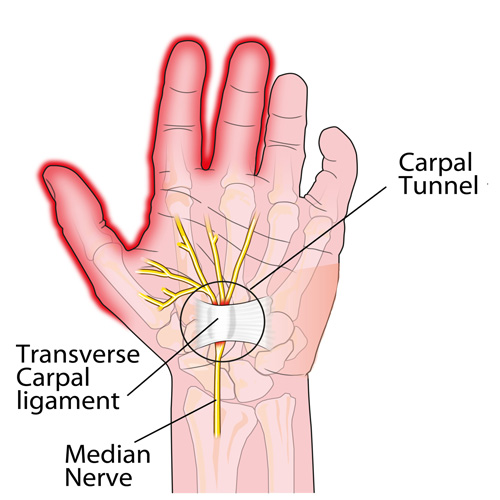
CTS TREATMENT OPTIONS (continued): Aside from the carpal tunnel, there are several places where the median nerve can become compressed as it travels from the neck, down through the shoulder, through tight muscular areas of the upper arm and forearm, and finally through the carpal tunnel at the wrist. In order to achieve good, long-lasting results, treatment must focus on relieving compression at any point along the course of the nerve. This is why chiropractic works SO WELL as it addresses ALL of these areas using manual adjustments, muscle release techniques, and even physical therapy modalities.

CTS PREVENTION: Because there are multiple causes of CTS, prevention must be tailored to each person. For example, if the patient has diabetes mellitus, maintaining a proper blood sugar level is very important because the blood becomes thicker as the sugar levels increase and it simply cannot pass through our small blood vessels (capillaries), especially those located in the feet and hands. This can eventually lead to the need for amputation due to poor circulation and contribute to the numbness associated with diabetic neuropathy.

Similarly, low thyroid function results in a type of swelling called myxedema that can cause or worsen CTS, and keeping the thyroid hormone balanced in the bloodstream is very important. Managing other conditions that create inflammation or swelling, such as rheumatoid and other types of arthritis, will also help prevent CTS from developing or worsening.

Carpal tunnel syndrome can also occur during pregnancy due to the hormonal shifts similar for those taking birth control pills. The PRICE treatment options presented last month can be very helpful for the pregnant mother and represent important non-medication self-care approaches.

Certain occupations that require fast, repetitive work and/or firm gripping can result in carpal tunnel syndrome because of the friction that results in swelling that occurs when the muscle tendons inside the carpal tunnel rub excessively fast together (kind of like starting a fire with two sticks). Modifying the work task until the swelling is controlled is VERY important, as discussed last month.

Other preventative measures include exercises that keep the muscles and tendons in the forearm and inside the carpal tunnel stretched so that the tendons easily slide inside their respective muscle tendon sheaths. This is accomplished by placing the palm side of the hand (elbow straight) on a wall with the fingers pointing downwards while reaching across with the opposite hand and pulling the thumb back until you feel a good firm stretch. Hold this position for 5-10 seconds or until the forearm muscles feel like they are relaxing. Repeat this multiple times a day.

We realize you have a choice in whom you consider for your health care provision and we sincerely appreciate your trust in choosing our service for those needs.  If you, a friend, or family member requires care for Carpal Tunnel Syndrome, we would be honored to render our services.
Carpal Tunnel

Do I have a tension headache? Or Migranes?

Cervicogenic

Most likely, everyone reading this article has had a headache at one time or another. The American Headache Society reports that nearly 40% of the population suffers from episodic headaches each year while 3% have chronic tension-type headaches. The United States Department of Health and Human Services estimates that 29.5 million Americans experience migraines, but tension headaches are more common than migraines at a frequency of 5 to 1. Knowing the difference between the two is important, as the proper diagnosis can guide treatment in the right direction.

TENSION HEADACHES: These typically result in a steady ache and tightness located in the neck, particularly at the base of the skull, which can irritate the upper cervical nerve roots resulting in radiating pain and/or numbness into the head. At times, the pain can reach the eyes but often stops at the top of the head. Common triggers include stress, muscle strain, or anxiety.

MIGRAINE HEADACHES: Migraines are often much more intense, severe, and sometimes incapacitating. They usually remain on one side of the head and are associated with nausea and/or vomiting. An “aura”, or a pre-headache warning, often comes with symptoms such as a bright flashing light, ringing or noise in the ears, a visual floater, and more. For migraine headaches, there is often a strong family history, which indicates genetics may play a role in their origin.

There are many causes for headaches. Commonly, they include lack of sleep and/or stress and they can also result from a recent injury—such as a car accident, and/or a sports injury—especially when accompanied by a concussion.

Certain things can “trigger” a migraine including caffeine, chocolate, citrus fruits, cured meats, dehydration, depression, diet (skipping meals), dried fish, dried fruit, exercise (excessive), eyestrain, fatigue (extreme), food additives (nitrites, nitrates, MSG), lights (bright, flickering, glare), menstruation, some medications, noise, nuts, odors, onions, altered sleep, stress, watching TV, red wine/alcohol, weather, etc.

Posture is also a very important consideration. A forward head carriage is not only related to headaches, but also neck and back pain. We’ve previously pointed out that every inch (2.54 cm) the average 12 pound head (5.44 kg) shifts forwards adds an EXTRA ten pounds (4.5 kg) of load on the neck and upper back muscles to keep the head upright.

So, what can be done for people who suffer from headaches? First, research shows chiropractic care is highly effective for patients with both types of headaches. Spinal manipulation, deep tissue release techniques, and nutritional counseling are common approaches utilized by chiropractors. Patients are also advised to use some of these self-management strategies at home as part of their treatment plan: the use of ice, self-trigger point therapy, exercise (especially strengthening the deep neck flexors), and nutritional supplements.

The Best Diet For Fibromyalgia?

Anti-Inflam

Fibromyalgia (FM) and its cause remains a mystery, but most studies suggest that FM is NOT the result of a single event but rather a combination of many physical, chemical, and emotional stressors.

The question of the month regarding the BEST FM diet is intriguing since one might assume that the many causes should mean that there isn’t one dietary solution. But is that true? Could there be a “best diet” to help ease the symptoms from such a multi-faceted disorder?

Certainly, healthy eating is VERY important for ALL of us regardless of our current ailment(s). Obesity is rampant largely due to the fact that 60% of the calories consumed by the “typical” American center around eating highly inflaming food that include those rich in Sugar, Omega-6 oil, Flour, and Trans fats (“SOFT” foods, if you will!). Obesity has been cited as “an epidemic” largely due to kids and adults becoming too sedentary (watching TV, playing on electronic devices, etc.) and eating poorly.

Perhaps the BEST way to manage the pain associated with FM and to maintain a healthy BMI (Body Mass Index, or ratio between height and weight) is to substitute ANTI-INFLAMING foods for those that inflame (or SOFT foods).

You can simplify your diet by substituting OUT “fast foods” for fruits, vegetables, and lean meats. So there you have it. It’s that simple. The problem is making up your mind to change and then actually doing it. Once these two things take place, most everyone can easily “recalibrate” their caloric intake and easily adapt.

Not only have studies shown that chronic illnesses like heart disease, stroke, and diabetes significantly benefit by following this simple dietary shift, but so does pain arising from the musculoskeletal system! This is because the human body is made up largely of chemicals, and chemical shifts are constantly taking place when it moves. If you reach for an anti-inflammatory drug like ibuprofen or naproxen and it helps, it’s because you ARE inflamed and the drug reduces the pain associated with that inflammation. This is an indication that an anti-inflammatory diet WILL HELP as well (but without the negative side effects)!

The list of chronic conditions that result in muscle pain not only includes FM but also obesity, metabolic syndrome, and type II diabetes. Conditions like tension-type and migraine headaches, neck and back pain, disk herniation, and tendonopathies and MANY more ALL respond WELL to making this SIMPLE change in the diet. For more information on how to “DEFLAME,” visit http://www.deflame.com! It could be a potential “lifesaver!”

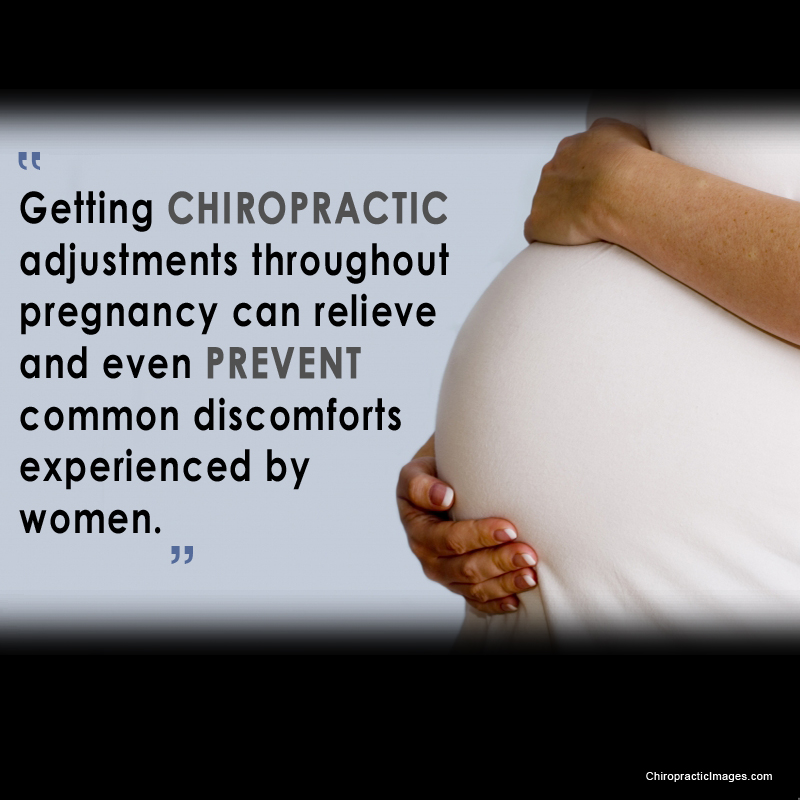
Pregnancy and Low Back Pain?

40

Did you know that 50-72% of women have low back pain (LBP) and/or pelvic pain during their pregnancy but only 32% do something about it? Let’s look closer!


Pregnancy-related low back pain (PLBP) can be a highly debilitating syndrome that accounts for the most common cause of sick leave for pregnant women. In 2004, Americans spent $26.1 billion dollars in an effort to find relief from back pain during pregnancy. Statistics show one out of ten women will experience daily DISABLING LBP for at least two years following delivery.


Because of the limited number of treatment options available for the pregnant woman due to mother and fetus safety, and given the high propensity of potentially disabling PLBP that can significantly limit function and quality of life, chiropractic care seems to be a natural choice for this patient population! Obviously, pharmaceuticals and surgery are NOT appropriate options for the expectant mother, even during the post-partum breast-feeding time period. Chiropractic offers a non-invasive and safe approach to managing lumbopelvic pain that uses many different approaches.


In a 2009 research paper, 78 women participated in a study that investigated disability, pain intensity, and percent improvement after receiving chiropractic care to treat pregnancy-related PLBP. Here, 73% reported their improvement as either “excellent” or “good.” For disability and pain, 51% and 67% (respectively) experienced clinically significant improvement! Researchers followed up with them eleven months later and found 85.5% reported their improvement as either “excellent” or “good!” For disability and pain, 73% and 82% (respectively) experienced clinically significant improvement!
So, what’s causing LBP in pregnant women? Because of the biomechanical changes that occur in the low back and pelvis over a relatively short amount of time during pregnancy, especially in the second and third trimesters, common pain generators include (but are not limited to): the sacroiliac joint, facet joints, shock-absorbing disks, and the many connecting muscles (strains) and ligaments (sprains). During the later stages of pregnancy, the hormone Relaxin prepares the pelvis for delivery by widening the pelvic girdle, which can also be problematic.


Treatment options within chiropractic often include spinal manipulation, lumbopelvic exercises, patient education, posture correction, massage, an SI belt, soft tissue mobilization, and more. Exercises that target the transverse abdominus, multifidus, and pelvic floor muscles help to stabilize the lumbopelvic region. The American College of Obstetricians & Gynaecologists recommends exercise at least three times a week during pregnancy, and studies report NO obstetric complications (pre-term labor, premature ruptured membranes, or changes to maternal or neonatal weight) with exercise.


So, the answer is clear! When PLBP strikes, seek chiropractic care to safely and effectively manage the pain and disability and so you can ENJOY YOUR PREGNANCY!!!
We realize you have a choice in whom you consider for your health care provision and we sincerely appreciate your trust in choosing our service for those needs.  If you, a friend, or family member requires care for back pain, we would be honoured to render our services.

Happy Canada Day!!!

Happy Canada Day to all our wonderful patients! 🍁 Wishing you a day filled with joy, laughter, and cherished moments with loved ones as we celebrate the beauty and diversity of our great nation. Let’s take this opportunity to reflect on the values that unite us and the unique cultural tapestry that makes Canada so special. From coast to coast, may your day be filled with pride in our shared heritage and excitement for the future. Happy Canada Day! 🇨🇦