Put the shovel down and read this!

Your low back consists of 5 individual vertebrae stacked on top of each other. Flexible cushions called “discs” live between each set of vertebrae. A disc is made up of two basic components. The inner disc, called the “nucleus”, is like a ball of jelly about the size of a marble. This jelly is held in place by the outer part of the disc called the “annulus”, which is a tough ligament that wraps around the inner nucleus much like a ribbon wrapping around your finger.
Your low back relies on discs and other ligaments for support. “Discogenic Low Back Pain” develops when these tissues are placed under excessive stress, much like a rope that frays when it is stretched beyond its normal capacity. Most commonly, disc pain is not the result of any single event, but rather from repeated overloading. Your lumbar discs generally manage small isolated stressors quite well, but repetitive challenges lead to injury in much the same way that constantly bending a piece of copper wire will cause it to break. Examples of these stressors include: bad postures, sedentary lifestyles, poor fitting workstations, repetitive movements, improper lifting, or being overweight.

Approximately one third of adults will experience pain from a lumbar disc at some point in their lifetime. The condition is more common in men. Most lumbar disc problems occur at one of the two lowest discs- L5 or L4. Smokers and people who are generally inactive have a higher risk of lumbar disc problems. Certain occupations may place you at a greater risk, especially if you spend extended periods of time sitting or driving. People who are tall or overweight have increased risk of disc problems.

Symptoms from disc pain may begin abruptly but more commonly develop gradually. Symptoms may range from dull discomfort to surprisingly debilitating pain that becomes sharper when you move. Rest may relieve your symptoms but often leads to stiffness. The pain is generally centered in your lower back but can spread towards your hips or thighs. Be sure to tell your doctor if your pain extends beyond your knee, or if you have weakness in your lower extremities or a fever.

Repeated injuries cause your normal healthy elastic tissue to be replaced with less elastic “scar tissue.” Over time, discs may dehydrate and thin. This process can lead to ongoing pain and even arthritis. Patients who elect to forego treatment and “just deal with it” develop chronic low back pain more than 60% of the time. Seeking early and appropriate treatment like the type provided in our office is critical.

Depending on the severity of your injury, you may need to limit your activity for a while, especially bending, twisting, and lifting, or movements that cause pain. Bed rest is not in your best interest. You should remain active and return to normal activities as your symptoms allow. Light aerobic exercise (i.e. walking, swimming, etc) has been shown to help back pain sufferers. The short-term use of a lumbar support belt may be helpful. Sitting makes your back temporarily more vulnerable to sprains and strains from sudden or unexpected movements. Be sure to take “micro breaks” from workstations for 10 seconds every 20 minutes.
Hamstring Problems?

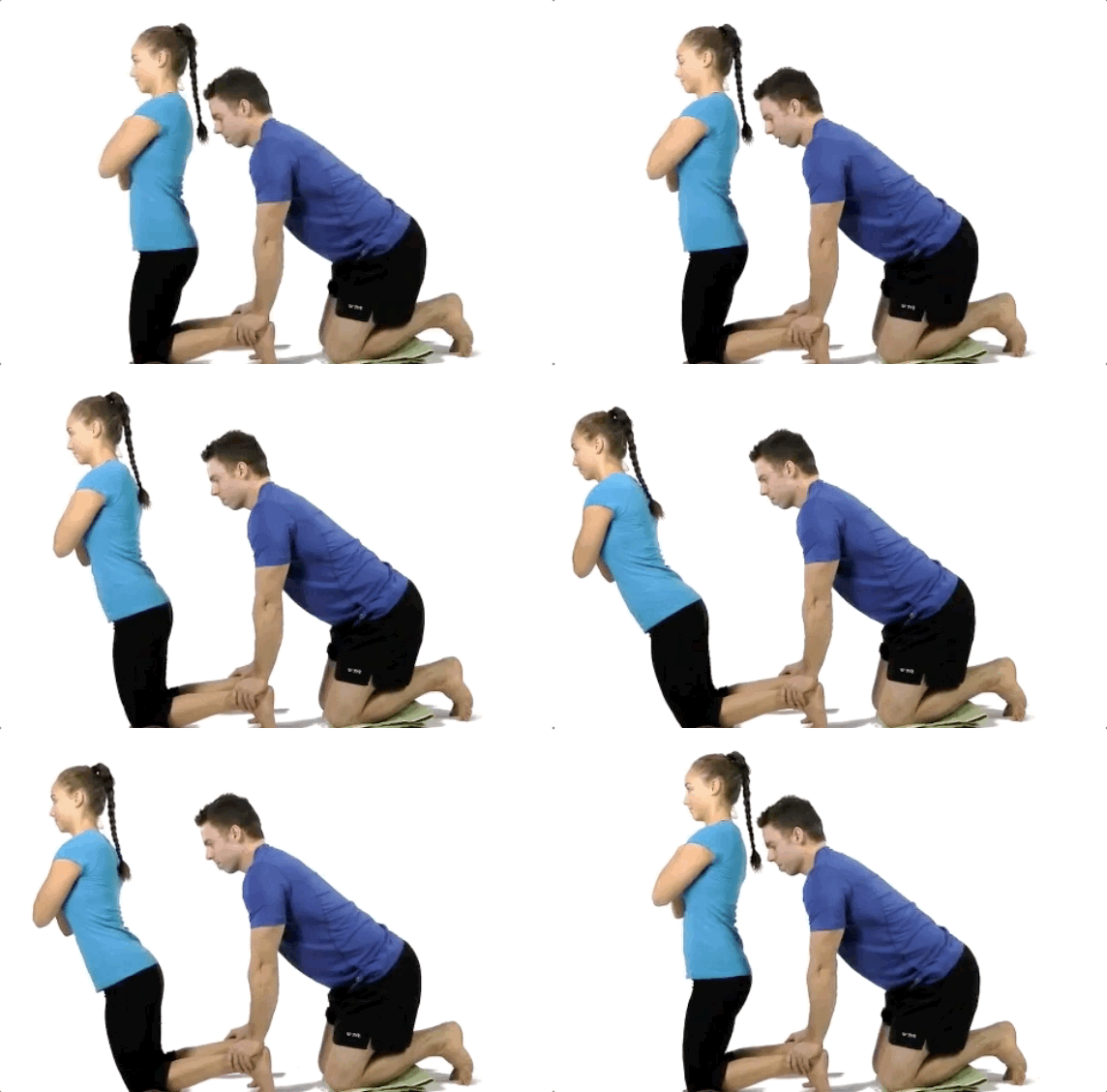
Glute Ham Raise.gif

A great injury prevention movement is the glute-ham raise. Done after a warm up and prior to competition it will significantly reduce the odds of hamstring strains in running athletes in sports like Soccer, Football and Sprinting.

To perform the movement:

Begin in a tall kneeling position on a cushion or pillow.

Partner grabs and holds ankles to ground or hook your feet under a stable surface.

Keeping your torso neutral and your thighs in line with your body, bend forward at the knees, using your hamstrings to control the speed of your forward bend.

Go as far as you can without cramping, pain or falling to the ground.


My Hip Hurts….

hip FAI

​Is it a labral tear? 

One of the structures that is frequently blamed for hip pain is called the labrum—the rubbery tissue that surrounds the socket helping to stabilize the hip joint. This tissue often wears and tears with age, but it can also be torn as a result of a trauma or sports-related injury.

The clinical significance of a labral tear of the hip is controversial, as these can be found in people who don’t have any pain at all. We know from studies of the intervertebral disks located in the lower back that disk herniation is often found in pain-free subjects—between 20-50% of the normal population.  In other words, the presence of abnormalities on an MRI is often poorly associated with patient symptoms, and the presence of a labral tear of the hip appears to be quite similar.

For instance, in a study of 45 volunteers (average age 38, range: 15–66 years old; 60% males) with no history of hip pain, symptoms, injury, or prior surgery, MRIs reviewed by three board-certified radiologists revealed a total of 73% of the hips had abnormalities, of which more than two-thirds were labral tears.

Another interesting study found an equal number of labral tears in a group of professional ballet dancers (both with and without hip pain) and in non-dancer control subjects of similar age and gender.

Another study showed that diagnostic blocks—a pain killer injected into the hip for diagnostic purposes to determine if it’s a pain generator—failed to offer relief for those with labral tears.

Doctors of chiropractic are trained to identify the origins of pain arising from the low back, pelvis, hip, and knee, all of which can mimic or produce hip symptoms.  Utilizing information derived from a careful history, examination, imaging (when appropriate), and functional tests, chiropractors can offer a nonsurgical, noninvasive, safe method of managing hip pain.

PFPS Cont. You want details?

Screen Shot 2017-10-31 at 11.15.32 AM.png

The muscles of the hip provide not only local stability, but also play an important role in spinal and lower extremity functional alignment. (1-4) While weakness in some hip muscles (hip extensors and knee extensors) is well tolerated, weakness or imbalance in others can have a profound effect on gait and biomechanical function throughout the lower half of the body. (5) Weakness of the hip abductors, particularly those that assist with external rotation, has the most significant impact on hip and lower extremity stability. (5,6)

Hip Abduction.gif

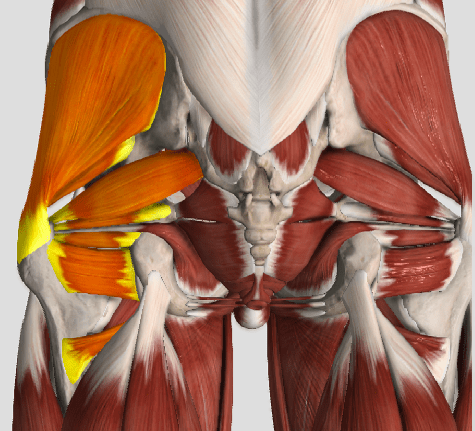
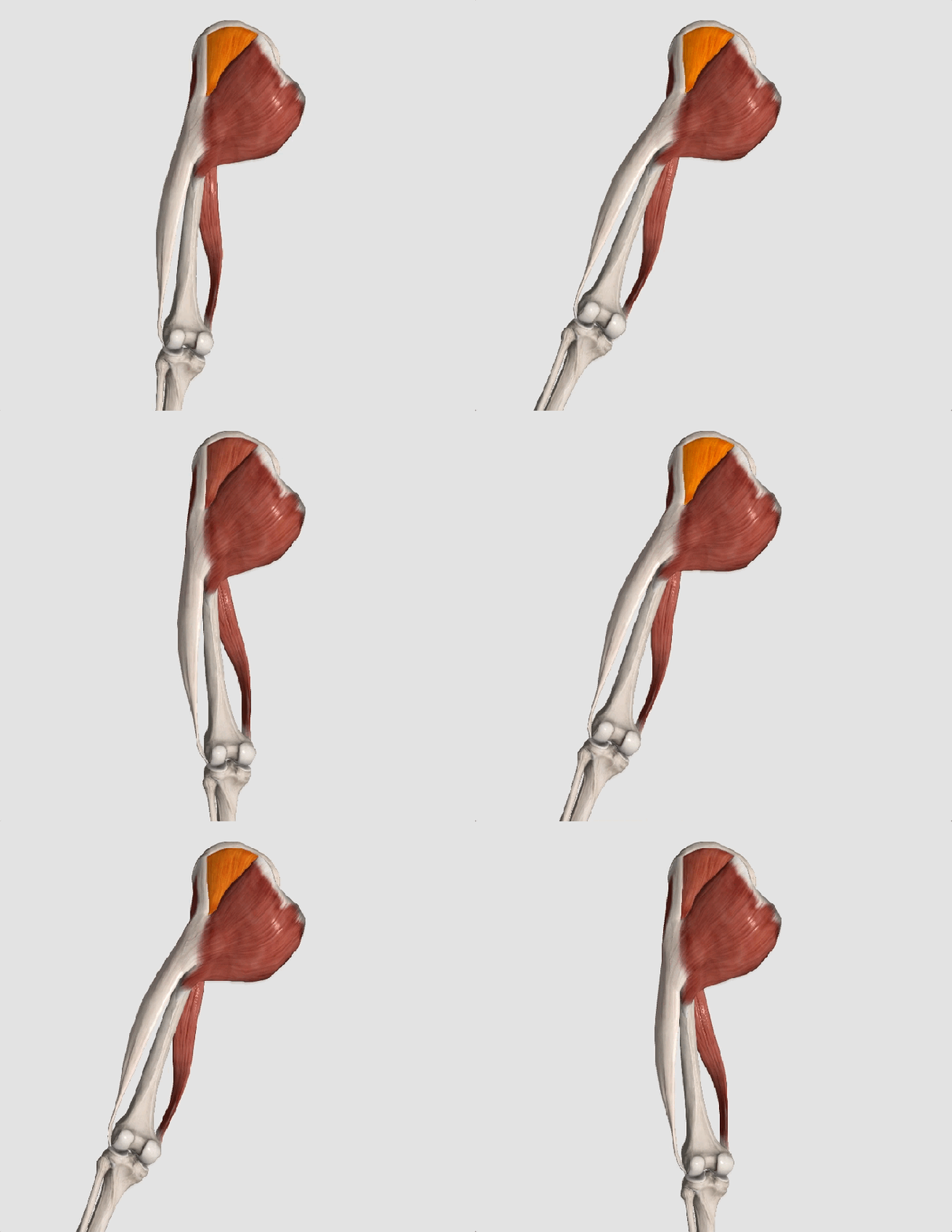
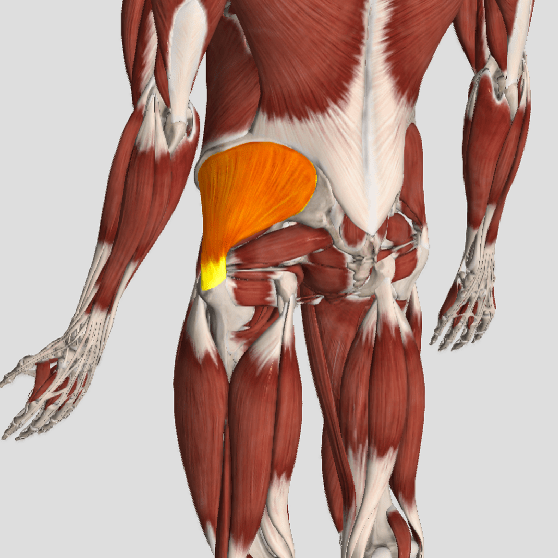
The gluteus medius is the principal hip abductor. When the hip is flexed, the muscle also assists the six deep hip external rotators (piriformis, gemelli, obturators, and quadratus femoris). The gluteus medius originates on the ilium just inferior to the iliac crest and inserts on the lateral and superior aspects of the greater trochanter. While the principal declared action of the gluteus medius is hip abduction, clinicians will appreciate its more valuable contribution as a dynamic stabilizer of the hip and pelvis- particularly during single leg stance activities like walking, running, and squatting. The gluteus medius contributes approximately 70% of the abduction force required to maintain pelvic leveling during single leg stance. The remainder comes predominantly from 2 muscles that insert onto the iliotibial band: the tensor fascia lata and upper gluteus maximus.  Hip abductor strength is the single greatest contributor to lower extremity frontal plain alignment during activity. (6)

Screen Shot 2017-10-31 at 11.12.00 AM

Incompetent hip abductors and/or external rotators allows for excessive adduction and internal rotation of the thigh during single leg stance activities. This leads to a cascade of biomechanical problems, including pelvic drop, excessive hip adduction, excessive femoral internal rotation, valgus knee stress, and internal tibial rotation. (1,7-12)


References
1. Szu-Ping Lee, Powers C. Description of a Weight-Bearing Method to Assess Hip Abductor and External Rotator Muscle Performance. JOSPT. Volume 43, Issue 6
2. Crossley KM, Zhang WJ, Schache AG, Bryant A, Cowan SM. Performance on the single-leg squat task indicates hip abductor muscle function. Am J Sports Med. 2011;39:866-873.
3. Presswood L, Cronin J, Keogh JWL, Whatman C. Gluteus medius: applied anatomy, dysfunction, assessment, and progressive strengthening. Strength Cond J. 2008;30:41-53.
4. Sled EA, Khoja L, Deluzio KJ, Olney SJ, Culham EG. Effect of a home program of hip abductor ex- ercises on knee joint loading, strength, function, and pain in people with knee osteoarthritis: a clinical trial. Phys Ther. 2010;90:895-904.
5. van der Krogt MM, Delp SL, Schwartz MH How robust is human gait to muscle weakness? Gait Posture. 2012 Feb 29.
6. Laurie Stickler, Margaret Finley, Heather Gulgin Relationship between hip and core strength and frontal plane alignment during a single leg squat Physical Therapy in Sport Available online 2 June 2014
7. Ireland ML, Willson JD, Ballantyne BT, Davis
IM. Hip strength in females with and without patellofemoral pain. J Orthop Sports Phys Ther. 2003;33:671-676.
8. Noehren B, Davis I, Hamill J. ASB clinical biome- chanics award winner 2006: prospective study of the biomechanical factors associated with iliotib- ial band syndrome. Clin Biomech (Bristol, Avon). 2007;22:951-956.
9. Powers CM. The influence of abnormal hip me- chanics on knee injury: a biomechanical perspec- tive. J Orthop Sports Phys Ther. 2010;40:42-51.
10. Powers CM. The influence of altered lower- extremity kinematics on patellofemoral joint dysfunction: a theoretical perspective. J Orthop Sports Phys Ther. 2003;33:639-646.
11. Sigward SM, Powers CM. Loading characteristics of females exhibiting excessive valgus moments during cutting. Clin Biomech (Bristol, Avon). 2007;22:827-833
12. Souza RB, Powers CM. Differences in hip kine- matics, muscle strength, and muscle activation between subjects with and without patellofemo- ral pain. J Orthop Sports Phys Ther. 2009;39:12- 19.

Patellofemoral Pain Syndrome

knock knee

Patellofemoral pain syndrome (PFPS), also called “Runners Knee”, describes the symptom complex of knee discomfort, swelling, or crepitus that results from excessive or imbalanced forces acting on the joint. It is the most common cause of knee pain in the general population, affecting an estimated 25% of adults.

PFPS is most commonly related to lateral tracking of the patella. The patella has a natural tendency to migrate laterally due to the pull of the quadriceps and the slight natural valgus of the lower extremity. A new study in the Journal of Sports Medicine (1) provides additional confirmation that when managing patellofemoral pain syndrome, clinicians must address two critical yet often overlooked issues.

This study concludes that PFPS and dynamic knee valgus do not arise primarily from knee dysfunction, rather from hip abductor/ external rotator weakness and/or foot hyperpronation.

“The most effective intervention programs included exercises targeting the hip external rotator and abductor muscles and knee extensor muscles.” and “PFPS patients with foot abnormalities, such as those with increased rearfoot eversion or pes pronatus, may benefit the most from foot orthotics.”

Since gluteus medius and VMO weakness are key factors in the development of PFPS, strengthening exercises that target those muscles prove most effective. Stabilization exercises may include pillow push (push the back of your knee into a pillow for 5-6 seconds), supine heel slide, terminal knee (short-arc) extension, clam, glut bridge, semi-stiff deadlift, posterior lunge, and monster walk.

Myofascial release and stretching should be directed at hypertonic muscles, including the TFL, gastroc, soleus, hamstring, piriformis, hip rotators, and psoas. Myofascial release or IASTM may be appropriate for tightness in the iliotibial band, vastus lateralis, posterior hip capsule, and lateral knee retinaculum.

Manipulation may be necessary for restrictions in the lumbosacral and lower extremity joints. Hypermobility is common in the ipsilateral SI joint with restrictions present contralaterally. Evidence has shown that patellar tracking braces, i.e. BioSkin® or PatellaPro®, may lead to better outcomes.

Lifestyle modification may be necessary to reduce pain-provoking endeavors, especially running, jumping and other activities that induce a valgus stress. Athletes should avoid allowing their knee to cross in front of their toes while squatting. Arch supports or custom orthotics may be necessary to correct hyperpronation. Runners should avoid cross-over gaits and change shoes every 250 to 500 miles.

.

.

.

.

.

.

.

#pain

#kneepain

#chiropractic

#fitness

#sports

#wellness

#fitness

#healthyliving

#healthychoices

#Winnipeg

References

1. Petersen W, Rembitzki I, Liebau C. Patellofemoral pain in athletes. Open Access Journal of Sports Medicine. 2017;8:143-15

Ischial Bursitis

Photo by Edgar Martu00ednez on Pexels.com

Ischial Bursitis
Ischial bursitis is the irritation of the bursa at the bony prominence behind the pelvis,​ ​called ischial tuberosity. This bony prominence represents an insertion zone for several muscles, including the hamstrings, and provides support in the sitting position.

Activities and sports that require the hamstring muscles to be repeatedly contracted or stretched during running, jumping or kicking can cause irritation of the bursa and sometimes inflammation. Ischial bursitis usually results from injury to the hamstring tendons. Prolonged sitting on a hard surface or falling on the buttocks can also aggravate the irritation.

▬▬▬▬▬

Structures involved

The b​ursa ​is a small fluid-filled sac. The bursa located in the pelvis acts as a lubricant to reduce friction between the muscles and the ischial tuberosity.

▬▬▬▬▬

Signs & Symptoms that you may experience

Each person will react differently after an injury and recovery will depend on the severity of the injury. Ischial bursitis can produce, but is not limited to pain in the buttock area, localized swelling of the bursa and reduced mobility at the hip.

▬▬▬▬▬

Recovery

Your rehabilitation plan, health profile, fitness level and nutritional status affect the recovery time. In most cases, you can expect a full recovery from ischial bursitis. As a general rule, this condition may take a few months to fully recover.1

Managing Hip Arthritis: Causes, Symptoms, and Effective Treatments

Hip arthritis is a common condition that affects up to one-third of the population, particularly as we age. The likelihood of developing osteoarthritis (OA) increases with age and is often partially inherited. Factors such as being overweight and experiencing repetitive injury from occupations or sports that require prolonged standing or heavy physical exertion can also contribute to the development of hip arthritis.

Symptoms of Hip Arthritis

One of the early signs of hip osteoarthritis is prolonged stiffness, especially upon arising in the morning or after periods of inactivity. You might find it difficult to perform simple tasks such as putting on your socks, shaving your legs, or climbing stairs. Common symptoms include:

  • Groin, thigh, and buttock pain: Pain in these areas is typical and can sometimes radiate into the lower leg.
  • Stiffness: Particularly noticeable in the morning or after sitting for long periods.
  • Cracking and popping: You might hear or feel your hip cracking or popping when you move.
  • Reduced range of motion: Difficulty in moving the hip, such as rotating it internally (pigeon-toed movements).

Diagnosing Hip Arthritis

Diagnosing hip arthritis can be challenging, as the symptoms often overlap with lower back problems that also cause hip pain. To determine the extent of arthritis, doctors typically use X-rays, grading the severity from 1 to 4.

Treatment Options for Hip Arthritis

While arthritis cannot be cured, several treatment options can help relieve symptoms and improve quality of life:

1. Exercise and Physical Therapy: Engaging in regular exercise, especially water-based programs like water aerobics, can help manage symptoms. Physical therapy modalities, including specific stretches and manipulations of the hip, have been shown to be effective in alleviating pain and improving mobility.

2. Chiropractic Adjustments: Chiropractic care is an excellent treatment option for relieving the symptoms of hip arthritis. Chiropractors can use adjustments and manipulative techniques to improve hip joint function, reduce pain, and enhance overall mobility. Chiropractic treatments focus on restoring proper alignment and can provide significant relief from the discomfort associated with hip arthritis.

3. Lifestyle Modifications: Your doctor may recommend avoiding activities that aggravate your hip pain, particularly those involving internal rotation of the hip. Maintaining a healthy weight is crucial to reducing stress on the hip joint. Learning home stretching and strengthening exercises can also aid in recovery and symptom management.

4. Supplements: Some arthritis sufferers find relief by taking 1500 mg of glucosamine and chondroitin daily, which can help reduce inflammation and improve joint health.

5. Assistive Devices: In more severe cases, using a cane (in the opposite hand) can help take weight off the arthritic hip, making walking less painful.

6. Medical Interventions: If conservative treatments fail to relieve your pain, your doctor might refer you to an orthopedic hip specialist to discuss the possibility of joint replacement surgery.

Final Thoughts

While hip arthritis can significantly impact your quality of life, various treatment options, including chiropractic care, exercise, lifestyle modifications, and medical interventions, can help manage symptoms and improve mobility. Early diagnosis and proactive management are key to living well with hip arthritis.

Have you experienced hip arthritis? Share your story in the comments below and let us know what treatments have worked for you, especially if you’ve found relief through chiropractic care. Stay informed and take proactive steps to keep your hips healthy and pain-free!

Understanding Femoroacetabular Impingement (FAI) and Hip Pain

Your hip socket or “acetabulum” is covered by smooth, glassy cartilage extending all the way to its outer rim. The term “Femoroacetabular impingement” (FAI) means that this rim of cartilage is being pinched when you move your hip into certain positions. Repetitive pinching results in irritation, tearing, or even detachment of this cartilage from your hip socket.

FAI occurs because of a mismatch between the head of your femur and the socket of your hip. The mismatch may be from an abnormally shaped hip bone (cam deformity), or having too much cartilage on the rim of your hip socket (pincer deformity). Most frequently, FAI results from a combination of both (combined or mixed deformity).
FAI is most common in young active people. Although the deformity may be present on both sides, symptoms are usually one-sided. The condition is equally common among men and women. Symptoms of FAI include a constant dull pain with periods of sharp pain, made worse by activity. Walking, pivoting, prolonged sitting, stair climbing, and impact activities like running or jumping can aggravate your symptoms. Snapping, locking, and clicking are common.

Our office will help direct a rehab program to maximize your chance of recovery. You should attempt to stay active, but avoid activities that aggravate symptoms. You may consider temporarily switching to low-impact activities, like stationary biking or water-walking. You should avoid motions that combine flexion and internal rotation, like- getting out of a car with one leg at a time, swimming the breaststroke, or performing squats. Patients with FAI should avoid excessive stretching, as this could aggravate the condition, but will likely benefit from strengthening exercises in the type of treatment provided in this office.

Wellness/Prevention: Preventing Second Hip Fractures.

Wellness/Prevention: Preventing Second Hip Fractures.

After analyzing long-term data on nearly 40,000 first-time hip fracture patients, University of British Columbia researchers found that roughly 8% will experience a second hip fracture in the decade following their first hip injury. In light of this finding, they recommend that secondary hip fracture prevention interventions should continue beyond just the early post-fracture period. Bone, February 2015

Trochanteric Bursitis

Trochanteric Bursitis: That pain on the outside of your hip…..

Trochanteric bursitis is the irritation of the bursa at the level of the bony prominence of the hip, called the greater trochanter. This bony landmark constitutes an insertion zone for several muscles, including the gluteus medius, the gluteus minimus and the piriformis.

Activities and sports that require repetitive contraction or tensing of these muscles to stabilize the hip can lead to bursa irritation and sometimes inflammation. Trochanteric bursitis can occur following a fall.

The bursa is a thin sac filled with fluid. The trochanteric bursa is located at hip level between the greater trochanter and the tendons of the gluteus medius and minimus muscles and the piriformis. It acts as a lubricant to reduce friction between the muscles and that bony prominence.

Trochanteric bursitis can produce, but is not limited to, pain on the side of the hip, localized edema due to swelling of the bursa, and reduced mobility at the hip.