Myofascial trigger points and pain.

TP’s were first brought to the attention of the medical world by Dr. Janet G. Travell. Dr. Travell, physician to President John F. Kennedy, is the acknowledged Mother of Myofascial Trigger Points. In fact, “Trigger Point massage, the most effective modality used by massage therapists for the relief of pain, is based almost entirely on Dr. Travell’s insights.”2 Dr. Travell’s partner in her research was Dr. David G. Simons, a research scientist and aerospace physician.

Trigger Points are very common. In fact, Travell and Simons state that TP’s are responsible for, or associated with, 75% of pain complaints or conditions.1 With this kind of prevalence, it’s no wonder that TP’s are often referred to as the “scourge of mankind”.

Trigger Points can produce a wide variety of pain complaints. Some of the most common are migraine headaches, back pain, and pain and tingling into the extremities. They are usually responsible for most cases of achy deep pain that is hard to localize.

A TP will refer pain in a predictable pattern, based on its location in a given muscle. Also, since these spots are bundles of contracted muscle fibres, they can cause stiffness and a decreased range of motion. Chronic conditions with many TP’s can also cause general fatigue and malaise, as well as muscle weakness.

Trigger point massage

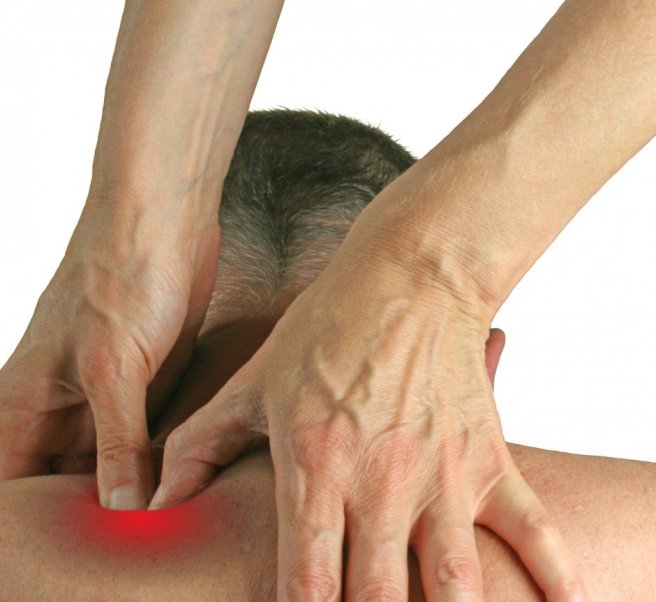
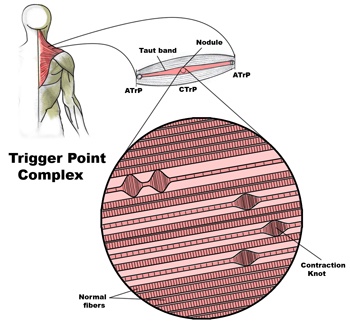
Trigger points are contracted knots in muscles. They form from overload stress causing muscle fibers to become locked together in a self perpetuateing spasm. Trigger points will then produce pain, usually deep achy pain, as well as refered pain. Because of the contraction of the tissue trigger points will also produce stiffness and weakness. Trigger points are also known to mimick other symptoms such as Carple tunnel, and sciatica symptoms. Trigger points are one of, if not the most common cause of pain in the body. Regular massage therapy is not specific or deep enough to release trigger points, a specific technique of applying deep focused pressure to the heart of the knot is required for the point to release. This is called trigger point massage.

Trigger point massage.

Myofascial trigger points are contracted knots in muscle tissue. They are one of the most common causes of pain in the body. Most people will experience pain from trigger points at some point in there lives. Trigger point pain is usually felt as a deep achey pain. This pain may be refered In a specific pattern to other areas of the body. For example, trigger points in your hip can refer pain all the way down the leg into the foot. Trigger points will also mimick joint pain leading to misdiagnosis of arthritis. Trigger point massage therapy targets the knots specifically with focused deep work to release the area and allow the muscle to heal. Visit http://www.triggerpointmassagetherapy.info or http://www.aberdeenchiropractic.com for more information.

How to treat a stiff, sore neck.

One of the most common issues that I treat in my clinic on a regular basis is neck stiffness and pain. This is a prevelent problem in our society in large part due to poor posture. Sitting in front of a computer at work all day, or being on you phone will eventually cause the muscles in you neck to become strained and over worked. When this happens the muscles become tight and sore. At this point all the stretching in the world won’t make a difference. A manual intervention such as trigger point massage is needed to allow the muscles to heal and function normally again.

What are trigger points.

What is a Trigger Point?

Trigger Points (TP’s) are defined as a “hyper-irritable spot within a taut band of skeletal muscle. The spot is painful on compression and can evoke characteristic referred pain and autonomic phenomena.”1

Put into plain language, a TP is a painful knot in muscle tissue that can refer pain to other areas of the body. You have probably felt the characteristic achy pain and stiffness that TP’s produce at some time in your life.

Trigger points in the upper traps.

One of the most common issues that I treat on a daily basis is trigger points in the upper traps. The trapezius muscle or “traps” is a large diamond shaped muscle located in you back and neck. The upper portion of this muscle is one on the most common areas to become strained due to poor posture or emotional stress. When this

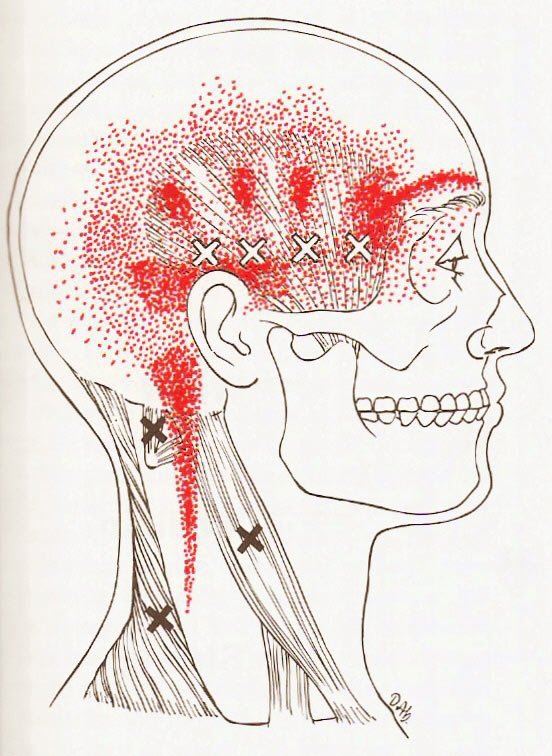
happens trigger points are sure to develop. These points will cause pain to be felt up the neck, behind the ear, and traveling to the temple. Trigger points in the upper traps are one of the most common causes of headache pain, as well as a stiff neck.

Stiff neck and trigger points.

Myofascial trigger points in the neck muscles are one of the most common causes of neck pain and stiffness. Poor posture and stress can cause muscles in the neck to become overworked and strained. When this happens trigger points will form. These points of contracted muscle will cause pain, referred pain (often into the head), as well as stiffness and weakness. Trigger points won’t resolve on there own, a manual release such as trigger point massage is required to treat the problem.

Trigger points and headaches

One of the most common sources of headache pain is trigger points in the neck muscles. These muscles are often overloaded from poor posture such as sitting in front of a computer or looking down at you phone for long periods of time. Trigger points that form in the upper traps are the most common trigger points in the body. They refer pain up the neck, behind the ear into the temple. The suboccipital muscles refer pain deep into the skull behind the eye. Sternocleidomastoid trigger points will refer pain to the top of the head and around the orbit of the eye. Trigger points need to be manually released to be resolved.

Myofascial pain syndrome

Myofascial pain syndrome is caused by a stimulus, such as muscle tightness, that sets off trigger points in your muscles. Factors that may increase your risk of muscle

trigger points include:

  • Muscle injury. An acute muscle injury or continual muscle stress may lead to the development of trigger points. For example, a spot within or near a strained muscle may become a trigger point. Repetitive motions and poor posture also may increase your risk.
  • Stress and anxiety. People who frequently experience stress and anxiety may be more likely to develop trigger points in their muscles. One theory holds that these people may be more likely to clench their muscles, a form of repeated strain that leaves muscles susceptible to trigger point

Trigger points and myofascial pain.


Sensitive areas of tight muscle fibers can form in your muscles after injuries or overuse. These sensitive areas are called trigger points. A trigger point in a muscle can cause strain and pain throughout the muscle. When this pain persists and worsens, doctors call it myofascial pain syndrome.