Headache & Dizzy. When To Be Concerned.

Last week, we discussed some startling new research that found that lightheadedness upon standing up (orthostatic hypotension) may be more serious than previously thought. This month, we’ll look specifically at headache AND dizziness and if we should we be concerned about this combination of complaints and if so, when?

A team of researchers from Johns Hopkins University reviewed past medical records of 187,188 patients presenting to over 1,000 emergency departments (EDs) between 2008 and 2009. They found the combination of headache and dizziness—especially in women, minorities, and young patients—was a potential signal of an impending stroke!

Specifically, they reported that 12.7% of people complaining of headache and dizziness were later admitted for stroke and had been misdiagnosed and inappropriately sent home from the ED within the previous 30 days. Patients were told they had a “benign condition” such as inner ear infection or migraine, and in some cases, they weren’t given a diagnosis at all. Slightly less than half of this population had a stroke within seven days and over half had a stoke within the first 48 hours of the initial pre-stroke ED presentation!

The study reported that women were 33% and minorities 20-30% more likely to be misdiagnosed, suggesting gender and racial disparities may play a role. The researchers estimate that doctors miss 15,000 to 165,000 strokes that result in harm to the patient each year.

Studies have found that the early diagnosis and quick treatment of strokes is critical in reducing serious residuals in patients having a transient ischemic attach (TIA), sometimes referred to as a “mini-stroke” or “pre-stroke.” TIAs are often pre-cursors to a more catastrophic stroke leading to death or permanent disability without appropriate treatment.

Again, to put this in perspective, MANY people present to healthcare providers with headaches and dizziness with NO relationship to stroke—about 87%—though it is sometimes not possible to know whether a potentially dangerous problem may arise in the near future. The good news is that it usually does not!

The importance of this study is to alert both healthcare providers AND patients of the potential risk. When in doubt, it’s ALWAYS best to seek out multiple opinions. An MRI may be the best way to confirm the most common type of stroke (according the study reviewed above), as a CT scan may not show the brain changes early on and could lead to false reassurance.


Doctors of chiropractic commonly see patients presenting with headaches and dizziness. When this occurs suddenly, out of the ordinary, and/or at a relatively young age (women > men), it’s better to be safe than sorry and obtain multiple opinions, especially WHEN IN DOUBT!

Trigger points in the sternocleidomastoid muscle. By Bryan Cobb RMT.

Screen Shot 2017-12-01 at 10.39.50 AM.png

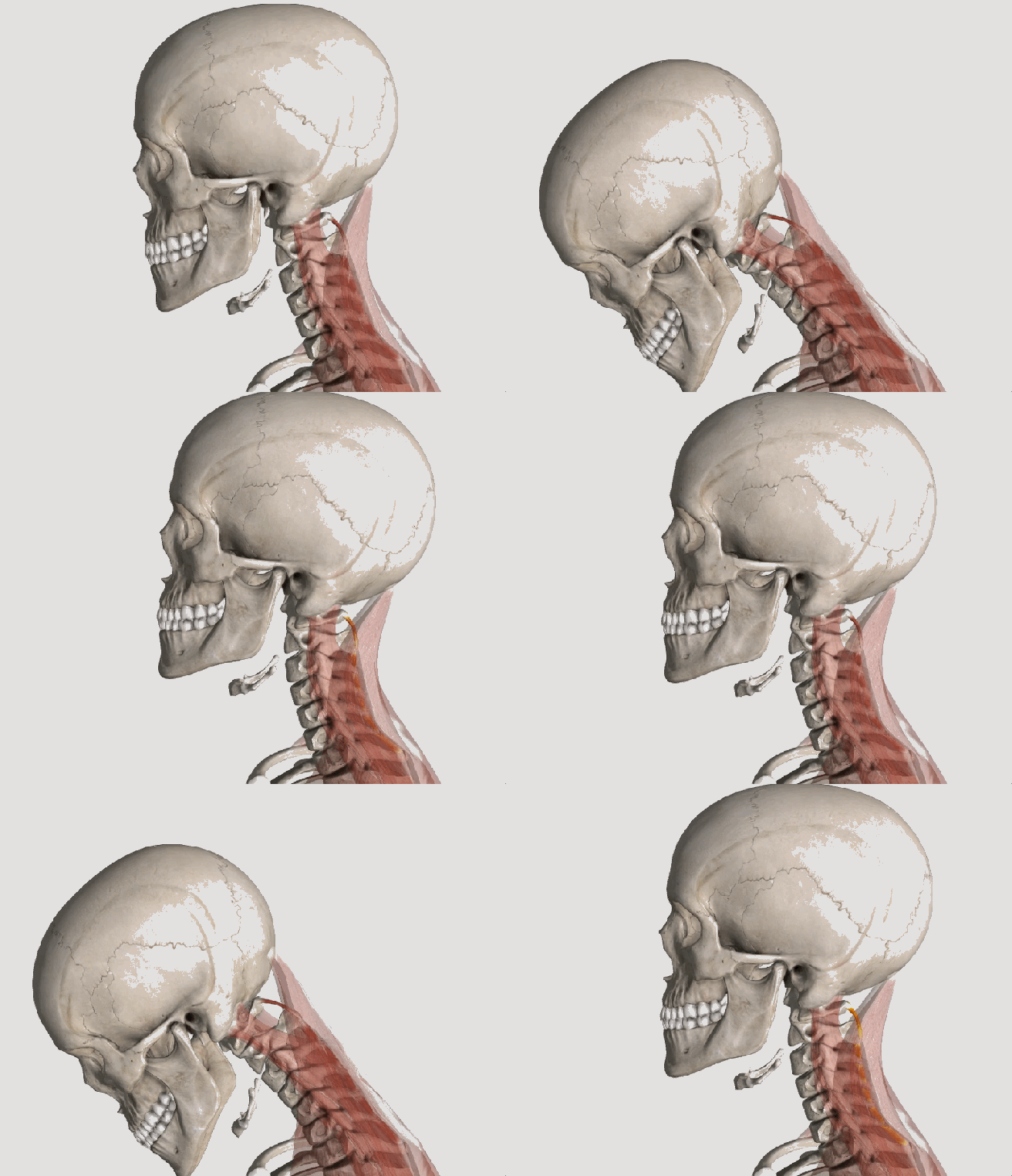
The sternocleidomastoid muscle or “scm” is a strap like muscle located in the front of the neck. It originates on the manubrium of the sternum and the medial clavicle, and inserts on the mastoid process of the temporal bone( the lump or bone behind the ear). When working together the scm flexes the head and neck. The actions of one muscle working by itself is to rotate the face to the opposite side and lift it toward the ceiling.

Trigger points in this muscle usually form due to acute injury or to chronic postural stress. These trigger points can cause a wide variety of symptoms including pain felt in the cheek, temple, forehead, top of the head, and base of the skull. Trigger points in these muscles can also refer deep into the ear and cause postural dizziness.

I get dizzy when I have a headache. Should I worry?

Vertigo_view_03,_Andels_Hotel_Łódź.jpg

Dizziness, neck pain, and headaches are very common symptoms that may or may not occur at the same time. Though this interrelationship exists, this month’s article will focus primarily on dizziness, particularly related to dizziness that occurs after standing.

First, it is important to point out that it is VERY common to be light headed or dizzy when standing up too fast, which is typically referred to as orthostatic hypotension (OH). OH is frequently referred to as a benign symptom, but new information may challenge this thought.

Let’s review what happens. When we are lying down, our heart does not have to work as hard as when we are upright; therefore, our blood pressure (BP) is usually lower while we lay in bed. When standing up, blood initially pools in the legs until an increase in blood pressure brings oxygen to the brain. This either resolves or prevents dizziness.

Orthostatic hypotension is defined as a blood pressure drop of >20 mm Hg systolic (the upper number—heart at FULL contraction), 10 mm Hg diastolic (lower number—heart at FULL rest), or both. This typically occurs within seconds to a few minutes after rising to a standing position.

There are two types of OH—delayed OH (DOH) where the onset of symptoms are not immediate but occur within three minutes of standing and “full” OH, which is more serious and occurs immediately upon rising. According to a 2016 study published in the prestigious journal Neurology, researchers reviewed the medical records of 165 people who had undergone autonomic nervous system testing for dizziness. The subjects averaged 59 years of age, and 48 were diagnosed with DOH, 42 with full OH, and 75 subjects didn’t have either condition.

During a ten-year follow-up, 54% of the DOH group progressed to OH, of which 31% developed a degenerative brain condition such as Parkinson’s disease or dementia. Those with initial DOH who also had diabetes were more likely to develop full OH vs. those without diabetes.

The early death rate in this 165 patient group was 29% for those with DOH, 64% with full OH, vs. 9% for those with neither diagnosed condition. The authors point out that those initially diagnosed with DOH who did NOT progress into full OH were given treatment that may have improved their blood pressure.

The authors state that a premature death might be avoided by having DOH and OH diagnosed and properly managed as early as possible. They point out that a prospective study is needed since this study only looked back at medical records of subjects who had nervous system testing performed at a specialized center, and therefore, these findings may not apply to the general population.

The value of this study is that this is the FIRST time a study described OH (or DOH) as a potentially serious condition with recommendations NOT to take OH/DOH lightly or view it as a benign condition. Since doctors see this a lot, a closer evaluation of the patient is in order.

Do I have a tension headache? Or Migranes?

Cervicogenic

Most likely, everyone reading this article has had a headache at one time or another. The American Headache Society reports that nearly 40% of the population suffers from episodic headaches each year while 3% have chronic tension-type headaches. The United States Department of Health and Human Services estimates that 29.5 million Americans experience migraines, but tension headaches are more common than migraines at a frequency of 5 to 1. Knowing the difference between the two is important, as the proper diagnosis can guide treatment in the right direction.

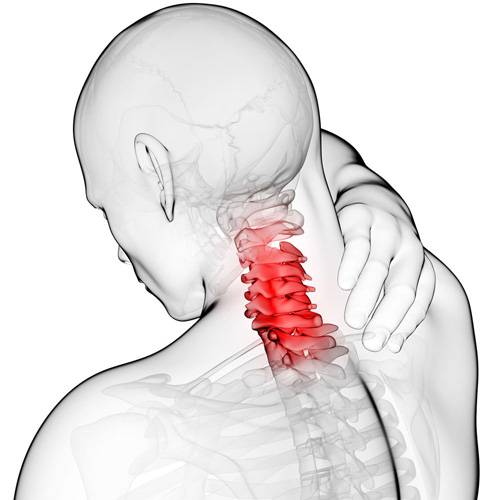
TENSION HEADACHES: These typically result in a steady ache and tightness located in the neck, particularly at the base of the skull, which can irritate the upper cervical nerve roots resulting in radiating pain and/or numbness into the head. At times, the pain can reach the eyes but often stops at the top of the head. Common triggers include stress, muscle strain, or anxiety.

MIGRAINE HEADACHES: Migraines are often much more intense, severe, and sometimes incapacitating. They usually remain on one side of the head and are associated with nausea and/or vomiting. An “aura”, or a pre-headache warning, often comes with symptoms such as a bright flashing light, ringing or noise in the ears, a visual floater, and more. For migraine headaches, there is often a strong family history, which indicates genetics may play a role in their origin.

There are many causes for headaches. Commonly, they include lack of sleep and/or stress and they can also result from a recent injury—such as a car accident, and/or a sports injury—especially when accompanied by a concussion.

Certain things can “trigger” a migraine including caffeine, chocolate, citrus fruits, cured meats, dehydration, depression, diet (skipping meals), dried fish, dried fruit, exercise (excessive), eyestrain, fatigue (extreme), food additives (nitrites, nitrates, MSG), lights (bright, flickering, glare), menstruation, some medications, noise, nuts, odors, onions, altered sleep, stress, watching TV, red wine/alcohol, weather, etc.

Posture is also a very important consideration. A forward head carriage is not only related to headaches, but also neck and back pain. We’ve previously pointed out that every inch (2.54 cm) the average 12 pound head (5.44 kg) shifts forwards adds an EXTRA ten pounds (4.5 kg) of load on the neck and upper back muscles to keep the head upright.

So, what can be done for people who suffer from headaches? First, research shows chiropractic care is highly effective for patients with both types of headaches. Spinal manipulation, deep tissue release techniques, and nutritional counseling are common approaches utilized by chiropractors. Patients are also advised to use some of these self-management strategies at home as part of their treatment plan: the use of ice, self-trigger point therapy, exercise (especially strengthening the deep neck flexors), and nutritional supplements.

Whiplash and Your Posture

WRD 2.gif

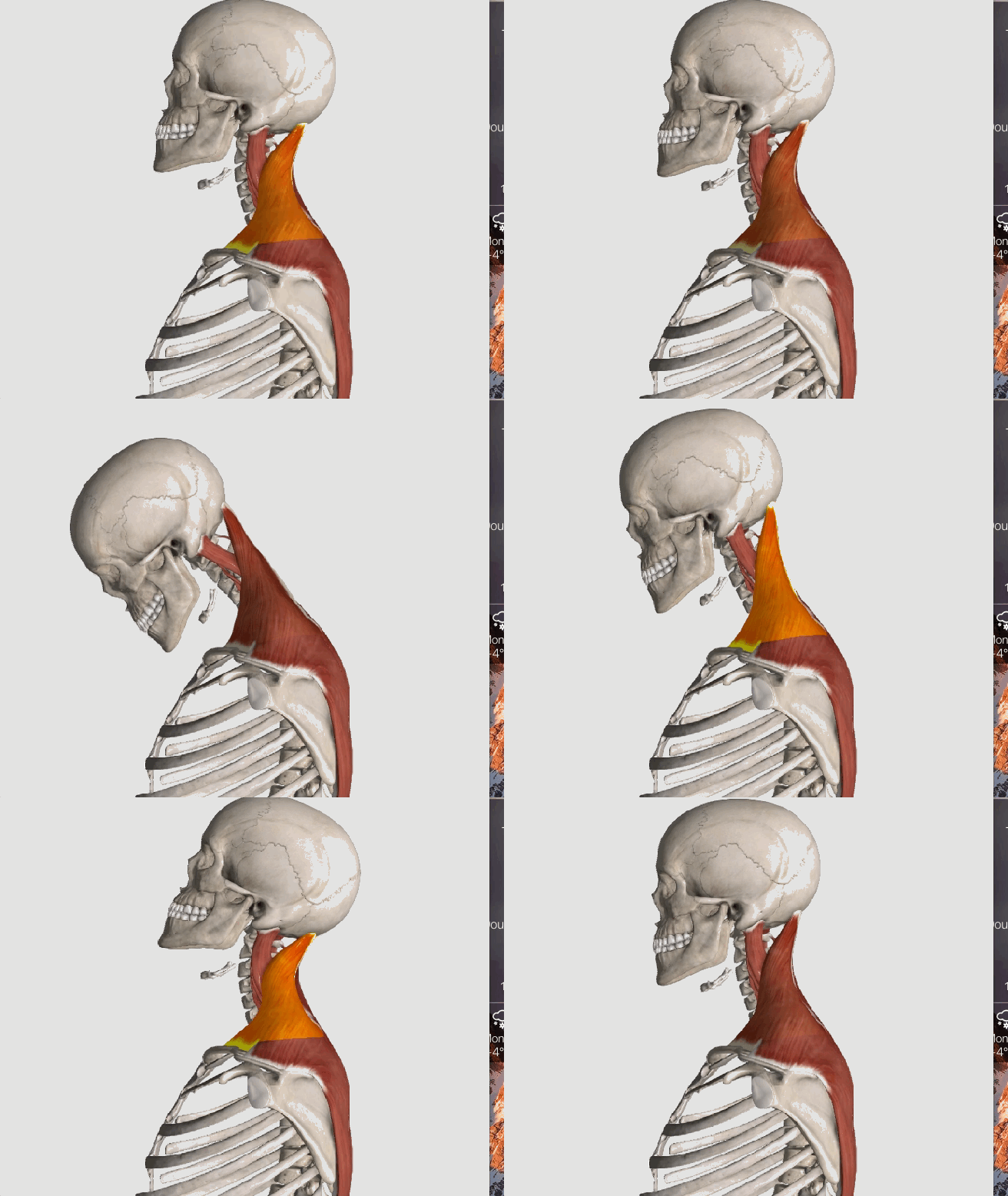
Posture assessment is a key component of the chiropractic examination, and the posture of the head and neck is especially important for a patient recovering from a whiplash injury. Forward head carriage describes a state in which the head sits more forward on the shoulders than it should. In order for the muscles in the neck and shoulders to keep the head upright, they must work harder. This added strain can increase one’s risk for neck pain and headaches, which is why retraining posture is a key component to the management of neck pain and headaches in patients with or without a history of whiplash.

Forward head carriage also increases the distance between the back of the head and the headrest in the seated position, especially when the seat is reclined. In a rear-end collision, a gap greater than a half an inch between the head rest and the back of the head increases the probability of injury due to the greater distance the head can hyperextend as it rebounds backwards into the headrest.  This makes posture correction of forward head carriage an important aspect of treatment from both a preventative and curative perspective.

So this begs the question, can forward head carriage be corrected?  The simple answer is “yes!” One study evaluated the effects of a 16-week resistance and stretching program designed to address forward head posture and protracted shoulder positioning.

Researchers conducted the study in two separate secondary schools with 130 adolescents aged 15–17 years with forward head and protracted shoulder posture. The control group participated in a regular physical education (PE) program while the experimental group attended the same PE classes with the addition of specific exercises for posture correction. The research ream measured the teens’ shoulder head posture from the side using two different validated methods and tracked symptoms using a questionnaire. The results revealed a significant improvement in the shoulder and cervical angle in the experimental group that did not occur in the control group.

The conclusion of the study strongly supports that a 16-week resistance and stretching program is effective in decreasing forward head and protracted shoulder posture in adolescents.  This would suggest that a program such as this should be strongly considered in the regular curriculum of PE courses since this is such a common problem.

Doctors of chiropractic are trained to evaluate and manage forward head posture with shoulder protraction. This can prove beneficial in both the prevention as well as management of signs and symptoms associated with a whiplash injury.

What is Whiplash?

Up Trap Ext

Whiplash is an injury to the soft-tissues of the neck often referred to as a sprain or strain. Because there are a unique set of symptoms associated with whiplash, doctors and researchers commonly use the term “whiplash associated disorders” or WAD to describe the condition.

WAD commonly occurs as a result of a car crash, but it can also result from a slip and fall, sports injury, a personal injury (such as an assault), and other traumatic causes. The tissues commonly involved include muscle tendons (“strain”), ligaments and joint capsules (“sprains”), disk injuries (tears, herniation), as well as brain injury or concussion—even without hitting the head!

Symptoms vary widely but often include neck pain, stiffness, tender muscles and connective tissue (myofascial pain), headache, dizziness, sensations such as burning, prickly, tingling, numbness, muscle weakness, and referred pain to the shoulder blade, mid-back, arm, head, or face. If concussion occurs, additional symptoms include cognitive problems, concentration loss, poor memory, anxiety/depression, nervousness/irritability, sleep disturbance, fatigue, and more!

Whiplash associated disorders can be broken down into three categories: WAD I includes symptoms without any significant examination findings; WAD II includes loss of cervical range of motion and evidence of soft-tissue damage; and WAD III includes WAD II elements with neurological loss—altered motor and/or sensory functions. There is a WAD IV which includes fracture, but this is less common and often excluded.

Treatment for WAD includes everything from doing nothing to intensive management from multiple disciplines—chiropractic, primary care, physical therapy, clinical psychology, pain management, and specialty services such as neurology, orthopedics, and more. The goal of treatment is to restore normal function and activity participation, as well as symptom management.

The prognosis of WAD is generally good as many will recover without residual problems within days to weeks, with most people recovering around three months after the injury. Unfortunately, some are not so lucky and have continued neck pain, stiffness, headache, and some develop post-concussive syndrome. The latter can affect cognition, memory, vision, and other brain functions. Generally speaking, the higher the WAD category, the worse the prognosis, although each case MUST be managed by its own unique characteristics. If the injury includes neurological loss (muscle strength and/or sensory dysfunction like numbness, tingling, burning, pressure), the prognosis is often worse.

Chiropractic care for the WAD patient can include manipulation, mobilization, and home-based exercises, as well as the use of anti-inflammatory herbs (ginger, turmeric, proteolysis enzymes (bromelain, papain), devil’s claw, boswellia extract, rutin, bioflavonoid, vitamin D, coenzyme Q10, etc.) and dietary modifications aimed at reducing inflammation and promoting healing.

* 83% of those patients involved in an MVA will suffer whiplash injury and 50% will be symptomatic at 1 year.
* 90% of patients with neurologic signs at onset may be symptomatic at 1 year.
* 25- 80% of patients who suffer a whiplash injury will experience late-onset dizziness
* Clinicians should be observant for radiographic signs of instability, including interspinous widening, vertebral subluxation, vertebral compression fracture, and loss of cervical lordosis.
* Horizontal displacement of greater than 3.5 mm or angular displacement of more than 11 degrees on flexion/extension views suggests instability

Can Chiro Help My Headache?

Migrane

Everyone, well at least almost everyone, has had headaches from time to time, and we all know how miserable they can make us feel. In fact, at some point in time, 9 out of 10 Americans suffer from headaches that range between mild and dull to throbbing, intense, and debilitating, sometimes to the point of requiring bed rest in a dark, quiet room.

The common reflex is to reach for that bottle of pills and pray the headache subsides so you don’t have to call in sick and lose another day of productivity when you have so much to do. Unfortunately, between the side effects of many medications designed to help headaches and the pain associated with the headache, this approach is frequently NOT the answer. So what is?

The good news is that many studies have identified spinal manipulation therapy (SMT), the main type of care utilized by chiropractors, as being very effective for popular types of headaches—in particular tension-type headaches that arise in the neck. An important 2001 study reported that SMT provided almost immediate relief for headaches that arose in the neck with SIGNIFICANTLY fewer side effects and longer-lasting results compared with commonly prescribed medications.

Another interesting study that found similar results included tracking the prevalence/frequency of headaches after treatment stopped. The authors of the study reported the patients receiving SMT had continued to experience sustained benefits throughout the following weeks, and even months, in contrast to those in a medication treatment group where headaches came back almost immediately after they discontinued treatment.

The most commonly prescribed medication for tension-type headaches are non-steroidal anti-inflammatory drugs (NSAIDs). Common over-the-counter options include ibuprofen (Advil, Nuprin, etc.) and Aleve (Naproxen). For those who can’t take NSAIDs because of blood thinning and/or stomach-liver-kidney problems, doctors commonly prescribe acetaminophen (Tylenol), but it can be hard on the liver and kidneys, especially when taken over time.

So, what can you expect from a visit to a chiropractor for your headaches? The typical approach begins with a thorough history and examination with an emphasis of evaluating the neck and its associated function. Your doctor of chiropractic may also perform tests designed to reduce pain and some that provoke a pain response to identify the “pain generator” or cause!

Because each patient is unique, the type of care provided will be individually determined based on the findings, the patient’s age, comfort, and preference of both the provider and patient.

So, the next time you find yourself reaching for pills because of headaches, remember that there are better options! Give chiropractic a try. You’ll be GLAD you did!!!

We realize you have a choice in whom you consider for your health care provision and we sincerely appreciate your trust in choosing our service for those needs.  If you, a friend, or family member requires care for neck pain or headaches, we would be honored to render our services.

Meds or Chiro first?

Head and Neck

Although both medication and chiropractic are utilized by neck pain sufferers, not everyone wants to or can take certain medications due to unwanted side effects. For those who aren’t sure what to do, wouldn’t it be nice if research was available that could answer the question posted above? Let’s take a look!

When people have neck pain, they have options as to where they can go for care. Many seek treatment from their primary care physician (PCP). The PCP’s approach to neck pain management usually results in a prescription that may include an anti-inflammatory drug (like ibuprofen or Naproxen), a muscle relaxant (like Flexeril / cyclobenzaprine), and/or a pain pill (like hydrocodone / Vicodin). The choice of which medication a PCP recommends hinges on the patient’s presentation, patient preference (driven from advertisements or prior experiences), and/or the PCP’s own preference.

Although it’s becoming increasingly common to have a PCP refer a neck pain patient for chiropractic care, this still does not happen for all neck pain patients in spite of strong research supporting the significant benefits of spinal manipulation to treat neck pain. One such study compared spinal manipulation, acupuncture, and anti-inflammatory medication with the objective of assessing the long-term benefits (at one year) of these three approaches in patients with chronic (>13 weeks) neck pain. The study randomly divided 115 patients into one of three groups that were all treated for nine weeks. Comparison at the one-year point showed that ONLY those who received spinal manipulation had maintained long-term benefits based on a review of seven main outcome measures. The study concludes that for patients with chronic neck pain, spinal manipulation was the ONLY treatment that maintained a significant long-term (one-year) benefit after nine weeks of treatment!

In a 2012 study published in medical journal The Annals of Internal Medicine, 272 acute or sub-acute neck pain patients received one of three treatment approaches: medication, exercise with advice from a health care practitioner, or chiropractic care. Participants were treated for twelve weeks, with outcomes assessed at 2, 4, 8, 12, 26, and 52 weeks. The patients in the chiropractic care and exercise groups significantly outperformed the medication group at the 26-week point AND had more than DOUBLE the likelihood of complete neck pain relief. However, at the one-year point, ONLY the chiropractic group continued to demonstrate long-term benefits! The significant benefits achieved from both exercise and chiropractic treatments when compared with medication make sense as both address the cause of neck pain as opposed to only masking the symptoms.

With results of these studies showing acute, subacute, as well as chronic neck pain responding BEST to chiropractic care, it only makes sense to TRY THIS FIRST!

Chiropractic & Headaches

Migrane

According to the World Health Organization, headaches are among the most common disorders of the nervous system affecting an estimated 47% of adults during the past year. Headaches place a significant burden on both quality of life (personal, social, and occupational) and financial health. They are usually misdiagnosed by healthcare practitioners, and in general, are underestimated, under-recognized, and under-treated around the world. So, what about chiropractic and headaches… Does it help?

Suffice it to say, there are MANY studies showing chiropractic care helps headache sufferers. For instance, in a review of past research studies using an “evidence-based” approach, chiropractic treatment of adults with different types of headaches revealed very positive findings! Researchers note that chiropractic care helps those with episodic or chronic migraine headaches, cervicogenic headache (that is, headaches caused by neck problems), and tension-type headaches (chronic more than episodic). There appears to be additional benefit when chiropractic adjustments are combined with massage, mobilization, and/or adding certain types of exercises, although this was not consistently studied. In the studies that discussed adverse or negative effects of treatment, the researchers noted no serious adverse effects.

In patients suffering from athletic injuries, particularly post-concussion headache (PC-HA), chiropractic care can play a very important role in the patient’s recovery. With an estimated 1.6 to 3.8 million sports-related brain injuries occurring each year, approximately 136,000 involve young high school athletes (although some argue this is “grossly underestimated”).

Several published case studies report significant benefits for post-concussion patients after receiving chiropractic care, some of which included PC-HA from motor vehicle collisions, as well as from slips and falls. For example, one described an improvement in symptoms that included deficits in short-term memory as well as attention problems. In this particular study, a six-year-old boy fell from a slide in the playground, and after 18 months of continuous problems, underwent a course of chiropractic care. After just three weeks of care, his spelling test scores improved from 20% to 80% with even more benefits observed by the eighth week of care!

Another case study looked at a 16-year-old male teenager with a five-week-old football injury who had daily headaches and “a sense of fogginess” (concentration difficulties). He reported significant improvement after the second visit, with near-complete symptom resolution after the fifth visit (within two weeks of care). After seven weeks of care, he successfully returned to normal activities, including playing football.

Dizziness and vertigo are also common residuals from concussion and were present in a 30-year-old woman just three days following a motor vehicle accident. She also complained of headache, neck pain, back pain, and numbness in both arms. The case study noted significant improvement after nine visits within an 18-day time frame.

We realize you have a choice in whom you consider for your health care provision and we sincerely appreciate your trust in choosing our service for those needs.  If you, a friend, or family member requires care for neck pain or headaches, we would be honored to render our services.

Neck Pain Reduction Strategies

Cervical Strain

Neck pain is very common! According to one study, between 10-21% of the population will experience an episode of neck pain each year with a higher incidence rate among office workers. Between 33-65% will recover within one year, but most cases become “chronic, recurrent” meaning neck pain will come and go indefinitely. The more we can learn WHAT to do to prevent these episodes, the better.

1.  SLEEP: Use a cervical pillow so the NECK is fully supported during sleep. This keeps your head in alignment with your spine. Also, if possible, sleep on your back!

2. OFFICE: Position the computer screen so that it’s at or slightly below eye level and straight in front of you. The “KEY” point is that you feel comfortable with the height of the monitor. Keep your chin “tucked in” so the 10-11 pound (4.5-5 kg) weight of your head stays back over your shoulders—this will place less of a load on your upper back and neck muscles to hold your head upright! Set a timer on your cell phone to remind you to get up and move around every 30-60 minutes.

3. TELEPHONE: If you are using the phone a lot during the day, GET A HEADSET! If you are pinching the phone between your shoulder and ear, you WILL have neck problems!

4.  EXERCISE: Studies show people who are more physically active are less likely to report neck pain.

5.  NUTRITION: Search for information on the “anti-inflammatory diet.” It’s basically fruits, veggies, and lean meat, with a few other twists. Also, stay hydrated by drinking plenty of water each day.

6.  LIFT/CARRY: A heavy purse, brief case, or roller bag can really hurt your neck. Take ONLY what you need and put the rest in a secondary bag that stays in your car or where you can access it when needed. Switch to a backpack if possible vs. a heavy brief case.

7.  SELF-MASSAGE: Reach back and dig your fingers into your neck muscles and “work” the tight fibers back and forth until they loosen up. Roll your head over the top edge of a chair by sliding down until the top of the chair back rests in your neck. Search for the tight fibers and work them loose!

8.  WHIPLASH: If you are injured, DO NOT WAIT! Those who seek chiropractic care shortly after an accident have less long-term trouble!