Trigger points can be found in all soft tissue.

Trigger points don’t just form in muscles. Any soft tissue or connective tissue can become damaged and develop trigger points. Once a trigger point has formed it will produce a large variety of painful symptoms. Visit http://www.aberdeenchiropractic.com for more information on trigger points and trigger point massage therapy.

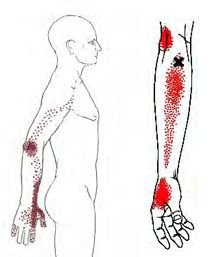
The brachioradialis muscle is located in your forearm, this muscle is responsible for helping to flex the elbow during semi pronation. Because of this it is sometimes called your drinking muscle. trigger points in this muscle will cause pain to refer into the elbow, down the forearm and into the hand. When severe enough trigger point pain can event travel up the arm.

Trigger points in your “Lats”

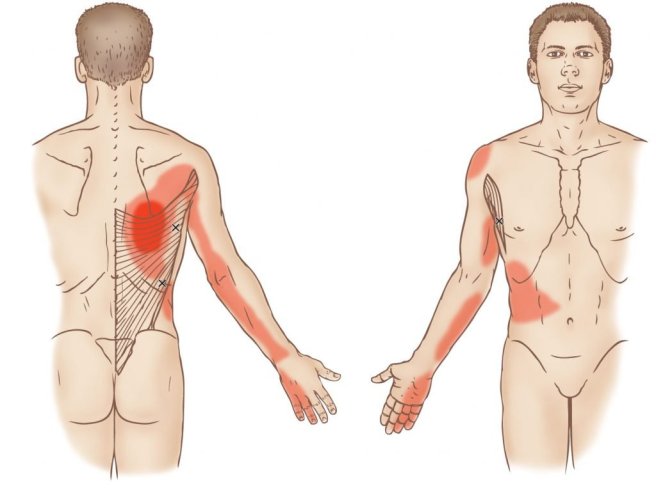
Your lats, or your latissimus dorsi muscles are the largest muscles of the back. They are responsible for adducting and medially rotating the arm. This muscle also produces extension at the shoulder joint. When trigger points for In this muscle, they can refer pain into the back, down the inside of the arm into the hand. These trigger points can also cause pain to be felt into the front of the shoulder. Once formed trigger points will not release on there own. They require a manual release technique like trigger point massage.

Trigger point massage therapy.

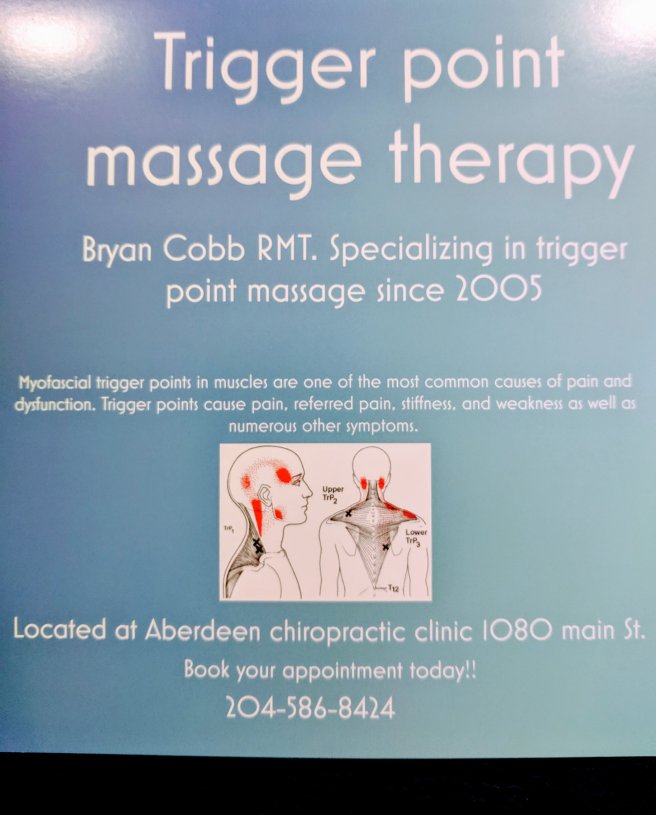
Trigger points are hyper irritable knots found in muscle tissue. These points form in a muscle due to overload stress. Trigger points can form anywhere, in any muscle. Once formed they irritate sensory nerves and produce pain, refered pain, weakness, and stiffness. Trigger points will also mimic symptoms of other conditions such as “sciatica” or Carple tunnel syndrome. Trigger points will not go away on there own, they must be manually released with hands on techniques like trigger point massage.

How trigger points form.

Activation of trigger points may be caused by a number of factors, including acute or chronic muscle overload, activation by other trigger points (key/satellite, primary/secondary), disease, psychological distress (via systemic inflammation), homeostatic imbalances, direct trauma to the region, collision trauma (such as a car crash which stresses many muscles and causes instant trigger points) radiculopathy, infections and health issues such as smoking.

Trigger point signs and symptoms

Pain related to a discrete, irritable point in skeletal muscle or fascia, not caused by acute local trauma, inflammation, degeneration, neoplasm or infection.
The painful point can be felt as a nodule or band in the muscle, and a twitch response can be elicited on stimulation of the trigger point.
Palpation of the trigger point reproduces the patient’s complaint of pain, and the pain radiates in a distribution typical of the specific muscle harboring the trigger point.

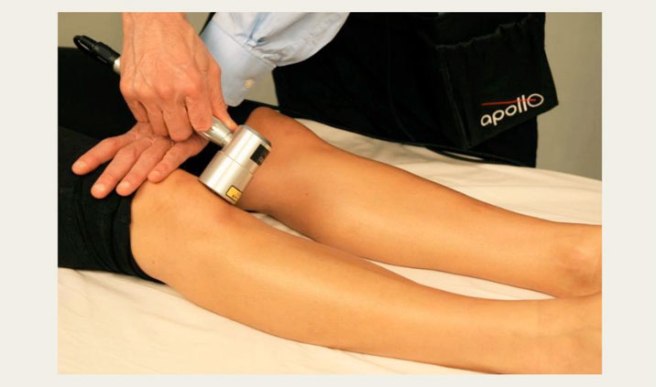
How Does Laser Work? 

Over 2000 published research studies demonstrate:

• Laser therapy improves blood flow and lymphatic drainage
• Laser therapy has a strengthening effect on tissue repair
• It is an effective means of relief for many pain syndromes
• It can improve immune response
• Enhanced nerve regeneration & function
• Increased microcirculation & vasodilation
• Increased lymphatic flow
• Increased collagen production
• Increases the speed, quality and tensile strength of tissue repair
• Reduced inflammation
• Enhanced angiogenesis (creation of new blood vessels)


Call us today for more information about Class IV laser therapy and how it can help you!


knee-apollo-image-716


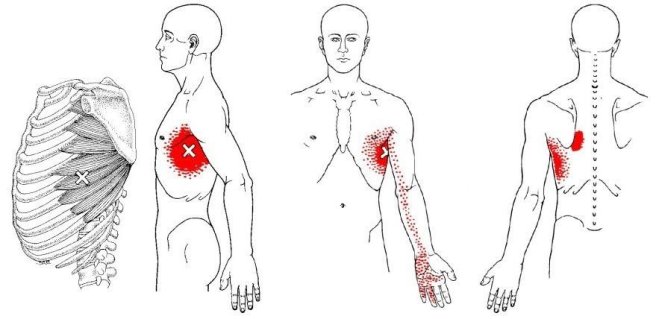
Trigger points in the serratus anterior.

The serratus anterior muscle is responsible for scapular and rib movement and stability. This muscle can become overloaded from poor posture of the shoulders, as well as heavy breathing from exertion. Trigger points in this muscle will cause pain to be felt under the armpit into the shoulder blade area, and down the arm into the fingers.

Trigger points up close.

trigger points are one of the most common sources of pain in the body. Once a trigger point has formed it won’t release on its own. Trigger point massage is one of the most effective way to release a point. It involves using a deep focused pressure applied directly to the knot. This frees the contracted tissue and stimulates healing.