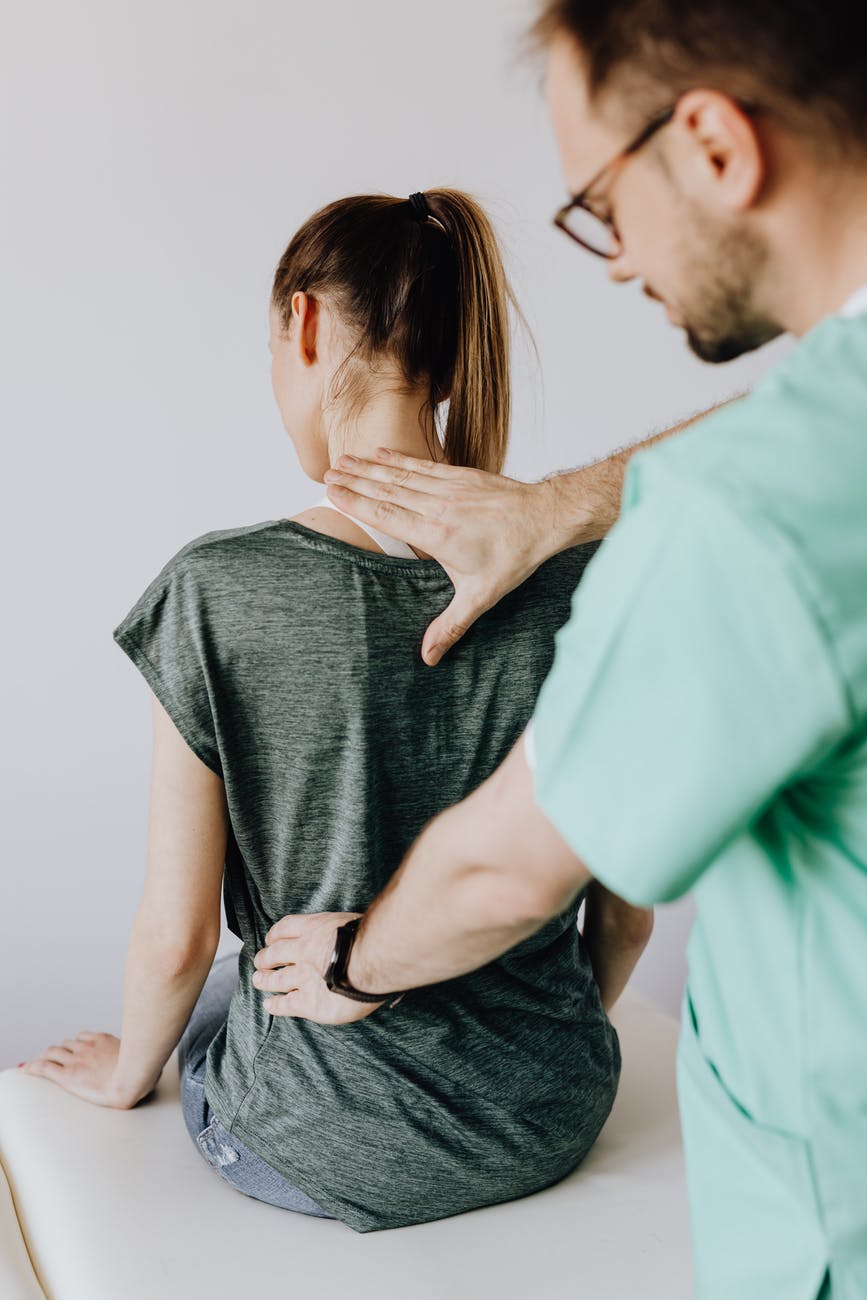
Low Back and Hip Stretch For Athletes

So I was checking out Twitter today and this stretch came across my timeline:

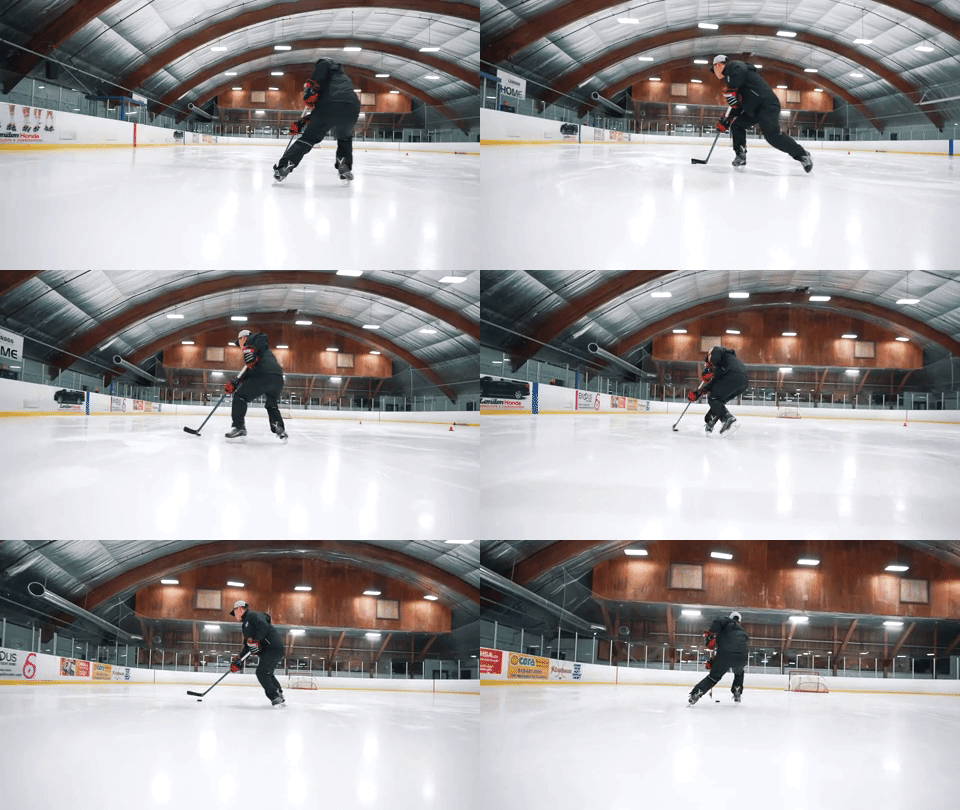
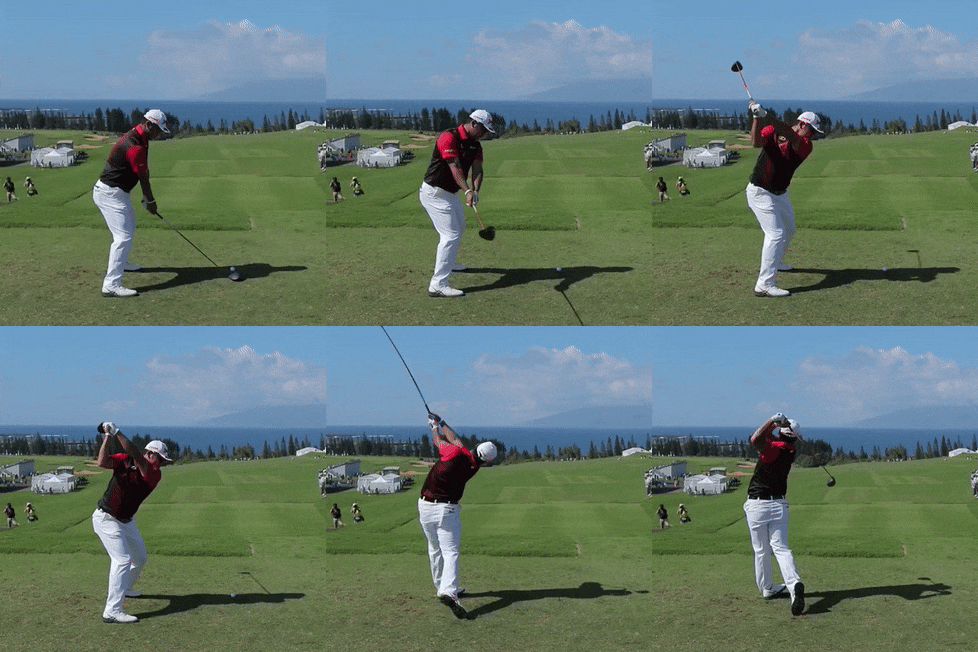
Now, this IS NOT a stretch for the beginner, someone with active low back pain, someone with an injury to the area that is under care, etc…. What this IS, is a stretch for rotational athletes (frankly, any athlete) and hip focused athletes to gain range of motion in their hips, low back and thoraco-lumbar junction.

Golfers, Baseball Players, Hockey Players, Wrestlers…. These are all examples of athletes who would benefit from this stretch as part of their performance training. Talk to your Strength and Conditioning coach about this stretch and see if they can fit it into your programming.

#Athletes

#HipMobility

#LowBack

#PowerProduction

#Chiropractic

Contact us for treatment in Winnipeg

Find and Follow us on Twitter and Instagram!

Hips, Hips, Hips

Patellar bursitis

Patellar bursitis is the irritation of the bursa in the front of the knee, just below the kneecap. It is covered by the patellar tendon that connects the kneecap to the tibia.

Sports and activities that require the quadriceps muscles to be repeatedly contracted or stretched while running, hiking, or any other extended activity can cause irritation of the bursa and sometimes inflammation. Patellar bursitis may also occur as a result of trauma directly to the knee.

The bursa is a small fluid-filled sac. The bursa, located in the front of the knee below the kneecap, acts as a lubricant to reduce friction between the patellar tendon and the tibia.

Each person will react differently after an injury and recovery will depend on the severity of the injury. Patellar bursitis can produce, but is not limited to pain in the front of the knee, localized edema due to swelling of the bursa and reduced mobility in the knee. Symptoms are usually worse while running, walking on a sloping surface, climbing and descending stairs, and squatting.

Your rehabilitation plan, health profile, fitness level and nutritional status affect the recovery time. In most cases, you can expect a full recovery from patellar bursitis. As a general rule, this condition may take a few months to fully recover.

Class IV Laser is a large part of our treatments. It provides safe and effective, treatment for knee pain and injury. Patients generally respond well to treatments and should notice pain relief after a few treatments. Our treatments use the latest Class IV Lasers and as well as other therapies including myofascial release and acupuncture to help reduce the pain, strengthen the muscles and increase range of motion. Most importantly these treatments help reduce inflammation/swelling, which helps with increasing function, pain relief and speeding up a return to normal life. 

Need more info? Contact Us Here

Want to see cool pics and fun stuff? Here’s our Instagram

Patellofemoral syndrome

Patellofemoral syndrome is an irritation of the articular surface between the kneecap and the femur, your thigh bone, that causes pain under and around the kneecap.

Climbing stairs, running and walking for a prolonged period of time often increases pain. Pain can also be felt after sitting for a long time or squatting.

Patellofemoral pain is more prevalent among young women than men, and more prevalent in the active population.

Photo by cottonbro on Pexels.com

Generally, the articular cartilage of your kneecap and femur are involved. A weakness of your quadriceps, mostly the internal portion, can be a risk factor. Research also demonstrated the involvement of the fat tissue around your kneecap as a source of pain.

Everyone will react differently after an injury and recovery will depend on the severity of it. Patellofemoral syndrome can cause, but is not limited to, pain at the front of the knee, difficulty with weight-bearing and squatting and sometimes swelling. Pain can also irradiate under and around the knee. Creaking or grinding sensations can occur during physical activity.

Your rehabilitation plan, health, fitness & nutritional status will affect recovery speed. Most of the time, you can expect to recover fully from a patellofemoral syndrome. As a rule of thumb, this condition can take up to three months to fully recover.

Class IV Laser is a large part of our treatments. It provides safe and effective, treatment for knee pain and injury. Patients generally respond well to treatments and should notice pain relief after a few treatments. Our treatments use the latest Class IV Lasers and as well as other therapies including myofascial release and acupuncture to help reduce the pain, strengthen the muscles and increase range of motion. Most importantly these treatments help reduce inflammation/swelling, which helps with increasing function, pain relief and speeding up a return to normal life. 

Relative rest is a good way to protect your knee and prevent further damage, but it’s important to avoid overprotecting your injury. A few days rest with a reduction of activities might be necessary. A quick but progressive return to weight-bearing during your activities of daily living and light cardiovascular exercise that doesn’t cause pain will allow better recovery.

Follow your practitioner’s advice. It will help you manage the different phases of the recovery process and will increase the likelihood of successful rehabilitation. Your practitioner will assist you during your rehabilitation program in order to regain range of motion, strength, endurance and functional status.

As per the principles of rehabilitation for a patellofemoral syndrome, adjusting the volume and intensity of your physical activities is a very important piece for a functional rehabilitation. For this condition, a progressive exercise program performed over a few months period is pretty standard.

Don’t rely on passive treatment only. Each phase of the rehabilitation process is important. Patients that are actively involved in their treatment plan tend to recover faster. Keep in mind that pain is not always a good indicator of tissue damage. As soon as you feel better and the pain is well managed in collaboration with your therapist, you should reintroduce light mobility and strengthening exercises as tolerated.

Chiropractic and Headaches

Chiropractic Headaches
Photo by Marcus Aurelius on Pexels.com

Chiropractic is a drug-free, hands-on approach to health care that includes patient examination, diagnosis and treatment. Chiropractors use adjustments to restore joint function and support the nervous system. Headaches are one of the most common ailments that chiropractors treat. Research shows that chiropractic care is an effective treatment for tension headaches and migraines. A study published in the Journal of Manipulative and Physiological Therapeutics found that chiropractic adjustments helped reduce the frequency, intensity and duration of headaches. If you suffer from headaches, consider seeking chiropractic care to find relief.


If you suffer from headaches, you’re not alone. According to the National Institutes of Health, headache is one of the most common reasons that people see a doctor. While there are many potential causes of headaches, often times they can be treated effectively with chiropractic care. Chiropractic is a drug-free, hands-on approach to health care that includes patient examination, diagnosis and treatment. Chiropractors use adjustments to restore joint function and support the nervous system. Research shows that chiropractic care is an effective treatment for tension headaches and migraines. A study published in the Journal of Manipulative and Physiological Therapeutics found that chiropractic adjustments helped reduce the frequency, intensity and duration of headaches. If you suffer from headaches, consider seeking chiropractic care to find relief.
Headaches are a common ailment, but that doesn’t mean you have to suffer. Chiropractic care is a drug-free, hands-on approach to health care

There are many different types of headaches, but the most common are tension headaches and migraines. Tension headaches are often caused by muscle tension or stress. Migraines are more severe and can be accompanied by symptoms such as nausea, vomiting and sensitivity to light. If you suffer from headaches, it’s important to see a doctor to rule out any underlying medical conditions.

There are many potential causes of headaches, including muscle tension, stress, eyestrain, dehydration and hunger. Often times, headaches can be caused by a combination of factors. If you suffer from frequent or severe headaches, it’s important to see a doctor to rule out any underlying medical conditions.

Chiropractic care is an effective treatment for tension headaches and migraines. A study published in the Journal of Manipulative and Physiological Therapeutics found that chiropractic adjustments helped reduce the frequency, intensity and duration of headaches. If you suffer from headaches, consider seeking chiropractic care to find relief.
Chiropractic care is an effective treatment for tension headaches and migraines. A study published in the Journal of Manipulative and Physiological Therapeutics found that chiropractic adjustments helped reduce the frequency, intensity and duration of headaches. If you suffer from headaches, consider seeking chiropractic care to find relief.

Chiropractic is a drug-free, hands-on approach to health care that includes patient examination, diagnosis and treatment. Chiropractors use adjustments to restore joint function and support the nervous system. Research shows that chiropractic care is an effective treatment for tension headaches and migraines. A study published in the Journal of Manipulative and Physiological Therapeutics found that chiropractic adjustments helped reduce the frequency, intensity and duration of headaches. If you suffer from headaches, consider seeking chiropractic care to find relief.

Headaches are a common ailment, but that doesn’t mean you have to suffer. Chiropractic care is a drug-free, hands-on approach to health care that can be an effective treatment for tension headaches and migraines. If you suffer from headaches, consider seeking chiropractic care to find relief.

If you suffer from headaches, chiropractic care may be able to help. Chiropractic is a drug-free, hands-on approach to health care that includes patient examination, diagnosis and treatment. Chiropractors use adjustments to restore joint function and support the nervous system. Research shows that chiropractic care is an effective treatment for tension headaches and migraines. A study published in the Journal of Manipulative and Physiological Therapeutics found that chiropractic adjustments helped reduce the frequency, intensity and duration of headaches. If you suffer from headaches, consider seeking chiropractic care to find relief.
Spondylolisthesis

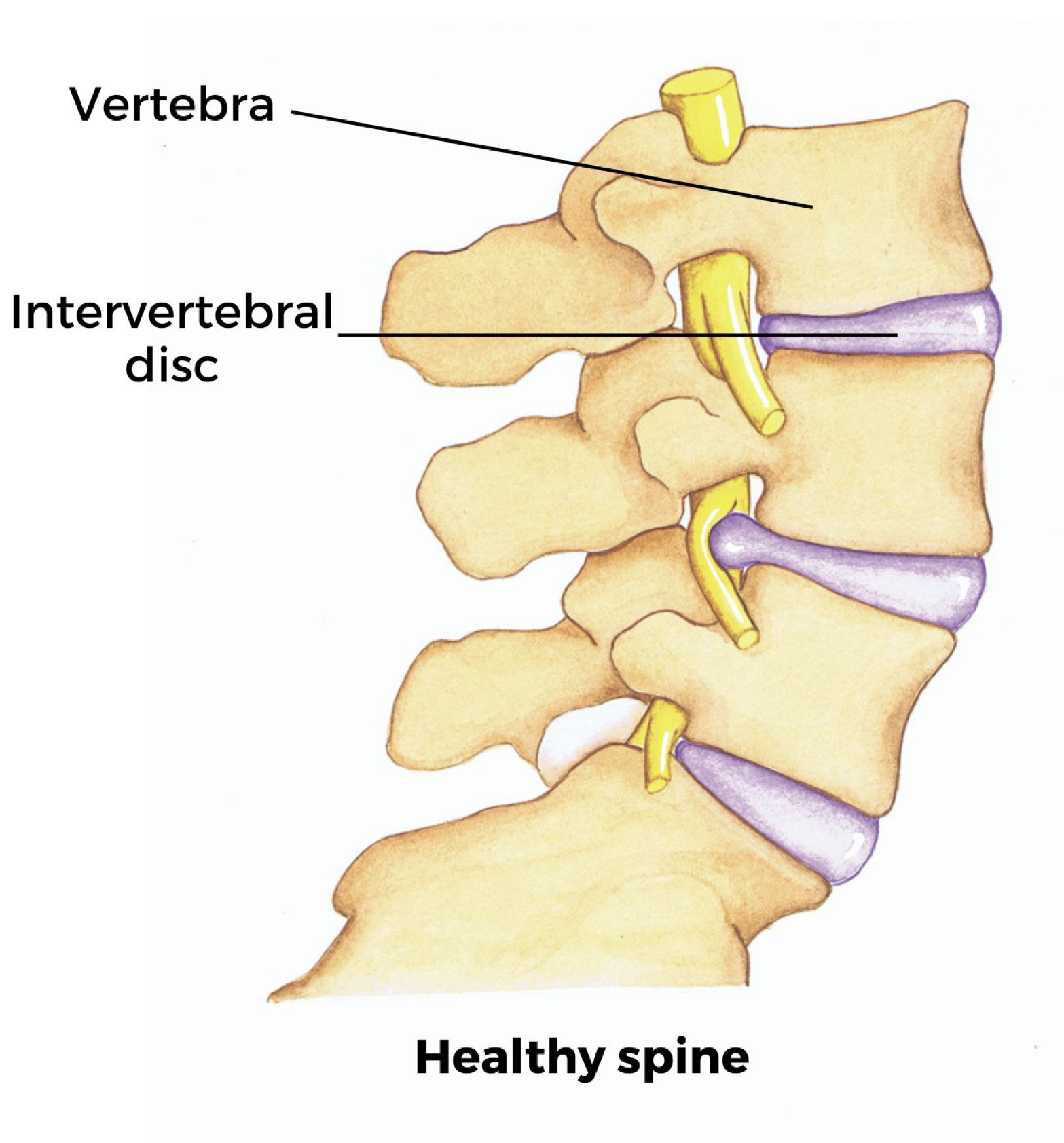
Spondylolisthesis occurs when one vertebra slips out of place. This slight slippage can sometimes cause compression of the nerves and, in some cases, cause tingling, numbness, pain, and even weakness in the legs.

Spondylolisthesis can be the result of a trauma to the spine, a congenital defect or simply be a progression of osteoarthritis. Spondylolisthesis can occur, without apparent cause, as people age. In younger individuals, spondylolisthesis usually occurs as a result of trauma during sports such as gymnastics or football and can cause a fracture in the vertebra.

Spondylolisthesis is found in the spine. The​ spine​ is made up of bones called ​vertebrae​ and between them are the ​intervertebral discs,​ which act as shock absorbers. Spondylolisthesis most often affects the lumbar region, particularly the L5 vertebra.

Each person will react differently to the presence of spondylolisthesis and symptoms can vary considerably. Initially, spondylolisthesis may be present without any noticeable symptoms.

When pain is present, it is often felt in the lower back or the buttocks. It can range from mild to severe and can affect daily activities such as walking. Burning and tingling sensations may be felt in the area of the buttocks and legs.

Sitting or leaning forward is often less painful than standing or walking because of the positioning of the spine.

Relative rest is a good way to protect your back and prevent your condition from getting worse, but it is important to avoid over-protecting it. A temporary reduction in activity may be necessary, but a quick return to your daily activities, light cardiovascular exercise and specific strengthening and mobility exercises will allow for better recovery.

Follow your therapist’s advice. This will help you manage your symptoms and increase the chances of successful rehabilitation. Your therapist will accompany you during your rehabilitation program to restore your mobility, muscle strength and endurance, flexibility and functional status.

According to the principles of spondylolisthesis rehabilitation, the reduction of joint and muscle stresses in the lumbopelvic-hip complex (back, pelvis, hip), the improvement of posture and thoracic mobility, muscular balance and weight control would be important elements for a functional recovery.

A progressive training program over a period of a few weeks including education on load-lifting techniques is quite common.

Do not rely solely on a passive treatment approach. Patients who actively participate in their treatment plan tend to better manage the symptoms caused by spondylolisthesis. Remember that pain is not always a good indicator of tissue damage. As soon as you feel better and the pain is well under control, introduce, in collaboration with your therapist, mild strengthening, mobility and cardiovascular exercises based on your tolerance.

https://aberdeenchiropracticblog.com/about/

https://www.facebook.com/AberdeenChiropractic

https://www.instagram.com/aberdeenchiropracticofficial/

Thoracic Outlet Syndrome

Thoracic Outlet Syndrome

Thoracic Outlet Syndrome

Thoracic outlet syndrome is a collection of symptoms of pain and numbness that can extend from the neck area to the hand.

Symptoms often result from the compression of nerve and blood structures in the space between the scalene muscles in the neck, collarbone and first rib.

Thoracic outlet syndrome occurs more often in people who perform repetitive activities above the shoulders such as swimming, racquet sports or simply in manual workers. This syndrome is more common in women than in men.

Nerves and blood vessels in the space between the muscles of the neck, collarbone and first rib are often involved in this condition.

A fracture of the collarbone, altered posture, a supernumerary rib or overdeveloped chest muscles can lead to thoracic outlet syndrome.

Symptoms depend on which vascular or nerve structures are compressed. Thoracic outlet syndrome can produce, but is not limited to, pain in the neck, shoulder, arm or hand. Symptoms may also include numbness in the forearm and some fingers. People may also experience a feeling of weakness on the affected side.

Compression of the blood vessels may cause a decrease in blood flow to the arm, resulting in increased swelling and redness in that arm. Symptoms usually appear or increase when the arms are extended, or held high above the shoulders for a period of time. They are often more acute at night.

Your rehabilitation plan, health profile and fitness level affect the recovery time. In most cases, you can expect a full recovery from thoracic outlet syndrome. Recovery will depend on the severity of the compression.

A few days of rest by reducing activities that cause pain may be necessary. A gradual return to your daily activities, light cardiovascular exercise and mobility and strengthening exercises will allow for better recovery.

Follow your therapist’s advice. This will help you manage the various stages of the healing process and increase the odds of successful rehabilitation. Your therapist will accompany you during your rehabilitation program to help you regain optimal posture, joint range of motion, muscle flexibility, muscle endurance and functional status.

According to the principles of thoracic outlet syndrome, improving posture and reducing muscle tension would be two important elements for functional recovery. A progressive rehabilitation program over a period of a few weeks is quite common.Do not rely solely on a passive treatment approach. Each phase of the rehabilitation process is important. Patients who actively participate in their treatment plan tend to recover more quickly. Remember that pain is not always a good indicator of tissue damage. As soon as you feel better and the pain is well under control, introduce, in collaboration with your therapist, light and progressive exercises based on your tolerance.

Acupuncture Now Available

Photo by Karolina Grabowska on Pexels.com

Acupuncture and back pain

Back pain (especially lower back pain) is a common chronic pain issue. Acupuncture is a physical therapy that has become a popular and well-researched method for managing this pain. We are excited to now offer acupuncture at Aberdeen Chiropractic.

Acupuncture Now Available In Winnipeg

Treatment consists of inserting needles at various points on the body and through the skin. Needles are not meant to cause pain, harm, or discomfort; in fact many patients barely feel anything at all when the needles are inserted.

A professional acupuncturist will target specific points for treatment called meridians, with some being of special benefit to painful structures in the back.

There are a few meridians that an acupuncturist may focus on for back pain that are actually not IN the back at all.

Some acupuncture points for lower back pain are:

  • back of the knees points
  • foot points
  • lower back points
  • hand points
  • hip points
  • stomach points

Points for upper back pain (also called thoracic spine or T-Spine pain) are often very different. These can be found on the head, neck, shoulders, and upper back.

By stimulating these points, parts of the nervous system are also stimulated to relieve pain. Acupuncture can also provide pain relief from other similar neuromuscular issues for which there may not be too many pain remedy options.

These include:

Acupuncture and Science

There are a few ways by which acupuncture is thought to work for back pain:

  • Stimulates nervous system. Trigger points stimulated by acupuncture could release chemicals from the spinal cord, muscles, and brain. Some of these are naturally pain-relieving.
  • Releases opioid-like chemicals produced in the body. Along the same lines as the theory above, acupuncture may release pain-relieving chemicals. These naturally occur in the body and have similar properties to opioid pain relievers. (Hydrocodone or morphine are examples.)
  • Releases neurotransmitters. These are hormones that send messages regulating the on/off mechanisms of various nerve endings. Acupuncture may stimulate some that shut off pain.
  • Triggers electromagnetic impulses in the body. These impulses can help speed the body’s way of handling pain, including the release of endorphins.

Regardless of how it works, trials on acupuncture for treating back pain show great results with very little risk of side effects.

Some 2012 researchTrusted Source involved reviewing almost 20,000 people with chronic pain. They were given authentic acupuncture treatments, fake treatments, or no acupuncture at all. Those who received real acupuncture experienced 50 percent improvement in their chronic pain issues. 

Two similar reviews from 2013 showed strong favor for acupuncture as successful therapy. These were specifically for chronic lower back pain.

One these studies expressed promise that acupuncture could be better than most pain medications.

What is CST and how can it help?

What is CST and how can it help?

CranioSacral Technique is now available at Aberdeen Chiropractic!

Dr. Natalie Carriere has come on board offering CST, Karen Specific Technique (KST), Acupuncture, Chiropractic, Dry Needling and rehabilitation at Aberdeen Chiropractic.

What is CranioSacral Technique? What does it treat?

CranioSacral Technique (CST) is a light touch treatment method of relieving pain and dysfunction.

CST releases tension to allow the entire body to relax and self-correct. Using gentle, light touch you are evaluated and treated to reduce pain and physical stress.

Because it is such a gentle technique, it is considered an excellent treatment option for patients of all ages, especially newborn and elderly patients who are concerned with what is seen as traditional Chiropractic treatment.

For more information or to book an appointment with Dr. Carriere please call us at 204-586-8424 or email at info@aberdeenchiropractic.com

CranioSacral Technique Is Here!

CranioSacral Technique is especially good at treating headaches.

CranioSacral Technique is here and now available at Aberdeen Chiropractic!

Dr. Natalie Carriere has come on board offering CST, Karen Specific Technique (KST), Acupuncture, Chiropractic, Dry Needling and rehabilitation at Aberdeen Chiropractic.

What is CranioSacral Technique? What does it treat?

CranioSacral Technique (CST) is a light touch treatment method of relieving pain and dysfunction.

CST releases tension to allow the entire body to relax and self-correct. Using gentle, light touch you are evaluated and treated to reduce pain and physical stress.

Because it is such a gentle technique, not is considered an excellent treatment option for patients of all ages, especially newborn and elderly patients who are concerned with what is seen as traditional Chiropractic treatment.

For more information or to book an appointment with Dr. Carriere please call us at 204-586-8424 or email at info@aberdeenchiropractic.com