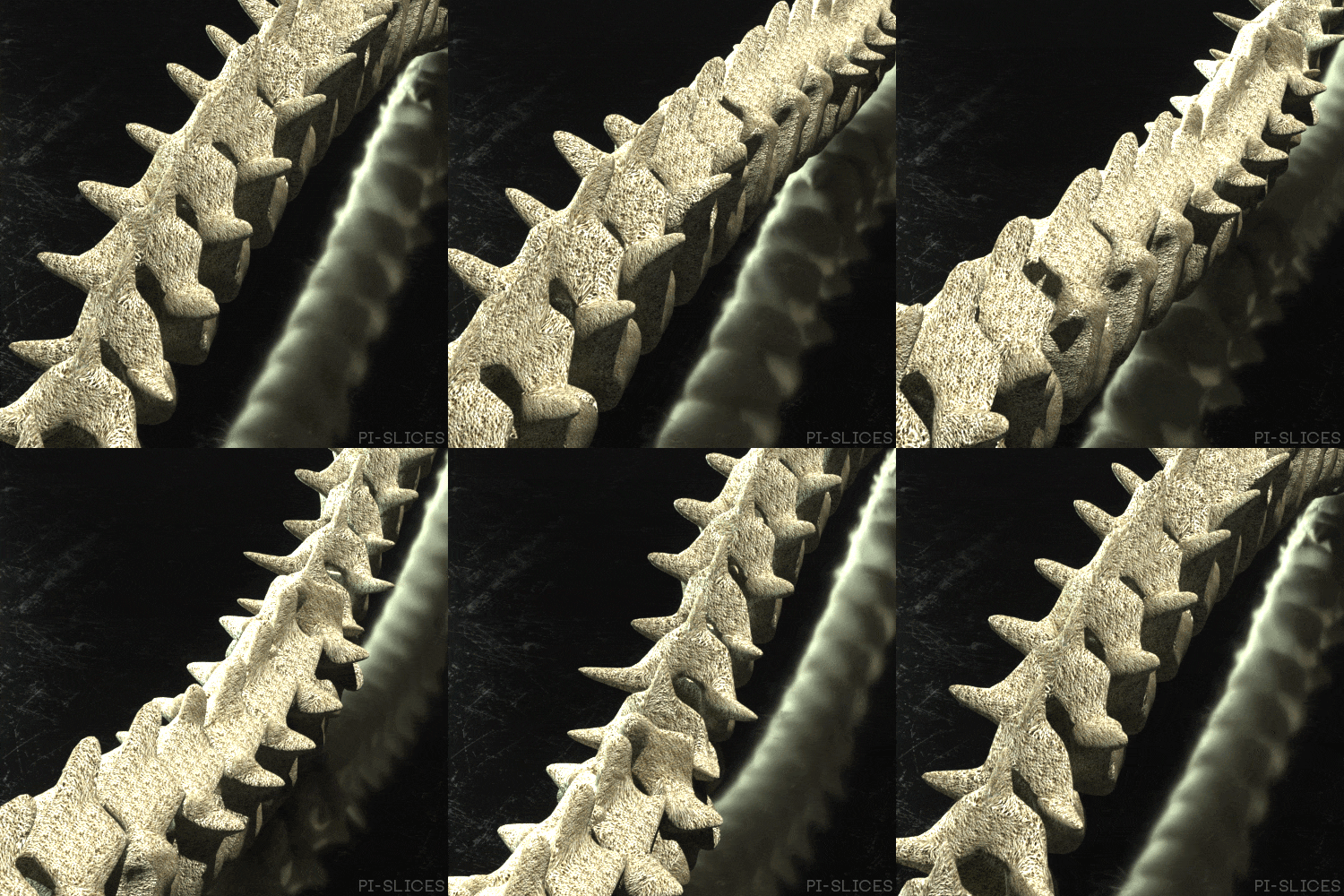
Scoliosis

Scoliosis is a deformation of the spine, that is, a deviation of it, which can vary from mild (10-25 degrees) to severe (> 40 degrees). Scoliosis affects the joints, muscles and surrounding organs such as the shoulders, ribs, hips and lungs. Over time, the rib cage becomes less mobile and makes breathing more difficult.

In most cases, scoliosis is idiopathic, that is, the reason for its occurrence remains unknown. Scoliosis usually progresses over time and often leads to increased curvature and twisting of the spine.

Scoliosis is more common in women than in men and most often presents in young adolescents during growth.

In some cases, scoliosis is hereditary and forms during the development of the fetus. It is also present in neuromuscular conditions such as spina bifida or cerebral palsy. Progressive degeneration of the spine, such as arthritis, can lead to scoliosis in older people.

Sacroiliitis

Sacroiliitis is an inflammatory condition that affects the sacroiliac joint. This joint is located at the base of the spine, where the sacrum meets the pelvis.

This condition can be caused by trauma from a car accident or a fall on the buttocks. An inflammatory condition such as arthritis can also cause sacroiliitis.

Pregnant women can suffer from sacroiliitis. During pregnancy, the stretching of the ligaments makes the joint a little more mobile and this can cause pain.

Sacroiliitis is a very common condition. Pain is usually increased by movement in the acute phase, but improved by it afterwards.

Sacroiliitis can produce, but is not limited to, pain in the buttock area and lower back, that may radiate into the legs. The pain increases with standing or sitting for long periods of time and also increases during periods of activity such as climbing stairs and running. A feeling of stiffness in the lower back and hips is common in the morning. 

#Chiropractic #PainRelief #Healthyliving #LaserTherapy #Winnipeg #BackPain #NeckPain #Headache #Fitness #Athlete #Wellness

Pubalgia Pain

Pubalgia is pain in the central point of the pubis, the pubic symphysis, which develops mainly after overexertion during sports activities. Repeated microtraumas or excessive strain on the abdominal and hip adductor muscles can cause slight shearing of this joint and generate pain felt in the groin area.

Pubalgia can produce, but is not limited to, pain in the pubic area and towards the groin area, difficulty in tolerating weight bearing and impacts during walking and running.

Relative rest is a good way to protect yourself and prevent your pubalgia from getting worse, but it’s important to avoid overprotecting. A few days of rest by reducing activities that cause pain may be needed. A progressive return to your activities of daily living, light cardiovascular activities that do not cause pain, and strengthening exercises will allow for better recovery.

#Chiropractic #PainRelief #Healthyliving #LaserTherapy #Winnipeg #BackPain #NeckPain #Headache #Fitness #Athlete #Wellness

Contact us for treatment in Winnipeg

Find and Follow us on Twitter and Instagram!

Plantar Fasciitis

Plantar fasciitis is a lesion that generally occurs during significant and repetitive stress on the plantar fascia.

It can occur in people who perform activities or sports that involve jumping, running, or sprinting.

Typically, this injury occurs during a period in which training intensity or volume has been increased too quickly with inadequate recovery. The practice of a new activity, a change of training surface, and a rushed transition to another type of shoes can be risk factors.

Plantar fasciitis can produce, but is not limited to, pain on weight bearing and sometimes edema under the arch of the foot near the heel.

The pain is often characterized as a needle-like sensation. Symptoms are usually present upon waking up, particularly during the first few steps.

Treatment of plantar fasciitis consists of Class IV Laser Therapy, management of any biomechanics stresses in the area and exercise rehabilitation to address any weaknesses that can be putting undue stress on the area. 

#LaserTherapy
#footpain
#Winnipeg
#Chiropractic
#LegInjury

Weight Lifting For Weight Loss?

Lifting weights is an important aspect of any weight loss program. While it may seem counterintuitive to lift weights when trying to lose weight, it can actually be an effective way to shed pounds and keep them off. Here are some reasons why lifting weights is important for weight loss:

  1. Increases muscle mass: Lifting weights can help to increase muscle mass, which can boost metabolism and help the body burn more calories. This is because muscle is more metabolically active than fat, meaning that it requires more energy to maintain. By increasing muscle mass, you can increase your resting metabolism and burn more calories throughout the day.
  2. Burns calories: Lifting weights can also help to burn calories during the actual workout. While it may not burn as many calories as cardio exercises like running or cycling, it can still be an effective way to burn calories and contribute to weight loss.
  3. Increases strength: Lifting weights can help to increase strength and improve overall physical fitness. This can be especially beneficial for people who are new to exercise or have been inactive for an extended period of time.
  4. Improves body composition: Lifting weights can help to improve body composition by increasing muscle mass and decreasing body fat. This can lead to a leaner, more toned appearance and improved overall health.
  5. Reduces risk of injury: Lifting weights can help to reduce the risk of injury by increasing muscle strength and improving balance and coordination. This can be especially beneficial for people who participate in high-impact activities or sports.
  6. Enhances weight loss: While lifting weights alone may not lead to significant weight loss, it can be an important component of a weight loss program when combined with a healthy diet and regular cardio exercise. By lifting weights and increasing muscle mass, you can boost metabolism and burn more calories, which can help to enhance weight loss.
  7. Increases bone density: Lifting weights can also help to increase bone density, which can reduce the risk of osteoporosis and other bone-related conditions.
  8. Improves mental health: In addition to the physical benefits, lifting weights can also have a positive impact on mental health. It can help to reduce stress and improve mood, which can be beneficial for people who are trying to lose weight.

It is important to use proper technique when lifting weights to avoid injury and get the most out of the exercise. Here are some additional tips to keep in mind:

  1. Use a weight that is appropriate for your fitness level: It is important to start with a weight that is appropriate for your fitness level and gradually increase the weight as you become stronger. Using too much weight can lead to poor technique and increase the risk of injury.
  2. Keep your form consistent: Maintain proper form throughout the exercise to ensure that you are targeting the correct muscles and reducing the risk of injury.
  3. Focus on good posture: Good posture is essential for proper weight lifting technique. Keep your shoulders back and down and avoid rounding your back or leaning too far forward or backward.
  4. Don’t rush the movement: Take your time with the exercise and focus on good technique rather than trying to lift the weight as quickly as possible.
  5. Warm up properly: It is important to warm up properly before lifting weights to help prevent injury. This can include dynamic stretches and a few warm-up sets with lighter weights.

Why Add Squats?

Squats are a compound exercise that targets the muscles in the legs, hips, and core. They are an effective exercise for building strength and power, and they can be modified to suit different fitness levels. Here are some of the benefits of adding squats to your workouts:

  1. Improved muscle strength and power: Squats are an excellent exercise for building muscle strength and power in the legs, hips, and core. By performing squats regularly, you can increase your muscle strength and improve your overall athletic performance.
  2. Enhanced mobility and flexibility: Squats can help to improve mobility and flexibility in the hips, legs, and lower back. This can be especially beneficial for people who sit for long periods of time and have limited mobility as a result.
  3. Improved balance and coordination: Squats can also help to improve balance and coordination, which can be beneficial for people who participate in sports or other physical activities.
  4. Increased bone density: Squats can help to increase bone density in the legs, which can reduce the risk of osteoporosis and other bone-related conditions.
  5. Improved overall physical fitness: Squats are a great exercise for improving overall physical fitness. They can help to increase cardiovascular endurance, improve muscle endurance, and enhance overall strength and power.
  6. Enhanced functional movements: Squats are a functional exercise that can help to improve everyday movements, such as lifting and carrying objects.
  7. Versatility: Squats can be modified to suit different fitness levels and goals. They can be performed with body weight, with dumbbells or a barbell, or with other types of equipment, such as a Smith machine or a TRX suspension trainer.

It is important to use proper technique when performing squats to avoid injury and get the most out of the exercise. Here are some additional tips to keep in mind:

  1. Use a weight that is appropriate for your fitness level: It is important to start with a weight that is appropriate for your fitness level and gradually increase the weight as you become stronger. Using too much weight can lead to poor technique and increase the risk of injury.
  2. Keep your form consistent: Maintain proper form throughout the exercise to ensure that you are targeting the correct muscles and reducing the risk of injury.
  3. Focus on good posture: Good posture is essential for proper squat technique. Keep your chest up and your shoulders back and down, and avoid rounding your back or leaning too far forward or backward.
  4. Don’t rush the movement: Take your time with the squat and focus on good technique rather than trying to lift the weight as quickly as possible.
  5. Warm up properly: It is important to warm up properly before performing squats to help prevent injury. This can include dynamic stretches and a few warm-up sets with lighter weights.

By adding squats to your workouts and practicing proper technique, you can enjoy the numerous benefits of this effective exercise. Remember to consult with a trained professional, such as a personal trainer or physical therapist, if you have any concerns about your form or if you are new to the exercise. They can help you develop a safe and effective training program that includes squats and other exercises that are suitable for your fitness level and goals.

Have Back Pain or Headaches?

Chiropractic care is a form of healthcare that focuses on the diagnosis and treatment of neuromuscular disorders. It is a popular treatment option for people with back pain or headaches, and it has been shown to be effective in relieving these types of pain. Here are some of the benefits of chiropractic care for people with back pain or headaches:

  1. Non-invasive treatment: Chiropractic care is a non-invasive treatment option, which means that it does not involve the use of drugs or surgery. This can be especially appealing for people who are looking for a natural or alternative treatment option for their pain.
  2. Pain relief: Chiropractic care can be effective in relieving back pain and headaches. It works by manipulating the spine and other joints to correct misalignments and improve overall function. This can help to reduce pain and improve mobility.
  3. Improved mobility: Chiropractic care can help to improve mobility and reduce stiffness in the back and neck. This can be especially beneficial for people who have been dealing with chronic back pain or headaches and have limited mobility as a result.
  4. Enhanced overall well-being: Chiropractic care can help to improve overall well-being by relieving pain and improving mobility. It can also help to reduce stress and improve sleep, which can have a positive impact on overall health and well-being.
  5. Reduced reliance on pain medication: Chiropractic care can be an effective treatment option for people who are looking to reduce their reliance on pain medication. It can provide relief for chronic pain without the use of drugs, which can have side effects and be addictive.
  6. Safe and effective: Chiropractic care is generally considered to be safe and effective, with few side effects. It is important to note, however, that chiropractic care may not be suitable for everyone. It is important to consult with a chiropractor to determine if chiropractic care is the right treatment option for you.
  7. Preventative care: Chiropractic care can also be used as a form of preventative care to help reduce the risk of developing back pain or headaches. Regular chiropractic adjustments can help to maintain proper spinal alignment and improve overall function, which can help to prevent these types of problems from occurring.

If you are considering chiropractic care for back pain or headaches, it is important to consult with a chiropractor to determine the best course of treatment. They will be able to assess your specific needs and develop a treatment plan that is tailored to your individual needs.

In conclusion, chiropractic care is a popular treatment option for people with back pain or headaches, and it has been shown to be effective in relieving these types of pain. It is a non-invasive treatment option that can provide pain relief, improve mobility, enhance overall well-being, reduce reliance on pain medication, and be used as a form of preventative care.

Mobility Training

Mobility training is an important aspect of any athlete’s training regimen. It helps to improve flexibility, range of motion, and movement efficiency, which can enhance performance and reduce the risk of injury.

Mobility training can help athletes to move more freely and with less restriction, which can help to improve speed, power, and endurance. It can also help to improve balance and coordination, which can be beneficial for athletes in all types of sports. Additionally, mobility training can help to reduce muscle imbalances and improve posture, which can help to prevent common injuries such as muscle strains and sprains.

By incorporating mobility training into their training regimen, athletes can improve their overall performance and reduce the risk of injury.

Proper Lifting Techniques

Proper #lifting techniques are important to avoid injury and strain on the body. Whether you are lifting a heavy object at work or lifting weights at the gym, it is important to use proper lifting techniques to avoid injury and ensure that you are getting the most out of your workouts. Here are some tips for proper lifting methods:

  1. Use your #legs: When lifting an object, it is important to use your legs to do the majority of the work, rather than relying on your back. This will help to reduce strain on your back muscles and prevent injury. To lift an object properly, start by standing with your feet shoulder-width apart and pointing forward. Bend your knees and hinge forward from your hips, keeping your back straight. Grasp the object with a firm grip and lift using your leg muscles, keeping the object close to your body as you stand up.
  2. Keep a neutral spine: When lifting an object, it is important to maintain a neutral spine position to avoid strain on your back muscles. A neutral spine position is one in which your spine is naturally aligned, with the small of your back slightly curved inwards. To maintain a neutral spine position when lifting, keep your shoulders back and down, and avoid rounding your back or leaning too far forward.
  3. Avoid twisting: Twisting while lifting an object can put additional strain on your back muscles and increase the risk of injury. To avoid twisting, turn your entire body in the direction you want to go rather than twisting at the waist.
  4. Use proper grip: It is important to use a proper grip when lifting an object to avoid straining your hands and wrists. A proper grip is one in which your thumb is on top of the object, with your fingers wrapped around the sides. Avoid gripping the object with just your fingers, as this can lead to hand and wrist strain.
  5. Take breaks: If you are lifting heavy objects or doing a lot of lifting in a short period of time, it is important to take breaks to rest and stretch. This will help to prevent fatigue and reduce the risk of injury.
  6. Use proper lifting aids: If you are lifting an extremely heavy object, it is important to use proper lifting aids to reduce the strain on your body. Some examples of lifting aids include lifting belts, slings, and forklifts.

By following these tips for proper lifting techniques, you can help to reduce the risk of injury and ensure that you are getting the most out of your workouts. Remember, if you are lifting an object that is too heavy for you to handle safely, it is important to seek assistance or use proper lifting aids. It is always better to err on the side of caution to avoid injury.

Should my teen hockey player lift weights?

Strength training is an important component of any athlete’s training regimen, and it is especially important for teen hockey players. Strength training can help improve performance on the ice, reduce the risk of injury, and promote overall physical and mental well-being. Here are some reasons why strength training is so important for teen hockey players:

  1. Improved performance: Strength training can help improve a player’s power, speed, and endurance on the ice. It can also help improve their ability to handle the puck and make quicker, more agile movements.
  2. Reduced risk of injury: Strong muscles and bones are better able to withstand the demands of high-intensity sports like hockey. Strength training can help to prevent common injuries such as muscle strains, sprains, and fractures, as well as more serious injuries like concussions.
  3. Enhanced physical and mental well-being: Strength training can help to improve a player’s overall physical health and well-being. It can also help to boost their confidence and mental toughness, which can be beneficial both on and off the ice.
  4. Increased bone density: Teenagers are still growing and developing, and strength training can help to increase bone density and strength during this critical period. This can help to reduce the risk of osteoporosis and other bone-related conditions later in life.

It is important to note that strength training is not just about lifting heavy weights. There are many different types of strength training exercises that can be done to target specific muscle groups and improve performance on the ice. Some examples of strength training exercises for teen hockey players might include:

  1. Squats: Squats are a great exercise for building lower body strength and power. They can be done with or without weights, and there are many variations to choose from.
  2. Lunges: Lunges are another excellent exercise for building lower body strength, as well as improving balance and stability.
  3. Push-ups: Push-ups are a classic strength training exercise that targets the chest, shoulders, and triceps. They can be modified for different levels of fitness.
  4. Pull-ups: Pull-ups are a great exercise for building upper body strength, particularly in the back and biceps.
  5. Planks: Planks are a great exercise for building core strength and stability. They can be modified for different levels of fitness.

It is important for teen hockey players to work with a trained professional, such as a strength and conditioning coach or a physical therapist, to develop a safe and effective strength training program. This can help ensure that they are using proper technique and avoiding injury.

In conclusion, strength training is an important component of any athlete’s training regimen, and it is especially important for teen hockey players. It can help improve performance on the ice, reduce the risk of injury, and promote overall physical and mental well-being. By incorporating strength training exercises into their training regimen, teen hockey players can take their game to the next level and set themselves up for success both on and off the ice.