Food Myth #2

Meal Prep

Mixing Carbs, Fats & Proteins is hard on digestion

I’ve heard this myth from people for years and I have no clue where it came form. The idea is that by combining foods you will overwhelm your digestive system and minimize proper absorption of nutrients.

In reality, there is zero science to back this up. Your body is more than capable of dealing with multiple food type as soon as they enter your system. The acids in your stomach will start working on every ounce of food you ingest without fail regardless of the make up of your meal.

Trying to separate carbs, proteins and fats into individual meals over the course of the day while also trying to eat healthy is an unnecessary complication to an already complicated process. Enjoy balanced, healthy meals without worrying about the processes your body uses to get the nutrients into your system.

How can I reduce stress on my spine while standing?

STress

To avoid extra stress on your spine while standing:

Avoid high-heeled shoes or boots

Use a footrest measuring 10% of your height

To decrease stress on your back and feet consider leaning on a tall chair.

If excessive standing can’t be avoided, consider shock-absorbent shoes or an anti-fatigue mat.

When transitioning from a sitting workstation to a standing desk, begin gradually by standing 20 minutes per hour and not necessarily in a continuous period. Add an extra 10 minutes per hour each day as long as there is no prolonged stiffness or discomfort.

Up Close & Personal With Headaches.

Migrane

Headaches are REALLY common! In fact, two out of three children will have a headache by the time they are fifteen years old, and more than 90% of adults will experience a headache at some point in their life. It appears safe to say that almost ALL of us will have firsthand knowledge of what a headache is like sooner or later!

Certain types of headaches run in families (due to genetics), and headaches can occur during different stages of life. Some have a consistent pattern, while others do not. To make this even more complicated, it’s not uncommon to have more than one type of headache at the same time!

Headaches can vary in frequency and intensity, as some people can have several headaches in one day that come and go, while others have multiple headaches per month or maybe only one or two a year. Headaches may be continuous and last for days or weeks and may or may not fluctuate in intensity.

For some, lying down in a dark, quiet room is a must. For others, life can continue on like normal. Headaches are a major reason for missed work or school days as well as for doctor visits. The “cost” of headaches is enormous—running into the billions of dollars per year in the United States (US) in both direct costs and productivity losses. Indirect costs such as the potential future costs in children with headaches who miss school and the associated interference with their academic progress are much more difficult to calculate.

There are MANY types of headaches, which are classified into types. With each type, there is a different cause or group of causes. For example, migraine headaches, which affect about 12% of the US population (both children and adults), are vascular in nature—where the blood vessels dilate or enlarge and irritate nerve-sensitive tissues inside the head. This usually results in throbbing, pulsating pain often on one side of the head and can include nausea and/or vomiting. Some migraine sufferers have an “aura” such as a flashing or bright light that occurs within 10-15 minutes prior to the onset while other migraine sufferers do not have an aura.

The tension-type headache is the most common type and as the name implies, is triggered by stress or some type of tension. The intensity ranges between mild and severe, usually on both sides of the head and often begin during adolescence and peak around age 30, affecting women slightly more than men. These can be episodic (come and go, ten to fifteen times a month, lasting 30 min. to several days) or chronic (more than fifteen times a month over a three-month period).

There are many other types of headaches that may be primary or secondary—when caused by an underlying illness or condition. The GOOD news is chiropractic care is often extremely helpful in managing headaches of all varieties and should be included in the healthcare team when management requires a multidisciplinary treatment approach.

Most of know someone who has been affected by headaches. If they are looking for help and information please feel free to contact us at 204-586-8424 or at info@aberdeenchiropractic.com.


Mind = Blown

Carpal tunnel syndrome (CTS) is a very common condition. According to a report by the Bureau of Labor Statistics (BLS), CTS ranks SECOND among the major disabling diseases and illnesses in ALL private industries. The BLS states that workers with CTS may eventually have to give up their livelihood. They cite one study in which almost half of all CTS patients changed their jobs within 30 months following their diagnosis. Due to the controversy surrounding the issue of CTS and worker’s compensation, workers do not always receive compensation benefits.

The KEY to long-term cost containment associated with CTS is EARLY DIAGNOSIS and PREVENTION! The challenge is getting the worker to identify early symptoms and NOT feel intimidated to report them, which could then lead to prompt care and possibly job modifications, resulting in the best chance of preventing a more complicated and far more costly problem.

Because of the many factors that contribute to and/or cause CTS, there is similarly no one way to prevent it from happening. Treating any/all underlying medical condition(s) is important. Using simple common sense can go a long way to help minimize some of the risk factors that predispose a person to work-related CTS and other cumulative trauma disorders (CTDs).

For example, watching and mimicking veteran workers can be a great guide as to how to maximize efficient work methods while minimizing unnecessary stresses and strains. Other preventative “tricks” include learning how to adjust the work area, handle tools, or perform tasks that minimize hand/wrist strain. Maintaining proper posture and exercise programs to strengthen the fingers, hands, wrists, forearms, shoulders, and neck may also help prevent CTS.

Many companies have taken action to help prevent repetitive stress injuries. In one study, 84% of the companies surveyed reported that they were modifying equipment, tasks, and processes as part of a prevention effort; nearly 85% analyzed their workstations and jobs; and 79% purchased more ergonomic equipment. Unfortunately, there is NO EVIDENCE that any of these methods can completely protect a worker against CTS. Often, the best approach is to relocate the worker to a less repetitive job, but this is not always an option.

Doctors of chiropractic can observe the worker through a video or during a factory tour/visit and often identify ergonomic problems that can result in a low-cost, easy modification. Simple modifications coupled with quality care, patient education, and cooperation from BOTH the worker and the employer can typically help yield the best outcome for the CTS patient.

fireworks

Plantar Fasciitis In A Nutshell

The “Plantar fascia” is a fibrous band running from the under surface of your heel to the ball of your foot. “Plantar fasciitis” is a painful inflammation of this tissue caused by chronic over stretching and mild tearing.

Plantar fasciitis is commonly associated with fallen arches of the foot. To understand how this happens, cup your hand to make a “C” shape. This represents a foot with a high arch.

Imagine a band running from your fingertips to your wrist. This represents the plantar fascia. Now, straighten your fingers to simulate what happens when the arch “falls.” When this happens in your foot, the plantar fascia is stretched and can begin to tear away from your heel.

Plantar fasciitis affects 10% of the population and is more common in women. Approximately one fourth of patients have the problem in both feet at the same time. People who place excessive stress on their feet by being overweight, standing for long periods, or participating in endurance sports are more likely to develop the condition as well. Shoes without adequate arch supports, including sandals or going barefoot, increase your chances of developing plantar fasciitis. Wearing high-heeled shoes or boots may contribute to the problem.

The most common symptom of plantar fasciitis is pain in the heel or arch when standing up after a period of inactivity, particularly first thing in the morning. When you are sleeping, the arch is in a relaxed or shortened state, and the plantar fascia is able to heal. When you stand up first thing in the morning, you stretch the fascia, once again tearing it away from its attachment on the heel. The condition may progress to the point that you experience pain throughout the day, even while resting. The pain often eases after you walk for a period of time, only to redevelop. You may notice some tenderness when you touch your heel, and you probably have tight calf and hamstring muscles as well.

Plantar fasciitis can be a frustrating condition, often lasting 18 months or more if left untreated. Fortunately, you may recover more quickly with proper treatment. One of the most important things that you can do is to make sure that you are wearing shoes with good arch supports on a consistent basis. A period of rest may be necessary to help you recover. Runners may need to temporarily decrease mileage or switch to less stressful activities like swimming, cycling, or using an elliptical machine. A splint or “Strassburg sock” worn at night will help to keep your plantar fascia in a stretched position while it is healing.

Brain injury after whiplash?

Cerebellum

In a 2010 study, researchers examined MRIs taken from 1,200 patients (600 whiplash and 600 non-whiplash neck pain patients) and noted that those who had sustained whiplash were more likely to have a brain injury than non-whiplash neck pain patients.

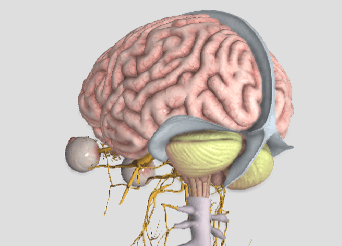
The specific type of brain injury found is a form of herniation called Chiari malformation, where the bottom part of the brain (the cerebellum) drops through the opening in the base of the skull called the foramen magnum. Their findings showed an alarming 23% of the whiplash cases studied had this anatomical abnormality.

Dr. Michael Freeman, Dr. Ezriel Kormel, and colleagues collaborated in this effort and evaluated the patients using MRI in both recumbent (laying down) AND upright positions. Interestingly, they found 5.7% and 5.3% of those in the non-whiplash neck pain group and 9.8% and 23.3% in the whiplash group had the Chiari malformation using the recumbent vs. upright MRI positions, respectfully.

Dr. Kormel stated, “This condition can be quite painful and endanger the patient’s health, with symptoms that may include headaches, neck pain, upper extremity numbness and tingling, and weakness. In a few cases, there can also be lower extremity weakness and brain dysfunction.” In a radio interview, he added the advice that ANYONE suffering from whiplash should see a healthcare provider immediately.

This study is important for a number of reasons. First, it revealed that there is often a more serious injury when whiplash occurs than what is initially found. Second, psychological findings like depression, anxiety, and difficulty coping with the decreased ability or inability to be productive at home or work may suggest the presence of an anatomical injury which simply has not yet been found. Third, MRI is frequently ONLY performed in a laying down position. This study didn’t find much difference between laying vs. weight-bearing MRI positions in the non-whiplash neck pain patients but not so in the whiplash neck pain group! In this group, the ability for MRI to detect Chiari malformation/brain injury more than doubled using weight-bearing MRI.

Expanding the last point, since one out of five whiplash patients had a brain injury that is more likely to be detected using a non-traditional upright MRI position, a “new” standard” for the use of MRI in the evaluation of the whiplash patient should be considered. This is especially important in those cases that are non-responsive to quality care or if their doctor had only ordered a recumbent MRI previously.

Doctors of all disciplines should be aware of this study and the need for a more thorough evaluation, especially when a whiplash patient is not responding as one might expect.

Food Myth Series

01-signs-healthy-fats-mufa.jpg

Over the next few weeks we will be addressing some common food myths that, frankly, drive us a little bit crazy when we hear them. Hopefully we are able to clarify some common misconceptions regarding diet and how what you eat affects how you feel and perform.

We are always open to discussion and want to hear any food myths you have heard in your travels that made you go “What?”.

So, without further delay, food myth #1:

Eating Fats Is Unhealthy

Generations of now adults have been brainwashed into believing that fats = getting fat by the Canada Food Guide. This is simply not the case. While some fats are unhealthy, plenty more have benefits that you won’t find elsewhere. A lower calorie eating plan that includes healthy fats can help people lose more weight than a similar diet that’s low in fat, according to a study in the International Journal of Obesity. Fats make food taste better, keep you fuller and help prevent overeating.

It is true that fats have more calories per gram than proteins and carbs but those calories come with health benefits that the others don’t. Healthy fats like the ones found in salmon, olive oil, nuts and avocados are key to several healthy living goals including:

1. They are a major fuel source for your body (meaning they provides a lot of calories) and are also the main way you store energy.
2. You need fat to help you absorb certain nutrients, such as fat-soluble vitamins (vitamins A, D, E and K) and antioxidants (like lycopene and beta-carotene).
3. Fats are important in giving your cells structure.
4. Omega-3 fats, a type of unsaturated fat, are important for optimum nerve, brain and heart function.

One type of fat you don’t need? Trans fats, an artificial kind of fat found in partially hydrogenated oils and a main ingredient in the food frying process (delicious, yes, but very unhealthy).

Source

So there you go, a quick overview of why fats are important in every healthy diet. Come back next week for more food myth-busting.

health-fats-for-your-heart.jpg


How Do We Choose A Mattress?

In-bed-after-no-sleep
The age and quality of your mattress have a major impact on how you feel. A worn-out mattress can certainly contribute to back and neck problems. Most experts agree that traditional mattresses should be replaced every 5-8 years. Since you spend about one third of your life in bed, choosing the right mattress is critical. Unfortunately, mattress selection is a highly individual process as there is no single “best” mattress. The following tips will help you make an informed decision:

* Choose a medium-firm model. Mattresses that are either too soft or excessively firm can aggravate back pain.

* Keep the pillow-top relatively thin. An excessively plush topper is the equivalent of placing a cheap mattress on top of a good one.

* Always replace the box spring foundation when you replace the mattress.

* Don’t choose the most expensive mattress in the store- but don’t set your budget unreasonably low. Bargain mattresses are not a good option. Your savings should be focused on avoiding unnecessary add-ons (mattress covers, custom sheets, pillows, etc).

* Look for vendors that provide an in-home warranty that allows you to exchange the mattress if it does not meet your expectations.

* Your chiropractor may be able to provide additional suggestions to help you choose between, coil spring, memory foam, water and air beds.