What is scoliosis?

Your spine is made up of 24 bones that stack on top of each other- normally in a straight line. “Scoliosis” means that your spine is curving from side to side, rather than being straight. Scoliosis affects between 1-3% of the population. Scoliosis may begin at any time between birth and adulthood but is most common during times that your skeleton is growing rapidly. Most cases of scoliosis begin between the ages of 13 and 18. Researchers are not completely certain why some people develop scoliosis, but they have found that the problem tends to run in families.

The curve of your scoliosis may be measured with an x-ray. Although some curves get worse, most do not. In fact, only ¼ of all adolescent idiopathic scoliosis curves will progress. Small curves in mature patients have a low risk of progression (2%), while large curves in younger patients progress more frequently. (70%) Curve progression is more common in girls, especially those with larger curves (greater than 20 degrees). Your doctor may need to monitor your scoliosis for progression by performing x-rays every 6-18 months.

Scoliosis may cause your shoulders, hips, or waist to be unlevel. Most curves are classified as “right thoracic”, which means that the peak of your curve protrudes toward the right. This is often accompanied by a forward rotation of your right shoulder and “winging” of your right shoulder blade. Many patients have a secondary curve in their lower spine that helps to balance their body. The majority of patients with mild to moderate scoliosis have no symptoms, but approximately ¼ report back pain. Unfortunately, scoliosis increases your risk of developing back pain later in life.

The primary goal of treatment is to stop curve progression. While many cases can be slowed or even reversed through appropriate management, it is important to recognize that others may progress in spite of the best care. Conservative care, including spinal manipulation (like the type provided in our office) has been shown to help some patients with scoliosis. Exercise is another effective treatment for scoliosis. It is important that you clearly understand your home exercise program and that you perform it consistently.

Patients with larger curves (30-40 degrees), or those who are at high risk for progression may benefit from wearing a brace. Braces have been shown to decrease the need for surgery in about three out of four patients. Fortunately, less than 0.3% of all scoliosis cases will ever require surgery.

You should avoid carrying heavy back packs and consider switching to a wheeled version, if necessary. Sports and exercise will not worsen most cases of scoliosis, and you should continue to participate in the things you enjoy unless directed otherwise by your doctor. The diagnosis of scoliosis is always discouraging, but you must focus on what it is really most important. Be confident in who you are! Don’t let something like a curved spine (or any other medical condition) define you as a person.

Put the shovel down and read this!

Your low back consists of 5 individual vertebrae stacked on top of each other. Flexible cushions called “discs” live between each set of vertebrae. A disc is made up of two basic components. The inner disc, called the “nucleus”, is like a ball of jelly about the size of a marble. This jelly is held in place by the outer part of the disc called the “annulus”, which is a tough ligament that wraps around the inner nucleus much like a ribbon wrapping around your finger.
Your low back relies on discs and other ligaments for support. “Discogenic Low Back Pain” develops when these tissues are placed under excessive stress, much like a rope that frays when it is stretched beyond its normal capacity. Most commonly, disc pain is not the result of any single event, but rather from repeated overloading. Your lumbar discs generally manage small isolated stressors quite well, but repetitive challenges lead to injury in much the same way that constantly bending a piece of copper wire will cause it to break. Examples of these stressors include: bad postures, sedentary lifestyles, poor fitting workstations, repetitive movements, improper lifting, or being overweight.

Approximately one third of adults will experience pain from a lumbar disc at some point in their lifetime. The condition is more common in men. Most lumbar disc problems occur at one of the two lowest discs- L5 or L4. Smokers and people who are generally inactive have a higher risk of lumbar disc problems. Certain occupations may place you at a greater risk, especially if you spend extended periods of time sitting or driving. People who are tall or overweight have increased risk of disc problems.

Symptoms from disc pain may begin abruptly but more commonly develop gradually. Symptoms may range from dull discomfort to surprisingly debilitating pain that becomes sharper when you move. Rest may relieve your symptoms but often leads to stiffness. The pain is generally centered in your lower back but can spread towards your hips or thighs. Be sure to tell your doctor if your pain extends beyond your knee, or if you have weakness in your lower extremities or a fever.

Repeated injuries cause your normal healthy elastic tissue to be replaced with less elastic “scar tissue.” Over time, discs may dehydrate and thin. This process can lead to ongoing pain and even arthritis. Patients who elect to forego treatment and “just deal with it” develop chronic low back pain more than 60% of the time. Seeking early and appropriate treatment like the type provided in our office is critical.

Depending on the severity of your injury, you may need to limit your activity for a while, especially bending, twisting, and lifting, or movements that cause pain. Bed rest is not in your best interest. You should remain active and return to normal activities as your symptoms allow. Light aerobic exercise (i.e. walking, swimming, etc) has been shown to help back pain sufferers. The short-term use of a lumbar support belt may be helpful. Sitting makes your back temporarily more vulnerable to sprains and strains from sudden or unexpected movements. Be sure to take “micro breaks” from workstations for 10 seconds every 20 minutes.

Stay Active During Your Vacation!

Active Travel

Stay Active During Your Spring and Summer Travels

For most people, traveling for work or going on a vacation means there will be a lot of sitting – Sitting at the airport, sitting on a plane, sitting in cars, sitting on the beach, etc. Excessive sitting causes a plethora of different health problems, So as health professionals, we always encourage our patients to fit in some daily exercise and movement, even while on vacation. You may not have as much time as you do at home for your regular workouts while traveling, but doing something is always a whole lot better than doing nothing at all. Here are our tips to keep you moving during any upcoming travels.

PREPARE BEFORE YOUR TRIP

Book a hotel that has a small fitness center/gym. This is probably the most convenient way to stay active on your trip. Get a quick workout done in the morning before you head out for the day.

– If you can’t get a hotel with a gym, consider one that is within walking distance to shops, restaurants, or trails, so that you can travel everywhere on foot. If the city is bike-friendly, arrange to rent a bicycle for transportation. 

– Pack a few supplies to help you workout right in your hotel room. Resistance bands, workout or yoga videos, and a jump rope are all easy to pack.

– Use a pedometer to track your steps. If you don’t normally wear one, try doing a “test” day before you leave so you can define a baseline of how many steps you take on an average day. Then, on your trip, you’ll know if you’re being more or less active. Maybe it will motivate you to get moving!

STAY ACTIVE AT THE AIRPORT

Walk the halls of the airport instead of sitting around at the gate.

– Find a vacant area to do some stretching during your layovers. Long flights will have your legs feeling stiff.

– A lot of airports now have counter-height charging stations. Consider standing to use your laptop, tablet, or phone in between flights.

STAY ACTIVE DURING YOUR TRIP

– Go sight-seeing on foot. Stay out of a car as much as you can.

– Take the stairs when possible.

– Opt to stand on a train, subway, or bus. Offer your seat to someone who really needs it.

– Schedule some fun activities that won’t even feel like you’re exercising, such as hiking, cycling, or dancing.

– Create a standing desk in your room. Place your laptop on a tall dresser, or use objects (maybe an ice bucket) to boost your computer up to eye level while you stand and work.

No matter if the purpose of your trip is for business or for pleasure, the most important tip we can give is to enjoy yourself. Embrace your ability to move your body and the opportunity you have to travel and experience other parts of the world!

I smoke and I sit; does that matter?

Your thoracic spine is made up of 12 individual vertebrae stacked on top of each other. To allow for flexibility and movement, there is a cushion or “disc” in between each level. As we age, these discs can wear and become thinner over time. This leads to additional changes, including bone spurs and narrowing of the opening where your nerves exit your spine. This process is called “thoracic spondylosis”, or simply, “arthritis”.

How quickly you develop back arthritis is largely a trait you inherited from your parents. Other factors may play a role, including a history of trauma, smoking, operating motorized vehicles, being overweight and/ or performing repetitive movements (i.e. lifting, twisting, bending or sitting). Men seem to be affected slightly more often than women.

Symptoms often begin as back pain that gradually worsens over time. Stiffness may be present upon arising in the morning. Pain is relieved by rest or light activity and aggravated by strenuous work. Sometimes your nerves can become “pinched” in narrowed openings where they exit your spine. This can cause pain, numbness, or tingling radiating around your trunk along the path of the irritated nerve. Be sure to tell your doctor if you notice any weakness or if you have a rash (running along your rib), fever, abdominal pain, change in bowel or bladder function, or pain in your groin crease.

Arthritic changes can be seen on x-rays, but interestingly, the amount of wearing does not seem to correlate directly with the severity of your symptoms. People with the same degree of arthritis may have symptoms ranging from none to severe. Most researchers believe that the symptoms of osteoarthritis are not the direct result of the disease, but rather, from the conditions that preceded the disease and those that develop after it, like joint restrictions and muscle tightness. Fortunately, those conditions are treatable and our office has a variety of tools to help relieve your pain.

In general, you should avoid repeated lifting and twisting and take frequent breaks from prolonged sitting, especially in motorized vehicles. Avoid any position that causes an increase in radiating pain. Light exercise, like walking, stationary cycling, water aerobics, and yoga may be helpful. Smokers should find a program to help them quit and overweight patients will benefit from a diet and exercise program.

Mobility Myth #1

what-is-mobility-mobility-myths-foam-rolling

Great stuff from our friends at Shape.com:

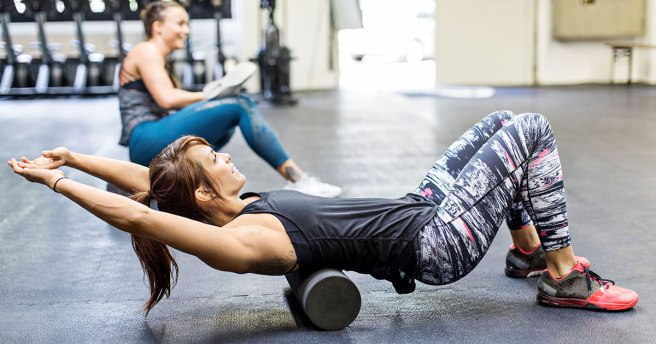
Myth: Stretching and foam rolling will address all of my mobility problems.

Truth: Stretching and soft tissue work (like foam rolling and massage) may seem like the bread and butter of mobility, but there’s more to know. “If you have a true mechanical mobility problem, soft tissue work and different stretching techniques are definitely great options,” says Ardoin. But you might experience tightness or a loss of motion that doesn’t have anything to do with tissue restrictions like tight muscles or joint stiffness.

“In these particular people, they actually have the mobility needed, but their brain doesn’t know how to access it,” says Ardoin. This sort of muscle-brain disconnect could be because of current pain, previous injuries, or, “sometimes people just forget how to move,” he says.

In this case, your muscles are working against each other instead of synergistically—and it’s not something stretching or foam rolling will fix. The good news is that there’s not actually anything physically wrong. The bad news: This is tough to diagnose on your own. “If you have a loss of motion while you perform the motion yourself but have full ROM when performed passively, then it’s safe to assume that you have the ROM available but your brain doesn’t know how to access it,” says Ardoin.

For example, let’s say you have a “tight” shoulder. Make a large, slow circle with your right arm. Then totally relax your arm while someone else rotates your arm in a circle for you. Did it go farther while you let the motion happen passively? Ding, ding! Could be a brain problem, not a muscle problem. Think this might be you? Seeing a trainer or physical therapist to confirm it (and help you work on the issue) can’t hurt.

5 Tips for healthy living

meditate-1851165_960_720

https://www.ndtv.com/food/5-tips-and-hacks-to-lead-a-healthy-life-1807791

Keeping fit and health is not a one-day job, but it’s rather a lifestyle and gradually needs to be developed into a habit. There’s no magic key to a healthy lifestyle, but one must beware of hit and trial methods too, as these can be detrimental to the overall health, as well as mental state. With so much being said and heard about how to develop a healthy lifestyle, it’s confusing to decide what’s good and bad for one’s health. As work schedules all over the world become crazier by the day, there’s a general concern about and increase in unhealthy life choices.

However, there are certain universally accepted ways of leading a healthy life. These are some things that you should never compromise on, if you want to be happy and healthy:

1. Don’t Compromise On Sleep

Although more and more people nowadays call themselves fashionably insomniac, sleep deprivation is ruinous for health. You may not know it, but a lot is riding on whether or not you get a good night’s sleep. It’s crucial to understand sleep cycle and dedicate a fixed time period to sound sleep in your everyday schedule.

2. Drink Enough Water

It’s not just about the amount of water you drink, but also the timings of drinking water that can make or break your health. Water has numerous benefits. Besides regulating your body environment and ensuring optimum rate of body processes, water can rev up your metabolism and even fight food cravings, helping you stay in shape. It’s commonly recommended that all human adults drink from 1.5 to 2 liters of water every day.

3. Balanced Diet

A well-balanced diet is one that meets the right amount of daily nutrient requirements of a person. Bodies of males and females require different kinds and quantities of nutrients like the various vitamins, minerals, dietary fiber and roughage, etc. An excess of any one nutrient or a deficiency might lead to diseases.

4. Take Care Of Your Mental Well-Being

Nowadays, there’s a lot of awareness regarding the need to maintain the sanctity of a calm and peaceful mind. However, a lot still needs to be talked about, as in a lot of countries, including India, mental health problems and seeking therapy remains a taboo. Your mental ailments can affect your body and have an indirect and harmful impact on your lifestyle. Taking care of your mental well-being is essential for leading a healthy life.

5. Eat Clean

A lot of emphasis is being laid on the need to eat simple and clean meals, devoid of excess grease. In fact, some of the hottest food trends for 2018 revolve around natural plant proteins and use of herbs for preparation of meals. Eating clean means eliminating processed foods with excess salt and sugar from your diet and relying heavily on what you get fresh.

Apart from this, eating small meals at frequent intervals help your body sustain optimum energy levels for longer. Including raw fruits, vegetables and nuts in your daily diet is also important. Don’t eat too much in any meal and remember the simple philosophy of ‘eating to live instead of living to eat.’

The Thoracic Disc Lesion

Your spine consists of 24 individual vertebrae stacked on top of each other. Flexible cushions called “discs” live between each set of vertebra. A disc is made up of two basic parts. The inner disc, called the “nucleus” is like a ball of jelly about the size of a marble. This jelly is held in place by the outer part of the disc called the “annulus,” which is wrapped around the inner nucleus,

much like a ribbon wrapping around your finger. The term “thoracic disc lesion” means that one or more of the 12 discs in the center section of your spine has been damaged.

Disc problems start when the outer fibers of the disc become strained or frayed. If enough fibers become frayed, the disc weakens and when compressed, may “bulge” like a weak spot on an inner tube. If more fibers are damaged, the nucleus of the disc may “herniate” out of the disc.

Surprisingly, thoracic disc bulges are present without any symptoms in almost half of the adult population. Disc bulges that cause pain commonly occur in the neck or lower back but are relatively infrequent in the thoracic spine – accounting for less than 1% of all symptomatic disc problems. The condition is most common between the ages of 40 and 60. Certain occupations or activities place you at greater risk, especially physically demanding activities that involve repetitive twisting, awkward postures.

Pain can range from dull, localized discomfort to sharp, radiating pain. Your symptoms may change unpredictably. If the disc bulge is bad enough to compress your nerve, you could experience sharp, burning, or shooting pain in a band-like distribution around your rib cage. Thoracic disc herniations commonly mimick other conditions like heart or lung problems. Be sure to let our office know if you notice chest pressure; shortness of breath; pain radiating into your arm, face, or jaw; pain with deep breathing; clumsiness; loss of bowel or bladder control; unexplained weight loss; night sweats; pain that awakens you at night; fever; indigestion; nausea; flu-like symptoms or if you notice a rash following the margin of one of your ribs.

You should avoid excessive bed rest while recovering. Researchers have shown that disc bulges may be successfully managed with exercise and conservative care, like the type we will provide.

The Most Common Work Injury We See? This Might Be It…..

Your “lumbar spine”, or low back, is made up of five bones stacked on top of each other with a shock-absorbing disc between each level. Your low back relies on muscles and ligaments for support. “Sprains” and “strains” are the result of these tissues being stretched too hard or too far, much like a rope that frays when it is stretched beyond its normal capacity. The term “sprain” means that the

tough, durable ligaments that hold your bones together have been damaged, while “strain” means that your muscles or tendons that move your trunk have been partially torn.

Most people experience low back pain at some point in their lifetime, and 70% of those patients can attribute their symptoms to sprain/strain injuries. Lumbar sprains and strains may result from sudden or forceful movements like a fall, twist, lift, push, pull, direct blow, or quickly straightening up from a seated, crouched, or bent position. Most commonly, sprains and strains are not the result of any single event, but rather from repeated overloading. The spine can generally manage small isolated stressors quite well, but repetitive challenges lead to injury in much the same way that constantly bending a piece of copper wire will cause it to break. Examples of these stressors include: bad postures, sedentary lifestyles, poor fitting workstations, repetitive movements, improper lifting, or being overweight.

Symptoms from a sprain/strain may begin abruptly but more commonly develop gradually. Symptoms may range from dull discomfort to surprisingly debilitating pain that becomes sharper when you move. Rest may relieve your symptoms but often leads to stiffness. The pain is generally centered in your lower back but can spread towards your hips or thighs. Be sure to tell your doctor if your pain extends beyond your knee, or if you have weakness in your lower extremities or a fever.

Sprain/strain injuries cause your normal healthy elastic tissue to be replaced with less elastic “scar tissue.” This process can lead to ongoing pain and even arthritis. Patients who elect to forego treatment and “just deal with it” develop chronic low back pain more than 60% of the time. Seeking early and appropriate treatment like the type provided in our office is critical.

Depending on the severity of your injury, you may need to limit your activity for a while, especially bending, twisting, and lifting, or movements that cause pain. Bed rest is not in your best interest. You should remain active and return to normal activities as your symptoms allow. The short-term use of a lumbar support belt may be helpful. Sitting makes your back temporarily more vulnerable to sprains and strains from sudden or unexpected movements. Be sure to take “micro breaks” from workstations for 10 seconds every 20 minutes. Following acute injuries, you can apply ice for 15-20 minutes each hour. Heat may be helpful after several days or for more chronic origins of pain. Ask your doctor for specific ice/heat recommendations. Some patients report partial relief from sports creams.

A weak lateral chain will stop you in your tracks.

One very important job of your hip muscles is to maintain the alignment of your leg when you move. One of the primary hip muscles, the gluteus medius, plays an especially important stabilizing role when you walk, run, or squat. The gluteus medius attaches your thigh bone to the crest of your hip. When you lift your left leg, your right gluteus medius must contract in order to keep your body from tipping toward the left. And when you are standing on a bent leg, your gluteus medius prevents that knee from diving into a “knock knee” or “valgus” position.
Weakness of the gluteus medius allows your pelvis to drop and your knee to dive inward when you walk or run. This places tremendous strain on your hip and knee and may cause other problems too. When your knee dives inward, your kneecap is forced outward, causing it to rub harder against your thigh bone- creating a painful irritation and eventually arthritis. Walking and running with a relative “knock knee” position places tremendous stress on the ligaments around your knee and is a known cause of “sprains”. Downstream, a “knock knee” position puts additional stress on the arch of your foot, leading to other painful problems, like plantar fasciitis. Upstream, weak hips allow your pelvis to roll forward which forces your spine into a “sway back” posture. This is a known cause of lower back pain. Hip muscle weakness seems to be more common in females, especially athletes.

You should avoid activities that cause prolonged stretching of the hip abductors, like “hanging on one hip” while standing, sitting crossed legged, and sleeping in a side-lying position with your top knee flexed and touching the bed. Patients with fallen arches may benefit from arch supports or orthotics. Obesity causes more stress to the hip muscles, so overweight patients may benefit from a diet and exercise program. The most important treatment for hip abductor weakness is strength training. Hip strengthening is directly linked to symptom improvement. Moreover, people with stronger hip muscles are less likely to become injured in the first place. The exercises listed below are critical for your recovery.

What does a shoulder separation actually mean?

Impingement

The term “acromioclavicular sprain” means that you have damaged the strong fibrous bands (ligaments) that hold the end of your collarbone (clavicle) to the tip of your shoulder blade (scapula). Another term sometimes used to describe this injury is “shoulder separation.” 40-50% of all athletic shoulder injuries involve the acromioclavicular (AC) joint. AC injuries are common in adolescents and young adults who participate in contact sports, like hockey and football. Males are affected five times more often than females.

Injuries may range from mild fraying of a single ligament to complete rupture of all of the supporting ligaments. Significant tears can allow your collarbone to move upward, out of its normal position, creating a raised bump under your skin. AC joint injuries are categorized (Grade 1-Grade 6) based upon the amount of damage. Grade 1 injuries are tender without joint separation. Grade 2 injuries may be accompanied by a slight separation of the joint. Grade 3 and above will show significant joint separation.

Injuries typically occur following a fall onto the point of your shoulder, while your arm is at your side, or by falling onto your outstretched hand. You will most likely feel pain and swelling on the very top of your shoulder. More significant injuries may produce bruising or a visible “bump” beneath the skin. Moving your shoulder will likely be painfully limited for a while.

Your treatment will vary, depending upon the severity of your injury. Grade 1, 2, and most Grade 3 injuries are best managed conservatively. A sling may be used only when needed to control painful movements. Initially, you will need to limit activity, especially reaching overhead, behind your back, or across your body. The exercises described below are an important part of your rehab and should be performed consistently to avoid long-term problems. Using an ice pack for 10-15 minutes each hour may help to limit swelling and pain.

Some mild separations will heal by themselves within a week or two. More significant injuries can take longer, and disabilities typically range between one and eight weeks. Patients who have suffered a significant amount of ligament damage may have a permanent bump on their shoulder, regardless of treatment. This bump does not usually cause ongoing problems.

If you or someone you know suffers from this condition, call our office today. Our doctors are experts at relieving many types of pain including shoulder injuries.

AC Joint