Where does back pain come from?

Screen Shot 2017-10-31 at 11.12.00 AM
Most of us have suffered from back pain at one time or another. It often occurs after over-doing a physical task, like fall yard work, winter snow shoveling, working on the car, cleaning the house, and so on. But there are times when identifying the cause of back pain can be difficult or impossible. Let’s take a deeper look at where back pain can come from…
Though activity-related back pain is common, many times a direct link to over-use is not clear. Micro-traumatic events can accumulate and become painful when a certain threshold is exceeded. (Think of the old adage “The straw that broke the camel’s back.”)
There are other less well-identified causes of back pain. One is called referred pain. This can be caused by an irritated joint or soft tissue not necessarily located in the immediate area of the perceived pain. For example, pain in the leg can result from an injured facet joint, sacroiliac joint, and/or a disk tear (without nerve root pinch). This is called “sclertogenous pain.”
Internal organs can also cause back pain. This is called a “viscerosomatic response” (VSR). A classic example of this is when the right shoulder blade seems to be the source of pain when the gall bladder is inflamed. This pain can be located at or below the scapula next to the spine and the muscles in the area are in spasm and sensitive or painful to the touch. Also, VSR is often not worsened or changed by bending in different directions (unlike musculoskeletal / MSK pain). Without further testing, it’s easy to confuse this with a MSK or a “typical” back ache. Ultimately, a final diagnosis may require an abdominal ultrasound (CT, MRI scan, and other diagnostics are less frequently used).
Visceral pathology in the back pain patient presenting to chiropractors is reportedly rare, and according to one survey, only 5.3% of patients present with non-musculoskeletal complaints. Other common VSR pain patterns are as follows: Heart – left chest to left arm, mid-upper back, left jaw; Liver – right upper shoulder (front and back), right middle to low back, and just below the sternum; Appendix – right lower abdomen (may start as stomach pain); Small intestine – either side of the umbilicus and/or between it and the breast bone; Kidney – small of the back, upper tailbone, and/or groin area; Bladder – just above the pubic bone and/or bilateral buttocks; Ovaries – groin and/or umbilical area; and Colon – mid-abdominal and/or lower quadrants.
Another challenge to diagnosis is cancer in the spine, which can be primary or metastatic (from a different location). Thankfully, this is very rare. A history of unexplained weight loss, a past history of cancer, over age 50, nighttime sleep interruptions, and no response to usual back care may lead a doctor to recommend tests to determine if cancer is present in the spine.
Bottom line: When patients present with back pain, chiropractors have been trained to look for these less common but important causes of back pain. They get “suspicious” when the “usual” orthopedic tests do not convey the usual responses seen with mechanical back pain. In these cases, they work with primary care doctors to coordinate care to obtain prompt diagnostic testing and treatment.
We realize you have a choice in whom you consider for your health care provision and we sincerely appreciate your trust in choosing our service for those needs.  If you, a friend, or family member requires care for back pain, we would be honored to render our services.


Why does my back hurt?

neck pain 1
It’s been said that if you haven’t had back pain, just wait, because (statistically) some day you will! The following list is a list of “causes” that can be easily “fixed” to reduce your risk for a back pain episode.
1. MATTRESS: Which type of mattress is best? The “short answer”: there is no single mattress (style or type) for all people, primarily due to body type, size, gender, and what “feels good.” TRY laying on a variety of mattresses (for several minutes on your back and sides) and check out the difference between coiled, inner springs, foam (of different densities), air, waterbeds, etc. The thickness of a mattress can vary from 7 to 18 inches (~17-45 cm) deep. Avoid mattresses that feel like you’re sleeping in a hammock! A “good” mattress should maintain your natural spinal curves when lying on your sides or back (avoid stomach sleeping in most cases). Try placing a pillow between the knees and “hug” a pillow when side sleeping, as it can act like a “kick stand” and prevent you from rolling onto your stomach. If your budget is tight, you can “cheat” by placing a piece of plywood between the mattress and box spring as a short-term fix.
2. SHOES: Look at the bottom of your favorite pair of shoes and check out the “wear pattern.” If you have worn out soles or heels, you are way overdue for a new pair or a “re-sole” by your local shoe cobbler! If you work on your feet, then it’s even more important for both managing and preventing LBP!
3. DIET: A poor diet leads to obesity, which is a MAJOR cause of LBP. Consider the Paleo or Mediterranean Diet and STAY AWAY from fast food! Identify the two or three “food abuses” you have embraced and eliminate them – things with empty calories like soda, ice cream, chips… you get the picture! Keeping your BMI (Body Mass Index) between 20 and 25 is the goal! Positive “side-effects” include increased longevity, better overall health, and an improved quality of life!
4. EXERCISE: The most effective self-help approach to LBP management is exercise. Studies show those who exercise regularly hurt less, see doctors less, have a higher quality of life, and just feel better! This dovetails with diet in keeping your weight in check as well. Think of hamstring stretches and core strengthening as important LBP managers – USE PROPER TECHNIQUE AND FORM; YOUR DOCTOR OF CHIROPRACTIC CAN GUIDE YOU IN THIS PROCESS!
5. POSTURE: Another important “self-help” trick of the trade is to avoid sitting slumped over with an extreme forward head carriage positions. Remember that every inch your head pokes forwards places an additional ten pounds (~4.5 kg) of load on your upper back muscles to keep your head upright, and sitting slumped increases the load on your entire back!
We have only scratched the surface of some COMMON causes and/or contributors of back pain. Stay tuned next month as we continue this important conversation!
We realize you have a choice in whom you consider for your health care provision and we sincerely appreciate your trust in choosing our service for those needs.  If you, a friend, or family member requires care for back pain, we would be honored to render our services.

How Common Is Low Back Pain?

back pain

Low back pain (LBP) is a very common problem that affects most of us at some point in life and for some, it’s a daily issue. Through education and research, researchers have found low back-specific exercises can not only help get rid of LBP but can also prevent future exacerbations or episodes. Like brushing our teeth, low back exercises are equally important in order to maintain, preserve, and optimize function. But because there are SO MANY exercise options available, it’s hard to know which ones are best, especially for each specific person.
There are different methods for determining the right low back exercises for the patient. One of the most common is to try different exercises to determine individual tolerance, but this is not very specific, as it only determines whether or not the patient is comfortable with an exercise. Another is using physical performance tests (PPTs) that measure the strength and endurance of specific muscle groups, muscle shortness, balance, aerobic capacity, and spinal range of motion.
Physical performance tests are much more specific because they address each patient’s differences. Also, many PPTs include normative data to compare against the patient’s own performance, so repeat use of the abnormal PPTs on a monthly interval can gauge their progress (or the lack thereof), which is motivating to the patient and serves as a great outcome measure!
PPTs are typically done two to four weeks after an initial presentation or at a time when the condition is stable so as not to irritate the condition. Initially, the decision as to which exercise is best is often made by something called “directional preference” or positional bias. This simply means if a patient feels best by bending over, we initially give “flexion-biased” exercises.
Flexion-biased exercises include (partial list): pulling the knees to the chest (single then double), posterior pelvic tilts (flattening the low back into the floor), sitting and/or standing bend overs, hamstring stretches, and more. If a person’s low back feels best bending backwards, their doctor of chiropractic may give extension-biased exercises, which include (partial list): standing back bends, saggy push-ups (prone press-ups), and/or laying on pillows or a gym ball on their back, arching over the ball.
Chiropractors generally add exercises gradually once they’ve determined tolerance and will recheck to make sure the patient is doing them correctly. Studies show that spinal manipulation achieves great short-term results, but when exercise is added to the treatment plan, the patient can achieve a more satisfying long-term result.

Unfortunately, other studies have shown that ONLY 4% of patients continue their exercises after pain is satisfactorily managed and they fall back into old habits of not exercising.

MRI Truths & Myths 

Arthritis
Low back pain is a very common complaint. In fact, it’s the #1 reason for doctor visits in the United States! The economic burden of LBP on the working class is astronomical. Most people can’t afford to be off work for one day, much less a week, month, or more! Because of the popularity of hospital-based TV dramas over the past two decades, many people think getting an MRI of their back can help their doctor fix their lower back problem. Is this a good idea? Let’s take a look!
Patients will often bring in a CD that has an MRI of their lower back to a doctor of chiropractic and ask the ultimate question, “….can you fix me?” Or, worse, “…I think I need surgery.” Sure, it’s quite amazing how an MRI can “slice” through the spine and show bone, soft tissues, disks, muscles, nerves, the spinal cord, and more! Since the low back bears approximately 2/3 of our body’s weight, you can frequently find MANY ABNORMALITIES in a person over 40-50 years old. In fact, it would be quite odd NOT to see things like disk degeneration, disk bulges, joint arthritis, spur formation, etc.!
Hence, the “downside” of having ALL this information is the struggle to determine which finding on the MRI has clinical significance. In other words, where is the LBP coming from? Is it that degenerative disk, bulged disk, herniated disk, or the narrowed canal where the nerve travels? Interestingly, in a recent review of more than 3,200 cases of acute low back pain, those who had an MRI scan performed earlier in their care had a WORSE outcome, more surgery, and higher costs compared with those who didn’t succumb to the temptation of requesting an MRI!
This is not to say MRI, CT scans, and x-rays are not important, as they effectively show conditions like subtle fractures and dangerous conditions like cancer. But for LBP, MRI is often misleading. This is because the primary cause of LBP is “functional” NOT “structural,” so it’s EASY to get railroaded into thinking whatever shows up on that MRI has to be the problem.
Here is how we know this, when we take 1,000 people WITHOUT low back pain between ages 30 and 60 (male or female) and perform an MRI on their lower back, we will find up to 53% will have PAINLESS disk bulges in one or more lumbar disks. Moreover, we will find up to 30% will have partial disk herniations, and up to 18% will have an extruded disk (one that has herniated ALL the way out). Yet, these people are PAIN FREE and never knew they had disk “derangement” (since they have no LBP). When combining all of these possible disk problems together, several studies report that between 57% and 64% of the general population has some type of disk problem without ANY BACK PAIN!
Hence, when a patient with a simple sprain/strain and localized LBP presents with an MRI showing a disk problem, it usually ONLY CONFUSES the patient (and frequently the doctor), as that disk problem is usually not the problem causing the pain!  So DON’T have an MRI UNLESS a surgical treatment decision depends on its findings. That is weakness, numbness, and non-resolving LBP in spite of 4-6 weeks of non-surgical care or unless there is weakness in bowel or bladder control. Remember, the majority of back pain sufferers DO NOT need surgery!
We realize you have a choice in whom you consider for your health care provision and we sincerely appreciate your trust in choosing our service for those needs.  If you, a friend, or family member requires care for back pain, we would be honored to render our services.

LBP & Pregnancy

DSC_0033

Did you know that 50-72% of women have low back pain (LBP) and/or pelvic pain during their pregnancy but only 32% do something about it? Let’s look closer!
Pregnancy-related low back pain (PLBP) can be a highly debilitating syndrome that accounts for the most common cause of sick leave for pregnant women. In 2004, Americans spent $26.1 billion dollars in an effort to find relief from back pain during pregnancy. Statistics show one out of ten women will experience daily DISABLING LBP for at least two years following delivery.
Because of the limited number of treatment options available for the pregnant woman due to mother and fetus safety, and given the high propensity of potentially disabling PLBP that can significantly limit function and quality of life, chiropractic care seems to be a natural choice for this patient population! Obviously, pharmaceuticals and surgery are NOT appropriate options for the expectant mother, even during the post-partum breast-feeding time period. Chiropractic offers a non-invasive and safe approach to managing lumbopelvic pain that uses many different approaches.
In a 2009 research paper, 78 women participated in a study that investigated disability, pain intensity, and percent improvement after receiving chiropractic care to treat pregnancy-related PLBP. Here, 73% reported their improvement as either “excellent” or “good.” For disability and pain, 51% and 67% (respectively) experienced clinically significant improvement! Researchers followed up with them eleven months later and found 85.5% reported their improvement as either “excellent” or “good!” For disability and pain, 73% and 82% (respectively) experienced clinically significant improvement!
So, what’s causing LBP in pregnant women? Because of the biomechanical changes that occur in the low back and pelvis over a relatively short amount of time during pregnancy, especially in the second and third trimesters, common pain generators include (but are not limited to): the sacroiliac joint, facet joints, shock-absorbing disks, and the many connecting muscles (strains) and ligaments (sprains). During the later stages of pregnancy, the hormone Relaxin prepares the pelvis for delivery by widening the pelvic girdle, which can also be problematic.
Treatment options within chiropractic often include spinal manipulation, lumbopelvic exercises, patient education, posture correction, massage, an SI belt, soft tissue mobilization, and more. Exercises that target the transverse abdominus, multifidus, and pelvic floor muscles help to stabilize the lumbopelvic region. The American College of Obstetricians & Gynecologists recommends exercise at least three times a week during pregnancy, and studies report NO obstetric complications (pre-term labor, premature ruptured membranes, or changes to maternal or neonatal weight) with exercise.
So, the answer is clear! When PLBP strikes, seek chiropractic care to safely and effectively manage the pain and disability and so you can ENJOY YOUR PREGNANCY!!!
We realize you have a choice in whom you consider for your health care provision and we sincerely appreciate your trust in choosing our service for those needs.  If you, a friend, or family member requires care for back pain, we would be honored to render our services.

Tennis Elbow Rehab

Tennis Elbow.png

A new study has found that for tennis elbow, eccentric strengthening exercises, i.e. “negatives” are the most effective type of rehab. If you or someone you know suffers from tennis elbow, click here to view a sample exercise and then check out this video to learn more about resolving this painful problem.

Cullinane FL , Boocock MG, Trevelyan FC. Is eccentric exercise an effective treatment for lateral epicondylitis? A systematic review. Clin Rehabil. 2014 Jan;28(1):3-19. doi: 10.1177/0269215513491974. Epub 2013 Jul 23.

Single Sport Kids Have More Injuries

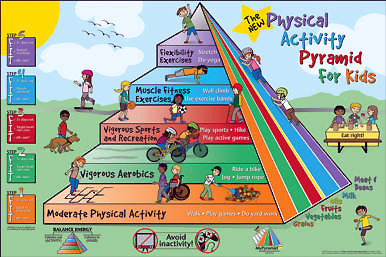
PhysicalActivityPyramidKids

A new study in the journal Pediatrics, confirms that playing one sport on a daily basis can place significant stress on young muscles, bones, and joints. Chiropractic care seeks to correct stressful imbalances and strengthen supporting tissues. It’s no wonder why nearly every professional team employs a chiropractor. If you know a single-sport athlete, call our office today to learn how chiropractic care can help keep them in the game.

Bell DR et al. Sport Specialization and Risk of Overuse Injuries: A Systematic Review With Meta-analysis. Pediatrics 2018 Sep;142(3). Epub 2018 Aug 22.

Tingling & Numbness in Your Palm?

CTS3

“Tingling & Numbness in Your Palm? A new study estimated that 5% of adults suffer from carpal tunnel syndrome. “Of those seen by specialists, 66% were female, 34% were male.” Check out this video to learn more about how chiropractic care helps relieve carpal tunnel syndrome.”

Kadow TR et al. Prevalence of Carpal Tunnel Syndrome in a Hand Surgeon’s Practice. J Hand Microsurg. 2018 Aug;10(2):79-81. doi: 10.1055/s-0038-1626688. Epub 2018 Mar 20.

We’re Listening

Listen

A new Gallup poll found that compared to other physicians, “Chiropractors scored higher on characteristics like empathy and listening: 93% of adults said their chiropractor often listens; provides convenient, quick access to care (93%); demonstrates care/compassion (91%); and explains things well (88%).”

Our doors (and ears) are open for you, because you deserve the best care.

Inserro A. Gallup, Palmer Release Report About Preferences for Chiropractic Care for Back, Neck Pain. Amer J Managed Care. October 03, 2018. Accessed fromhttps://www.ajmc.com/newsroom/gallup-palmer-release-report-about-preferences-for- chiropractic-care-for-back-neck-pain

Don’t Ignore Pain Following Auto Accidents

MVA

A new study has once again confirmed that auto accidents can lead to long-term problems:

“A history of low back injury in a motor vehicle collision is a risk factor for developing future troublesome back pain.”

Fortunately, the right early treatment can help relieve symptoms and minimize some risk for future problems. If you or someone you know has been involved in an auto accident, call our office immediately.

Nolet, P.S., Kristman, V.L., Côté, P. et al. The association between a lifetime history of low back injury in a motor vehicle collision and future low back pain: a population-based cohort study
Eur Spine J (2018) 27: 136.