Author: Dr. Robert Speirs DC
Exercise of the month: Monster Walks
Monster Walk
- Loop an elastic band around the arch of both feet.
- Spread your legs so that they are directly beneath your hips.
- While maintaining this foot separation, walk 10 yards forward, then 10 yards backward.
- Your goal is to walk without allowing your feet to move closer together.
- Perform two sets of five repetitions twice per day or as directed.
Hamstring Injuries and Laser
A pulled hamstring or strain is an injury to one or more of the muscles at the back of the thigh. Hamstring muscle injuries occur most frequently in athletes. They are especially common in athletes who participate in sports that require sprinting, such as track, soccer, and basketball.
Risk Factors
Several factors can make it more likely you will have a muscle strain, including:
Muscle tightness. Tight muscles are vulnerable to strain. Athletes should follow a year-round program of daily stretching exercises.
Muscle imbalance.When one muscle group is much stronger than its opposing muscle group, the imbalance can lead to a strain. This frequently happens with the hamstring muscles. The quadriceps muscles at the front of the thigh are usually more powerful. During high-speed activities, the hamstring may become fatigued faster than the quadriceps. This fatigue can lead to a strain.
Poor conditioning. If your muscles are weak, they are less able to cope with the stress of exercise and are more likely to be injured.
Muscle fatigue. Fatigue reduces the energy-absorbing capabilities of muscle, making them more susceptible to injury.
Those especially at risk:
- Anyone can experience hamstring strain, but those especially at risk are:
- Athletes who participate in sports like football, soccer, basketball
- Runners or sprinters
- Dancers
- Older athletes whose exercise program is primarily walking
- Adolescent athletes who are still growing
- Hamstring strains occur more often in adolescents because bones and muscles do not grow at the same rate. During a growth spurt, a child’s bones may grow faster than the muscles. The growing bone pulls the muscle tight. A sudden jump, stretch, or impact can tear the muscle away from its connection to the bone.
Severity of a Pulled Hamstring
Strains are graded 1, 2 or 3 depending on severity.
Grade 1 consists of minor tears within the muscle. A grade 2 is a partial tear in the muscle and grade 3 is a severe or complete rupture of the muscle.
Grade 1
- May have tightness in the posterior thigh.
- Probably able to walk normally however will be aware of some discomfort.
- Minimal swelling.
- Lying on front and trying to bend the knee against resistance probably won’t produce much pain.
- Over all pain is mild and usually heals readily.
- May require 3 weeks rest from sports
Grade 2
- Gait will be affected – limp may be present.
- May be associated with occasional sudden twinges of pain during activity.
- May notice swelling.
- Pressure increases pain.
- Flexing the knee against resistance causes pain.
- Might be unable to fully straighten the knee.
- May bruise after a few days
- Typically requires 4 to 6 weeks for recovery
Grade 3
- Walking severely affected – may need walking aids such as crutches.
- Severe pain – particularly during activity such as knee flexion.
- Noticeable swelling visible immediately.
- There may be a large lump of muscle tissue above a depression where the tear is.
- A grade three hamstring strain is a severe injury.
- May require an MRI scan to ascertain the amount of damage sustained.
- In severe ruptures surgery may be needed to repair the damage and may require 3-6 months after repair to resume sports
Treatment of a Pulled Hamstring
What can the athlete do?
It is important that treatment for a pulled hamstring starts immediately following injury. The most important phase for treatment is the first 48 hours post-injury. In this time the following can be carried out by the athlete themselves:
- Use Most hamstring strains heal very well with simple, nonsurgical treatment.
RICE. The RICE protocol is effective for most sports-related injuries. RICE stands for Rest, Ice, Compression, and Elevation. - Use a compression bandage to minimize intra muscular bleeding.
- Early mobilization of the injured lower limb is vital for the correct rehabilitation of the muscle. This includes stretching and strengthening exercises throughout the pain free range. These can aid with decreasing the swelling in the area. In addition, exercise will ensure that any new material will be laid down in correct orientation thus reducing the risk of subsequent injuries.
Class IV Laser Hamstring Injury Program
The Class IV Laser is at the heart of our treatment program. It provides a safe, effective, non-invasive, painless solution for hamstring pain and injury. Patients respond exceptionally well to treatments and usually notice significant pain relief after just a few treatments. Our program utilizes the latest FDA Cleared Lasers, and combines them with other therapies to help reduce the pain, strengthen the muscles and increase range of motion. Most importantly these treatments help reduce inflammation/swelling, which helps improve overall function.
How Does Laser Work?
Over 2000 published research studies demonstrate:
• Laser therapy improves blood flow and lymphatic drainage
• Laser therapy has a strengthening effect on tissue repair
• It is an effective means of relief for many pain syndromes
• It can improve immune response
• Enhanced nerve regeneration & function
• Increased microcirculation & vasodilation
• Increased lymphatic flow
• Increased collagen production
• Increases the speed, quality and tensile strength of tissue repair
• Reduced inflammation
• Enhanced angiogenesis (creation of new blood vessels)
Call us today for more information about Class IV laser therapy and how it can help you!

People Are Awesome
Te Top 5 Researched Benefits of Chiropractic Care!
1. PAIN REDUCTION
The first benefit of chiropractic care may be the most impactful- reducing your pain. Before you are living your optimal life, you have to be free of pain.
Multiple research studies have shown that chiropractic is considered one of the most safe and effective treatments to reduce pain from your neck, low back, and more. Even if you are suffering from spinal stenosis, disc herniations, or foraminal encroachment- chiropractic may be able to help.
2. REDUCE THE FREQUENCY, SEVERITY, AND INTENSITY OF HEADACHES
The second health benefit of chiropractic care, especially important if you have struggled with chronic headaches. Researchers have discovered that chiropractic care can reduce the frequency and intensity of headaches.
With over 20 million people suffering from headaches every day, this is a massive development in healthcare! The most common type of headaches includes; tension headaches and migraines. Tension headaches often include neck pain, muscle pain, and facial pain. Migraines are usually throbbing, can cause nausea and light sensitivity, and some even include an aura.
3. IMPROVED FUNCTION AND QUALITY OF LIFE
Many people don’t go to the doctor when they have pain. They go to the doctor when that pain interferes with their quality of life!
If you have a healthcare issue that is keeping you for enjoying your hobbies, hanging out with friends and family, and limit your ability to perform well at work- then you are likely going to start researching on Google and eventually call a doctor to get answers.
Fortunately, getting back to your active lifestyle, and improving your quality of life (or in science-speak, “functional ability”) is one proven benefits of chiropractic care.
4. REDUCED MEDICATION USAGE
Reducing medication use, and specifically opioids are one of the primary focuses of our healthcare world today.
Each day over 100 people die due to an opioid overdose. And it’s not only affecting addicts and junkies. A majority of opioid deaths come from people who were taking medications prescribed by their doctor.
Not only are these medications addictive and deadly, but in many cases, they are ineffective at helping people recover from spine pain, which is why most people start taking them. This vicious cycle leads people to take MORE medication an attempt to find relief, which only increases the likelihood of an adverse event or addiction.
There is a better way. Researchers have discovered that people who receive chiropractic care are 49% less likely to fill an opioid prescription. And, in my opinion, if we were able to reduce opioid use by nearly 50% just be helping people get well with chiropractic care- this world would be a different place!
Even what many people consider to be “safe” medications like NSAID’s contribute to over 100,000 hospitalizations, and over 3,000 deaths each year. Drugs should rarely be viewed as a first line treatment for spinal pain. Your body is designed to move and recover- so going to a doctor focused on movement and recovery seems like a good idea to not only reduce your medication use but to get the best results possible.
5. SPORTS PERFORMANCE IMPROVEMENTS
Did you know that every major sports team has a chiropractor available to their athletes to help with injury prevention and sports performance?
That’s right, teams in the NFL, MLB, NBA, and NHL all have chiropractors integrated into their healthcare team to keep their athletes performing at their top level all season long.
No one can perform their best when in pain, so chiropractors are used to keeping the athletes feeling good, but with a focus and eye towards sport-specific performance.
Working with the athletes on flexibility, biomechanics, and range of motion, and sport-focused training is critical to raising the bar of performance.
Quite frankly, whether you are working at an office or whether you are on the professional sports field, a balance of strength and flexibility is one of the top keys to stay well long term.
So those are the five significant benefits of chiropractic care. If you’ve experienced any of those, please let us know, or if you have any questions, I’m happy to answer those as well.
People are still amazing….
People Are Amazing
Fibromyalgia and Sleep
Is there a connection between fibromyalgia (FM) and sleep disturbance? Let’s take a look!
FM is a condition that causes widespread pain and stiffness in muscles and joints. Patients with FM often experience chronic daytime fatigue and some type of sleep problems like getting to sleep, staying asleep, and/or feeling restored in the morning upon waking. The National Institutes of Health estimates between 80-90% of those diagnosed with FM are middle-aged women, although it can affect men and happen at any age. As little as 10-20 years ago, it was hard to find a doctor who “believed” in FM, and it was common for the patient to be told that their pain “was all in their head.” FM has now been studied to the point that we know it is a real condition, and it affects between 2-6% of the general population around the world.
It is well established that sleep disturbance frequently occurs after surgery, which usually normalizes as time passes. One study used a group of healthy women who were deprived of sleep (particularly slow wave sleep) for three days to see if there was a link between sleep disturbance and pain. Results confirmed that the women experienced a decrease in pain tolerance and increased levels of discomfort and fatigue after three days—the same symptoms found among FM sufferers!
Fibromyalgia may have NO known cause, or it can be triggered by other conditions such as repetitive stress injuries, car crash injuries, and other forms of trauma. FM also appears to run in families though it’s still NOT clear if this is a true genetic link or caused by shared environmental factors. Some feel FM is a rheumatoid condition, and though FM is NOT a true form of arthritis, it has been found that people with arthritis are more likely to have FM.
FM sufferers frequently suffer from conditions such as irritable bowel syndrome, chronic fatigue syndrome, migraine headaches, arthritis, lupus, and major depressive disorders. Approximately 20% of FM patients have depression and/or anxiety disorders, and a link between chronic pain and depression exists and seems to play a role in people’s perception of pain.
Because conditions such as sleep apnea can result in symptoms similar to FM, it’s recommended that patients suspected of FM keep a sleep/sleepiness diary in order to rule out sleep apnea as a cause for their condition.
There are many “tips” for improving sleep quality, which we will dive into next month, as these may prove VERY HELPFUL in the management of FM!
If you, a friend or family member requires care for Fibromyalgia, we sincerely appreciate the trust and confidence shown by choosing our services!
How can I make my WRD less severe?

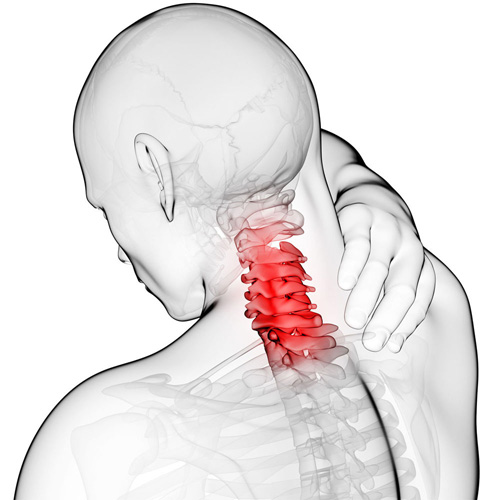
Whiplash is really a slang term for the rapid back and forth whipping of the head on the neck, usually associated with motor vehicle accidents. The title “Whiplash Associated Disorders”, or WAD, describes it best because it includes ALL of the MANY signs and symptoms of the disorder.
WAD basically comes in three sizes based on the degree of injury. A WAD I is present when there is pain but no physical examination findings; WAD II occurs when there are exam findings but no neurological loss (numbness or weakness); and WAD III includes loss of neurological function. There is also a separate WAD level that includes fractures and dislocations (WAD IV).
There are many things that can be done by the patient to assist in the healing process for WAD. The first well-studied recommendation is to “continue with your usual activities.” Try to keep active and not change your routine. The good news is that WAD (especially types I and II) usually resolves without complication, and recovery is even more likely to occur if you don’t deviate much from your routine.
For those whose symptoms are more severe and/or not resolving, mobilization and manipulation of the neck and back are very effective treatment options. In addition to treatments you’d receive in a chiropractic office, there are MANY things you can do at home as “self-help strategies.” Some of these include (“PRICE”):
1) PROTECT: Though it’s important to continue with your usual daily activities, this is dependent on both the degree of tissue injury and your pain tolerance. So do as many of your usual daily activities as possible, but AVOID those that result in a sharp, lancinating type of pain or those where recovery from the pain is delayed. Therefore, this category may require modifying your ADLs (activities of daily living). A cervical collar (hard or
soft) should NOT to be used UNLESS you have an unstable injury (fracture or a grade III sprain).
2) REST: Doing too much is like picking at a cut (which can delay healing) and doing too little can lead to a delayed healing response as well. Staying within reasonable pain boundaries is a good guide.
3) ICE > HEAT: Ice reduces swelling, and your doctor will typically recommend it over applying heat, especially on a recent injury. Heat draws fluids in, and while it may feel good, it can make your symptoms worse.
4) COMPRESS: We can basically ignore this when referencing neck pain. This pertains better to wrapping an ankle, knee, wrist, or elbow with an elastic compression orthotic or brace.
5) ELEVATE: This too is meant for the acute stages of an extremity injury like a foot or ankle.
Exercises unique for neck pain in the acute, subacute, and chronic stages of healing are perhaps the most important of the self-help approaches. In the ACUTE phase, try these…
1) Range of Motion: Once again, stay within “reasonable pain boundaries” as you move your head forwards, backwards, side to side, and rotate left and right. These can be done either with or without LIGHT resistance applied using one or two fingers placed against your head. Limit the repetitions to three slow reps in each direction and emphasize the release of the movement.
2) Chin/head Glides: Tuck in the chin (think of creating a double or triple chin) followed by poking the chin/head out.
In the SUBACUTE and CHRONIC phases of healing, the importance of strengthening the deep neck flexors cannot be over emphasized. Please refer to last month’s article for a description of this (see #3 of the 6 recommendations listed).