
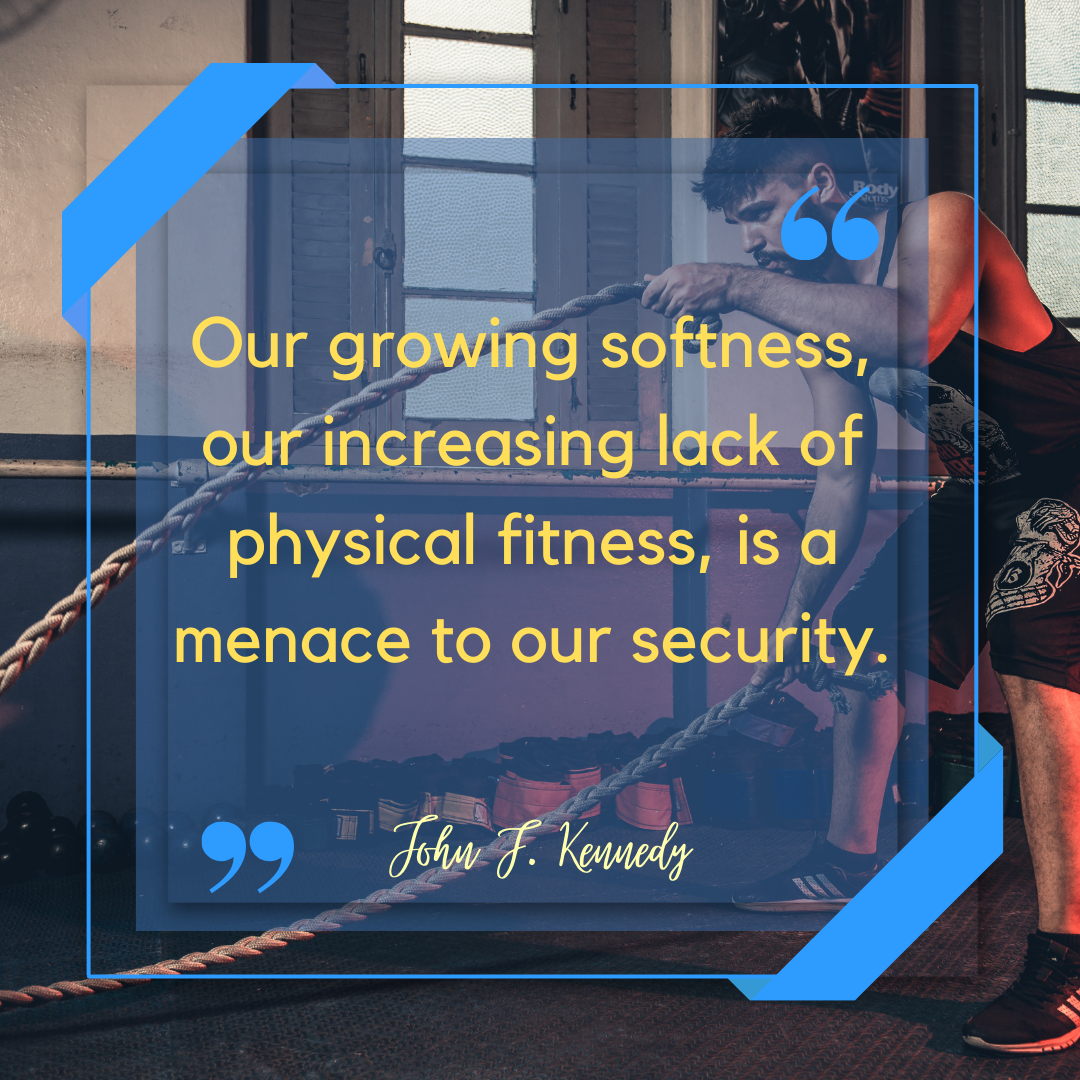
In the early 1960s, President John F. Kennedy recognized the growing need for a national focus on physical fitness. Concerned about the overall health of the American population—especially the youth—he believed that a strong and physically capable nation was essential for its future success. His initiatives in promoting physical fitness were groundbreaking and set the tone for decades of health-conscious policies in the United States.
Kennedy’s passion for fitness can be traced back to his personal experiences. Despite dealing with several chronic health issues, including back problems, JFK remained an advocate for staying physically active. His experiences in World War II, particularly his role in rescuing his crew after their PT boat was sunk, reinforced his belief in the importance of physical endurance and strength.
Shortly after taking office, JFK published an article titled “The Soft American” in Sports Illustrated in 1960. In this article, he voiced his concern that Americans were becoming too sedentary, with physical activity taking a backseat to modern conveniences. He wrote that this decline in physical fitness posed a threat to the nation’s overall well-being, as well as its ability to maintain global leadership. Kennedy emphasized that fitness was not just about individual health, but about national strength and preparedness.
To address this issue, Kennedy established the President’s Council on Physical Fitness, expanding on an existing initiative from the Eisenhower administration. Under JFK’s leadership, the Council promoted physical education programs in schools and developed new fitness tests to ensure that children were meeting national health standards. Kennedy also encouraged adults to incorporate regular exercise into their daily lives, highlighting activities like walking, running, and swimming as simple yet effective ways to stay fit.
One of the most notable aspects of JFK’s fitness initiatives was his challenge to the military to improve their physical standards. He promoted the 50-mile hike, originally designed by Theodore Roosevelt, as a test of endurance, even encouraging his staff to participate.
JFK’s fitness initiatives left a lasting legacy. His efforts to inspire Americans to prioritize their physical well-being contributed to a cultural shift towards health and fitness that continues today. Through his programs, Kennedy set a standard that recognized the importance of physical fitness not only for individuals but for the strength and resilience of the nation.
 Aberdeen Chiropractic