Health Alert: Cancer Survival Rates Have Improved Since the 1990s, But…

Health Alert: Cancer Survival Rates Have Improved Since the 1990s, But…

A new study finds that while survival rates have increased for individuals with breast, prostate, lung, liver, and colon cancers over the past 20 years, the improvements have been less remarkable among elderly cancer patients. Lead researcher Dr. Wei Zheng advises that further research is needed to identify reasons for the slower improvement in cancer survival among older adults in hopes of further reducing cancer mortality rates in the senior population. JAMA Oncology, February 2015

#BackHealth #ChiropracticCare #SpineHealth #PostureTips #PainRelief #HealthySpine #ChiropracticAdjustment #BackPainRelief #WellnessJourney #HolisticHealth

Wellness/Prevention: Eat More Carrots to Reduce Diabetes Risk!

Wellness/Prevention: Eat More Carrots to Reduce Diabetes Risk!

A diet rich in alpha-carotene and beta-carotene can reduce a person’s risk for developing type 2 diabetes by as much as 22%. The most common source of carotenes in the American diet is carrots; however, pumpkin, winter squash, sweet potato, spinach, and broccoli are also great food sources of alpha-carotene and/or beta-carotene. Nutrition, Metabolism, and Cardiovascular Diseases, December 2014

Quote: “And in the end it is not the years in your life that count, it’s the life in your years.” ~ Abraham Lincoln

#BackHealth #ChiropracticCare #SpineHealth #PostureTips #PainRelief #HealthySpine #ChiropracticAdjustment #BackPainRelief #WellnessJourney #HolisticHealth

From the “No Kidding” files: Light Activity Good for Seniors’ Hearts.

Exercise: Light Activity Good for Seniors’ Hearts.

Light physical activity appears to benefit older adults’ hearts even if they suffer from mobility issues. Research involving almost 1,200 elderly adults with limited mobility revealed that those who fit some movement into their day, such as light housework or slow walking, had a lower risk of suffering a heart attack over the following ten years. Senior researcher Dr. Thomas Buford adds, “I think this and other studies are showing us it’s never too late for people to benefit from physical activity.” Journal of the American Heart Association, February 2015

Diet: Unhealthy Foods on the Rise in Developing Nations.

Diet: Unhealthy Foods on the Rise in Developing Nations.

While citizens in wealthier nations may be eating healthier foods, developing nations are consuming more processed meats and sugar-sweetened drinks than ever before. Senior study author Dr. Dariush Mozaffarian warns, “There is a particularly urgent need to focus on improving diet quality among poorer populations. If we do nothing, under-nutrition will be rapidly eclipsed by obesity and non-communicable diseases, as is already being seen in India, China, and other middle-income countries.” The Lancet Global Health, February 2015

Exercise: Improves Cognitive Function in Women!

Exercise: Improves Cognitive Function in Women!

Regardless of age, females who are highly physically fit have faster neural reaction times than their less fit peers. Near infrared spectroscopy scans showed that physical fitness is associated with greater cerebral oxygenation, which may be the underlying mechanism for the observed elevations in brain function. Frontiers in Human Neuroscience, February 2015

Mental Attitude: Sound of Mom’s Voice Aids Fetal Brain Growth.

Mental Attitude: Sound of Mom’s Voice Aids Fetal Brain Growth.

A new study suggests that babies experience a brain boost when they hear the voice of their mother while in utero. Researchers found that sound centers in babies’ brains grew more quickly when they heard recordings of their mother versus other normal daily sounds. Babies who are born prematurely often suffer from hearing and language problems and these findings may explain why. Co-author Dr. Amir Lahav adds, “Babies begin to hear at 25 weeks’ gestation, and they’re exposed to the mother’s voice and heartbeat. If you put them inside the incubator for five to six weeks, you’re actually depriving them of these maternal exposures to the mother’s voice… The practice of encouraging mothers to visit their premature babies in the newborn nursery should be continued as it has so many other valuable effects.” Proceedings of the American Academy of Sciences, February 2015

Chiropractic: Prevention Is Key to Avoid Back Pain.

Chiropractic: Prevention Is Key to Avoid Back Pain.

The American Chiropractic Association offers these suggestions to help protect your back and improve your spinal health: maintain a healthy diet and weight, exercise regularly, maintain proper posture, avoid prolonged inactivity or bed rest, quit smoking, and use good body mechanics when lifting. American Chiropractic Association, August 2014

Health Alert: Frequent Sauna Use Linked to Reduced Risk of CVD.

Health Alert: Frequent Sauna Use Linked to Reduced Risk of CVD.

After reviewing twenty years of data concerning 2,315 Finnish men, researchers found that those who used a sauna at least two to three times per week were 22% less likely to experience sudden cardiac death, 23% less likely to experience fatal coronary heart disease (CHD), had a 27% lower risk of cardiovascular disease (CVD) death, and had a 24% lower risk of all-cause mortality during the course of the two-decade study. The authors write, “This study provides prospective evidence that sauna bathing is a protective factor against the risk of sudden cardiac death, fatal CHD, fatal CVD, and all-cause mortality events in the general male population. Our results suggest that sauna bathing is a recommendable health habit, although further studies are needed to confirm our results in different population settings.” JAMA Internal Medicine, February 2015

Diet: Fiber Helps People Lose Weight.

Diet: Fiber Helps People Lose Weight.

A new study indicates that a simple high-fiber diet can help lower blood pressure, reduce blood sugar, and aid in weight loss. Researchers found that increasing dietary fiber led to a host of other healthy dietary changes, likely because consuming more high-fiber foods can lead to a decrease in consumption of unhealthy foods that are high in fat and sugar. Study author Dr. Yunsheng Ma writes, “For people who find it difficult to follow complex dietary recommendations, a simpleto-follow diet with just one message — increase your fiber intake — may be the way to go.” Annals of Internal Medicine, February 2015

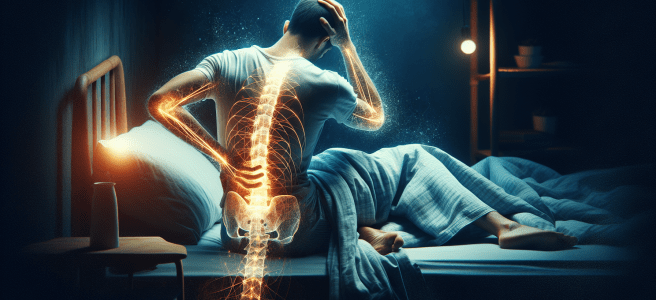
Chronic Low Back Pain and Insomnia: Uncovering the Alarming Connection

The detrimental impact of inadequate sleep on overall health and well-being is well-documented, with previous research linking poor sleep quality to a myriad of adverse health outcomes, including hypertension, type 2 diabetes, obesity, depression, cardiovascular events such as heart attack and stroke, among others. Building upon this body of evidence, a team of South Korean researchers embarked on a study aimed at investigating the relationship between chronic low back pain and insomnia.

Surveying a cohort of 481 chronic low back pain patients, the researchers uncovered a striking association between back pain and sleep disturbances. Alarmingly, 43% of the participants reported experiencing mild-to-severe insomnia following the onset of back pain, underscoring the profound impact of musculoskeletal discomfort on sleep quality.

Moreover, the study revealed that chronic low back pain patients with concurrent musculoskeletal pain in at least one other body site were more than eight times as likely to report sleeping difficulties compared to those experiencing isolated back pain. This finding highlights the compounding effect of multisite musculoskeletal pain on sleep disruption, further exacerbating the burden of chronic pain and sleep deprivation on individuals’ overall health and quality of life.

The intricate interplay between chronic pain and sleep disturbances underscores the importance of adopting a comprehensive, multidisciplinary approach to pain management. By addressing both the physical manifestations of pain and the underlying sleep disturbances, healthcare providers can effectively mitigate the impact of chronic musculoskeletal conditions on sleep quality and overall well-being.

Furthermore, these findings underscore the need for early intervention and holistic treatment strategies aimed at alleviating both pain and sleep disturbances among individuals with chronic low back pain. By prioritizing sleep hygiene practices, implementing targeted pain management interventions, and fostering a supportive therapeutic environment, healthcare providers can empower patients to reclaim restorative sleep and regain control over their lives despite the challenges posed by chronic pain.

The Korean Journal of Pain, April 2015