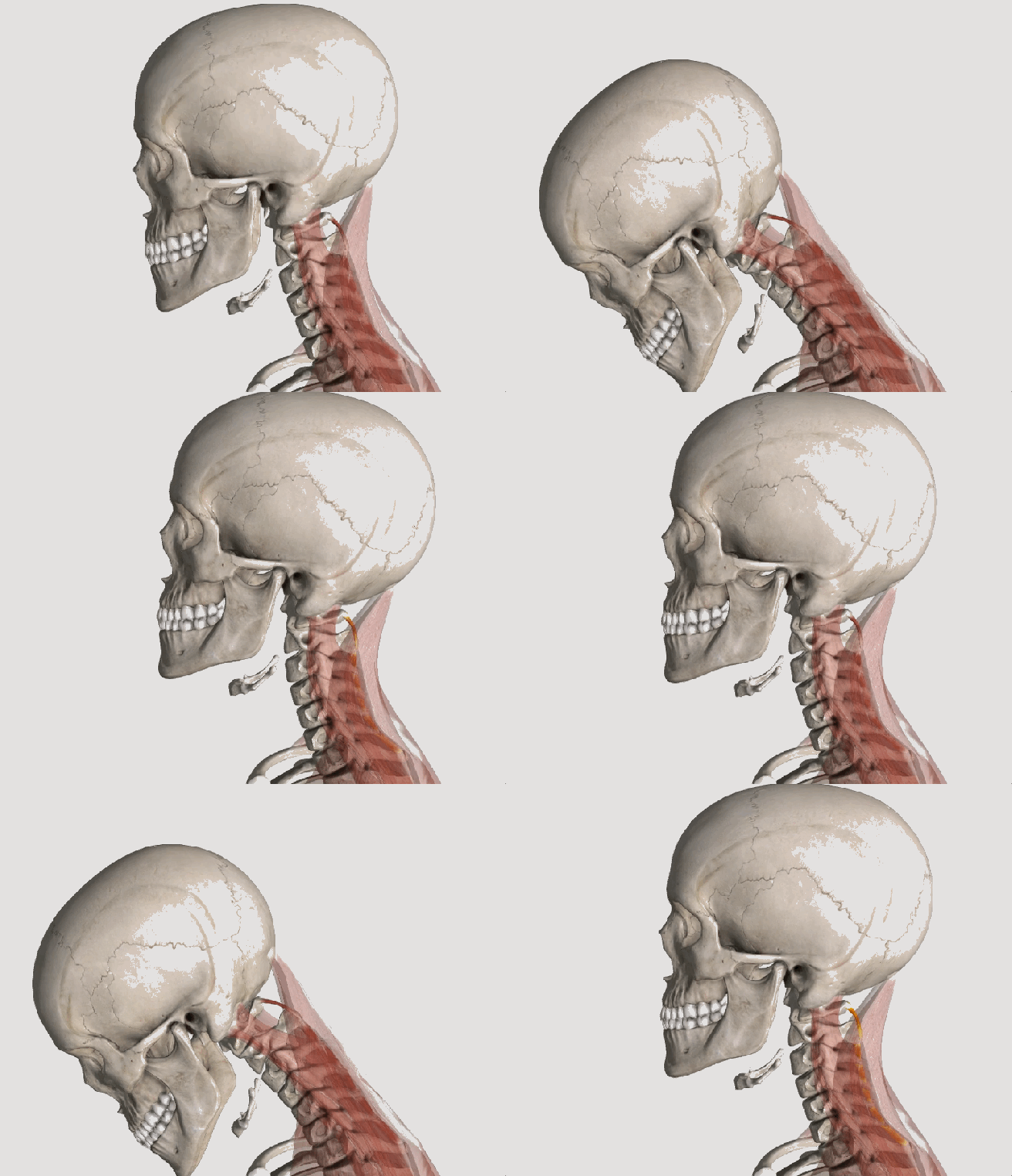
Chiropractic & Headaches

Migrane

According to the World Health Organization, headaches are among the most common disorders of the nervous system affecting an estimated 47% of adults during the past year. Headaches place a significant burden on both quality of life (personal, social, and occupational) and financial health. They are usually misdiagnosed by healthcare practitioners, and in general, are underestimated, under-recognized, and under-treated around the world. So, what about chiropractic and headaches… Does it help?

Suffice it to say, there are MANY studies showing chiropractic care helps headache sufferers. For instance, in a review of past research studies using an “evidence-based” approach, chiropractic treatment of adults with different types of headaches revealed very positive findings! Researchers note that chiropractic care helps those with episodic or chronic migraine headaches, cervicogenic headache (that is, headaches caused by neck problems), and tension-type headaches (chronic more than episodic). There appears to be additional benefit when chiropractic adjustments are combined with massage, mobilization, and/or adding certain types of exercises, although this was not consistently studied. In the studies that discussed adverse or negative effects of treatment, the researchers noted no serious adverse effects.

In patients suffering from athletic injuries, particularly post-concussion headache (PC-HA), chiropractic care can play a very important role in the patient’s recovery. With an estimated 1.6 to 3.8 million sports-related brain injuries occurring each year, approximately 136,000 involve young high school athletes (although some argue this is “grossly underestimated”).

Several published case studies report significant benefits for post-concussion patients after receiving chiropractic care, some of which included PC-HA from motor vehicle collisions, as well as from slips and falls. For example, one described an improvement in symptoms that included deficits in short-term memory as well as attention problems. In this particular study, a six-year-old boy fell from a slide in the playground, and after 18 months of continuous problems, underwent a course of chiropractic care. After just three weeks of care, his spelling test scores improved from 20% to 80% with even more benefits observed by the eighth week of care!

Another case study looked at a 16-year-old male teenager with a five-week-old football injury who had daily headaches and “a sense of fogginess” (concentration difficulties). He reported significant improvement after the second visit, with near-complete symptom resolution after the fifth visit (within two weeks of care). After seven weeks of care, he successfully returned to normal activities, including playing football.

Dizziness and vertigo are also common residuals from concussion and were present in a 30-year-old woman just three days following a motor vehicle accident. She also complained of headache, neck pain, back pain, and numbness in both arms. The case study noted significant improvement after nine visits within an 18-day time frame.

We realize you have a choice in whom you consider for your health care provision and we sincerely appreciate your trust in choosing our service for those needs.  If you, a friend, or family member requires care for neck pain or headaches, we would be honored to render our services.

What is CTS?

If tingling/numbness primarily affects your thumb, index, third, and ring fingers, it very well could be carpal tunnel syndrome, or CTS. Chances are you’ve probably had this condition for months or even longer but it’s been more of a nuisance than a “major problem” and therefore, you probably haven’t “bothered” having it checked out. Let’s take a look at some “facts” about CTS!

WHAT IS CTS? CTS is basically a pinched nerve (the median nerve) that occurs on the palm side of the wrist that innervates the three middle fingers and the thumb on the palm side. This nerve starts in the neck, runs through the shoulder to enter the arm, and travels down the palm side forearm through the carpal tunnel. The carpal tunnel is made up by eight small bones (called “carpal bones”) that form the roof and walls of the tunnel. The floor of the tunnel is a ligament called the transverse carpal ligament. The median nerve lies immediately on the floor, and deeper inside the tunnel are nine tendons that connect the muscles of our forearm to the fingers, which allow us to make a fist and grip. When swelling occurs inside the tunnel, the nerve is pinched against the floor (ligament) and symptoms occur.
SYMPTOMS OF CTS: Symptoms typically start gradually with tingling, numbness, burning, itching, or a “half-sleep” feeling in the palm of the hand, thumb, and middle three fingers. The fingers can feel swollen and weak, though “swelling” is usually NOT visible. CTS can occur in one or both hands, but it is usually worse in the dominant hand. Initially, you may only notice symptoms at night or in the morning. As CTS worsens, sleep interruptions, grip weakness, difficulty distinguishing hot from cold, increased pain, pain radiating up the arm, and more may occur.
CAUSES OF CTS: There are many causes of CTS that often occur in combination: 1) Heredity or genetics — being born with a smaller wrist than others; 2) Trauma — a fall on the arm/hand (sprain or fracture); 3)  Overuse of the arms/hands (like repetitive line work, serving tables, or using a computer), 4) Hormonal causes — during menstruation, with pregnancy, during menopause, diabetes, hypothyroid, overactive pituitary gland; 5) Rheumatoid arthritis; 6) Fluid retention; 7) Cysts, tumors, or spurs inside the tunnel; 8) Vibrating tools, 9) Hobbies such as knitting, sewing, crocheting; 10) sports; or 11) an “Insidious” or unknown cause!
CTS RISK FACTORS: 1) Gender: Women are three times more likely to develop CTS, possibly because they generally have a smaller carpal tunnel than men, in addition to hormonal differences; 2) Diabetes or other metabolic disorders; 3) Adults, especially >50 years old; 4) Job demands.
CTS DIAGNOSIS: Your doctor of chiropractic will review your patient history and then evaluate the neck, shoulder, arm, and hand, as ALL can be involved in producing CTS-like symptoms. He/she may also order blood tests (to check for diabetes, thyroid levels, rheumatoid arthritis, etc.) and/or an EMG/NCV (electromyogram/nerve conduction studies) to test for nerve damage.
We will FINISH THIS interesting discussion next month covering: Treatment, prevention, and research.
We realize you have a choice in whom you consider for your health care provision and we sincerely appreciate your trust in choosing our service for those needs.  If you, a friend, or family member requires care for Carpal Tunnel Syndrome, we would be honored to render our services.
480px-Carpal_Tunnel_Syndrome


My Hip Hurts….

hip FAI

​Is it a labral tear? 

One of the structures that is frequently blamed for hip pain is called the labrum—the rubbery tissue that surrounds the socket helping to stabilize the hip joint. This tissue often wears and tears with age, but it can also be torn as a result of a trauma or sports-related injury.

The clinical significance of a labral tear of the hip is controversial, as these can be found in people who don’t have any pain at all. We know from studies of the intervertebral disks located in the lower back that disk herniation is often found in pain-free subjects—between 20-50% of the normal population.  In other words, the presence of abnormalities on an MRI is often poorly associated with patient symptoms, and the presence of a labral tear of the hip appears to be quite similar.

For instance, in a study of 45 volunteers (average age 38, range: 15–66 years old; 60% males) with no history of hip pain, symptoms, injury, or prior surgery, MRIs reviewed by three board-certified radiologists revealed a total of 73% of the hips had abnormalities, of which more than two-thirds were labral tears.

Another interesting study found an equal number of labral tears in a group of professional ballet dancers (both with and without hip pain) and in non-dancer control subjects of similar age and gender.

Another study showed that diagnostic blocks—a pain killer injected into the hip for diagnostic purposes to determine if it’s a pain generator—failed to offer relief for those with labral tears.

Doctors of chiropractic are trained to identify the origins of pain arising from the low back, pelvis, hip, and knee, all of which can mimic or produce hip symptoms.  Utilizing information derived from a careful history, examination, imaging (when appropriate), and functional tests, chiropractors can offer a nonsurgical, noninvasive, safe method of managing hip pain.

“Other” Causes of Low Back Pain

316046269_1280x720

Between 80% and 90% of the general population will experience an episode of lower back pain (LBP) at least once during their lives. When it affects the young to middle-aged, we often use the term “non-specific LBP” to describe the condition. The geriatric population suffers from the “aging effects” of the spine—things like degenerative joint disease, degenerative disk disease, and spinal stenosis. Fractures caused by osteoporosis can also result in back pain.

The “good news” is that there are rare times when your doctor must consider a serious cause of LBP. That’s why he or she will ask about or check the following during your initial consultation: 1) Have you had bowel or bladder control problems? (This is to make sure a patient doesn’t have “cauda equina syndrome”—a very severely pinched nerve.) 2) Take a patient’s temperature and ask about any recent urinary or respiratory tract infections to rule out spinal infections. 3) To rule out cancer, a doctor may ask about a family or personal history of cancer, recent unexplained weight loss, LBP that won’t go away with time, or sleep interruptions that are out of the ordinary. 4) To rule out fractures, a doctor may also take x-rays if a patient is over age 70 regardless of trauma due to osteoporosis, over age 50 with minor trauma, and at any age with major trauma.
Once a doctor of chiropractic can rule out the “dangerous” causes of LBP, the “KEY” form of treatment is giving reassurance that LBP is manageable and advise LBP sufferers of ALL ages (especially the elderly) to KEEP MOVING! Of course, the speed at which we move depends on many things—first is safety, but perhaps more importantly is to NOT BECOME AFRAID to do things! As we age, we gradually fall out of shape and end up blaming our age for the inability to do simple normal activities. Regardless of age, we must GRADUALLY increase our activities to avoid the trap of sedentary habits resulting in deconditioning followed “fear avoidant behavior!”
Here are a few “surprising” reasons your back may be “killing you”: 1) You’re feeling down – That’s right, having “the blues” and more serious mood disorders, like depression, can make it more difficult to cope with pain. Also, depression often reduces the drive to exercise, may disturb sleep, and can affect dietary decisions—all of which are LBP contributors. 2) Your phone – Poor posture caused by holding a phone between your bent head and shoulder (get a headset!) or prolonged mobile phone use can increase your risk for spinal pain. 3) Your feet hurt, which makes you walk with an altered gait pattern, forcing compensatory movements up the “kinetic chain” leading to LBP. 4) Core muscle weakness, especially if you add to that a “pendulous abdomen” from being overweight—this is a recipe for disaster for LBP. 5) Tight short muscles such as hamstrings, hip rotator muscles, and/or tight hip joint capsules are common problems that contribute to LBP. Stretching exercises can REALLY help!

CTS Exercises?

CTS Stretch

Carpal Tunnel Syndrome (CTS) is the leading cause of numbness to the middle three fingers and thumb and affects millions of Americans each year. There are MANY potential causes of CTS, and these causes can be unclear or multi-factorial. We have discussed the importance of night splints and what chiropractic can do for CTS in the recent past. This month, let’s look at what YOU can do for CTS.
“Self-help” concepts are VERY important as they empower YOU to gain control of your condition’s signs and symptoms, thus placing less reliance on those of us who manage (in this case) CTS. There is a time for “PRICE” or, Protect, Rest, Ice, Compress, Elevate, such as when most activities make symptoms worse. This is the time for splinting, reducing activities of daily living (which sometimes includes work restrictions), and the use of ice cupping or massage. Patients should initiate movement or exercise-based approaches as soon as such activities can be tolerated. Here are four different exercises you can do:
1. Fist / “Bear Claw” / Open Wide Hand: This is a three-step exercise, and you can start or stop on any of the three “steps.” A. FIST:  Make a fist and squeeze as tightly as tolerated; B. BEAR CLAW: Starting from the fist position (A), open only the palm of the hand (keep your thumb and fingers bent but straighten the big knuckle joints at the base of the fingers); C. OPEN WIDE: Straighten and spread ALL your finger joints by opening up your hand as much as possible and feel for a good stretch in the palm. HOLD each position for one to five seconds (vary the “speed” of moving between the three positions – fast, medium, and slow; emphasize what feels best if you have a preference). Repeat five to ten times or until your hands feel looser.
2. “Church Steeple”: Place your hands together in front of you (“prayer position”) touching the pads of the thumbs and all four fingertips together and spread your fingers as wide as possible. Next, separate your palms as far as you can while applying pressure against your finger/thumb tips and repeat. Alter the speed and number of repetitions until your hands feel stretched out.
3. “Shake and Flick”: Simply shake your hands as if you just washed them and you’re shaking the water off to “air dry” them. Again, alter the speed and reps until they feel loosened up.
4. Forearm Stretches: Place one arm out in front, elbow straight, and fingers pointed straight, palm up (first set). Reach with the opposite hand and pull the fingers, hand, and wrist down and back towards you until you feel a strong “pull” in your forearm muscles. Hold until the forearm muscles feels stretched (5-10 seconds). Repeat this with the palm facing down for the second set to stretch the opposite (extensor) forearm muscles.
Do these on each side two to three times each (even the “good” side) EVERY HOUR (or as often as possible). Think about what you do on a daily basis and if you work in a repetitive manner (on the job or a hobby at home), try to do these exercises DURING THE REPETITIVE ACTIVITY to help keep your symptoms from getting out of control. If you can alter the position or speed of a work or avocational activity, do so for long-term prevention purposes!
If you cannot gain control of your CTS condition, you may need additional treatment options of which chiropractic offers a safe, non-surgical approach.
We realize you have a choice in whom you consider for your health care provision and we sincerely appreciate your trust in choosing our service for those needs.  If you, a friend, or family member requires care for Carpal Tunnel Syndrome, we would be honored to render our services.

10 Quick Back Pain Tips

Low back pain (LBP) is VERY likely to affect all of us at some point in life. The question is, do you control IT or does IT control you? Here are ten “tricks” for staying in control of “IT!”
1)  STRETCH: When you’re in one position for a long time (like sitting at your desk), SET your cell phone timer to remind yourself to get moving and stretch every 30-60 minutes! Mornings are a great time to stretch.
2)  BE SMART: Do NOT place your computer monitor anywhere other than directly in front of you. Shop carefully for a GOOD supportive office chair that is comfortable and a good fit.
3)  POSTURE: For sitting, sit as upright as comfortably possible keeping your chin tucked in so the head stays back over the shoulders.
4)  SHOE WEAR: Avoid wearing heels greater than one inch high (2.54 cm). A supportive shoe that can be worn COMFORTABLY for several hours is ideal! Generally, the “skimpier” the shoe, the worse the support, so don’t “skimp” on shoe wear!
5)  SMOKING: Carbon monoxide from cigarette smoke competes with oxygen at each cell in the body literally suffocating them, which makes the healing process more difficult.
6)  WEIGHT: Your body mass index (BMI) should be between 18.5 and 25. Search the internet for “BMI Calculator” and plug in your height and weight to figure out yours.  BMI is a reliable indicator of body fatness and a great way to determine where you are at for goal setting.
7)  ANTI-INFLAMMATION: Common over the counter (OTC) medications include ibuprofen and naproxen. However, recent studies show these types of medications (NSAIDS) may delay the healing process. A healthier choice is ginger, turmeric, and bioflavonoids, which are commonly bundled together in a supplement. Eat fresh fruits, veggies, lean meats, and food rich in omega-3 fatty acids. Vitamin D, magnesium, and coenzyme Q10 are also smart choices. AVOID FAST FOOD as they tent to be rich in omega-6 fatty acids, which can promote inflammation.
8)  ICE: This could be included in #7 but deserves its own space. Ice reduces swelling while heat promotes it. Try rotations of ice every 15-20 minutes for about an hour three times a day to “pump” out the swelling!
9)  STAY ACTIVE: Balance rest with physical activity like exercise or simply going for a walk. The most important thing is to move your body around.
10)  STRENGTHEN: Core stabilizing exercises (sit-ups, planks, quadruped) and BALANCE exercises are VERY important!

Teens & Headaches? What?

Migrane

In 2016, researchers at Curtin University in Perth examined the seated posture and health data of 1,108 17-year olds in an effort to determine if any particular posture increased the risk of headaches/neck pain among late adolescents.

Among four posture subgroups—upright, intermediate, slumped thorax, and forward head—the researchers observed the following: participants who were slumped in their thoracic spine (mid-back region) and had their head forward when they sat were at higher odds of having mild, moderate, or severe depression; participants classified as having a more upright posture exercised more frequently, females were more likely to sit more upright than males; those who were overweight were more likely to sit with a forward neck posture; and taller people were more likely to sit upright.

While they found biopsychosocial factors like exercise frequency, depression, and body mass index (BMI) ARE associated with headaches and neck pain, their data did not suggest any one particular posture increased the risk of neck pain or headaches more than any other posture among the teenagers involved in the study.

This is noteworthy as studies with adults do indicate the risk for neck pain and headaches is greater in individuals with poor neck posture. In particular, postures such as forward head carriage, pinching a phone between the ear and shoulder, and prolonged neck/head rotation outside of neutral can all increase the risk of cervical disorders. This suggests that in younger bodies, the cause of neck pain and headaches may be multifactoral and not limited to just poor posture and that treatment must address all issues that may increase one’s risk for neck pain/headaches in order to reach a desired outcome.

The good news is that chiropractic has long embraced the biopsychosocial model of healthcare, looking at ALL factors that affect back and neck pain and quality of life. Through patient education, spinal manipulation, mobilization, exercise training, the use of modalities, and more, chiropractors can greatly help those struggling with neck pain and headaches!

Fibromyalgia Diet?

10-Easy-Mediterranean-Diet-Swaps-01-722x406

Folks suffering with fibromyalgia (FM) commonly complain that certain foods can make their symptoms worse. How common is this? One study reported 42% of FM patients found that certain foods worsened their symptoms!

Because FM affects each person differently, there is no ONE FM diet or, “…one size fits all” when it comes to eating “right” for FM. Patients with FM usually find out by trial and error which foods work vs. those that consistently don’t. However, remembering which foods do what can be a challenge so FIRST, make a three column FOOD LOG with the following headings: BETTER, NO CHANGE, WORSE. This will allow you to QUICKLY review the list as a memory refresher.

According to Dr. Ginevra Liptan, medical director of the Frida Center for Fibromyalgia (Portland, OR) and author of Figuring Out Fibromyalgia: Current Science and the Most Effective Treatments, there are some common trends she’s observed through treating FM patients. Here are some of her recommendations:

PAY ATTENTION TO HOW FOOD MAKES YOU FEEL: It is quite common to have “sensitivities” to certain foods, but this is highly variable from person to person. Examples of problematic foods/ingredients include: MSG (commonly used in Chinese food), other preservatives, eggs, gluten, and dairy. Dr. Liptan HIGHLY recommends the food journal approach! She also recommends including a note about the type of symptoms noticed with each “WORSE” food, as symptoms can vary significantly.

ELIMINATE CERTAIN FOODS: If you suspect a certain food may be problematic, try an elimination challenge diet. That means STOP eating that food for six to eight weeks and then ADD it back into your diet and see how you feel. Remember, FM sufferers frequently have irritable bowel syndrome, also known as IBS, and this approach can be REALLY HELPFUL! Food allergies may be part of the problem, and your doctor may refer you for a consult with an allergist and/or a dietician. They will also discuss the “anti-inflammatory diet” with you.

EAT HEALTHY: In general, your diet should emphasize fruits and vegetables and lean protein. Pre-prepare food so you have something “healthy” to reach for rather than a less healthy snack when you’re hungry and tired. Consider “pre-washed” and pre-cut up vegetables; try quinoa rather than pasta. Consume anti-fatigue foods and eat multiple small meals daily vs. one to two large meals. Protein snacks (like a hardboiled egg or oatmeal – GLUTEN FREE) help a lot! Eat breakfast and include protein. Also, GET ENOUGH SLEEP (at least seven to eight hours and be consistent)!

SUPPLEMENTS: Consider a good general multi-vitamin, calcium and magnesium, omega-3 fatty acids, vitamin D3, and Co-Enzyme Q10. There are others, but this represents a great place to start. Remember to check any medication you may be taking with these/any suggestions before taking supplements!

If you, a friend or family member requires care for Fibromyalgia, we sincerely appreciate the trust and confidence shown by choosing our services!

What is Whiplash? 

WRD 2

Whiplash is an injury to the soft-tissues of the neck often referred to as a sprain or strain. Because there are a unique set of symptoms associated with whiplash, doctors and researchers commonly use the term “whiplash associated disorders” or WAD to describe the condition.

WAD commonly occurs as a result of a car crash, but it can also result from a slip and fall, sports injury, a personal injury (such as an assault), and other traumatic causes. The tissues commonly involved include muscle tendons (“strain”), ligaments and joint capsules (“sprains”), disk injuries (tears, herniation), as well as brain injury or concussion—even without hitting the head!

Symptoms vary widely but often include neck pain, stiffness, tender muscles and connective tissue (myofascial pain), headache, dizziness, sensations such as burning, prickly, tingling, numbness, muscle weakness, and referred pain to the shoulder blade, mid-back, arm, head, or face. If concussion occurs, additional symptoms include cognitive problems, concentration loss, poor memory, anxiety/depression, nervousness/irritability, sleep disturbance, fatigue, and more!

Whiplash associated disorders can be broken down into three categories: WAD I includes symptoms without any significant examination findings; WAD II includes loss of cervical range of motion and evidence of soft-tissue damage; and WAD III includes WAD II elements with neurological loss—altered motor and/or sensory functions. There is a WAD IV which includes fracture, but this is less common and often excluded.

Treatment for WAD includes everything from doing nothing to intensive management from multiple disciplines—chiropractic, primary care, physical therapy, clinical psychology, pain management, and specialty services such as neurology, orthopedics, and more. The goal of treatment is to restore normal function and activity participation, as well as symptom management.

The prognosis of WAD is generally good as many will recover without residual problems within days to weeks, with most people recovering around three months after the injury. Unfortunately, some are not so lucky and have continued neck pain, stiffness, headache, and some develop post-concussive syndrome. The latter can affect cognition, memory, vision, and other brain functions. Generally speaking, the higher the WAD category, the worse the prognosis, although each case MUST be managed by its own unique characteristics. If the injury includes neurological loss (muscle strength and/or sensory dysfunction like numbness, tingling, burning, pressure), the prognosis is often worse.

Chiropractic care for the WAD patient can include manipulation, mobilization, and home-based exercises, as well as the use of anti-inflammatory herbs (ginger, turmeric, proteolysis enzymes (bromelain, papain), devil’s claw, boswellia extract, rutin, bioflavonoid, vitamin D, coenzyme Q10, etc.) and dietary modifications aimed at reducing inflammation and promoting healing.

* 83% of those patients involved in an MVA will suffer whiplash injury and 50% will be symptomatic at 1 year.
* 90% of patients with neurologic signs at onset may be symptomatic at 1 year.
* 25- 80% of patients who suffer a whiplash injury will experience late-onset dizziness
* Clinicians should be observant for radiographic signs of instability, including interspinous widening, vertebral subluxation, vertebral compression fracture, and loss of cervical lordosis.
* Horizontal displacement of greater than 3.5 mm or angular displacement of more than 11 degrees on flexion/extension views suggests instability.

What is CTS?

480px-Carpal_Tunnel_Syndrome

Carpal tunnel syndrome (CTS) is a very common condition. According to a report by the Bureau of Labor Statistics (BLS), CTS ranks SECOND among the major disabling diseases and illnesses in ALL private industries. The BLS states that workers with CTS may eventually have to give up their livelihood. They cite one study in which almost half of all CTS patients changed their jobs within 30 months following their diagnosis. Due to the controversy surrounding the issue of CTS and worker’s compensation, workers do not always receive compensation benefits.
The KEY to long-term cost containment associated with CTS is EARLY DIAGNOSIS and PREVENTION! The challenge is getting the worker to identify early symptoms and NOT feel intimidated to report them, which could then lead to prompt care and possibly job modifications, resulting in the best chance of preventing a more complicated and far more costly problem.
Because of the many factors that contribute to and/or cause CTS, there is similarly no one way to prevent it from happening. Treating any/all underlying medical condition(s) is important. Using simple common sense can go a long way to help minimize some of the risk factors that predispose a person to work-related CTS and other cumulative trauma disorders (CTDs).
For example, watching and mimicking veteran workers can be a great guide as to how to maximize efficient work methods while minimizing unnecessary stresses and strains. Other preventative “tricks” include learning how to adjust the work area, handle tools, or perform tasks that minimize hand/wrist strain. Maintaining proper posture and exercise programs to strengthen the fingers, hands, wrists, forearms, shoulders, and neck may also help prevent CTS.
Many companies have taken action to help prevent repetitive stress injuries. In one study, 84% of the companies surveyed reported that they were modifying equipment, tasks, and processes as part of a prevention effort; nearly 85% analyzed their workstations and jobs; and 79% purchased more ergonomic equipment. Unfortunately, there is NO EVIDENCE that any of these methods can completely protect a worker against CTS. Often, the best approach is to relocate the worker to a less repetitive job, but this is not always an option.
Doctors of chiropractic can observe the worker through a video or during a factory tour/visit and often identify ergonomic problems that can result in a low-cost, easy modification. Simple modifications coupled with quality care, patient education, and cooperation from BOTH the worker and the employer can typically help yield the best outcome for the CTS patient.