You’re busy and you’re stressed out. Well, you’re not alone.
These are two of the most common reasons people give for not exercising consistently. Ironically, these are the two exact reasons you should be exercising and moving your body!
Moving your body releases endorphins which help you feel good, relaxes your mind which reduces stress, and burns calories to keep you looking great.
Why it Matters:
Your body is meant to move. Long hours commuting in your car or sitting at a desk can place a lot of stress on your musculoskeletal system.
If your spine and core muscles are weak and unstable, then you are more likely to suffer an injury which can cause a downward spiral that impacts your relationships with food, sleep, and exercise. So taking a pro-active approach to your exercise routine is crucial to live your best life. Chiropractic adjustments are an essential part of the picture because they can help you feel good mentally and keep you moving physically.
Maintaining a healthy weight can decrease the risk factors for cardiovascular and heart disease.
Even 15 minutes of light exercise can make a difference in your overall health.
Exercise can help you feel good both physically and mentally.
Next Steps:
Schedule time every day to exercise. But, don’t get discouraged if you feel like you aren’t doing enough. Rome wasn’t built in a day!
Even 15 minutes of walking during your afternoon break can provide you with the health benefits you are looking for. Burning an extra hundred calories per day (which could be accomplished with 10 minutes of walking) adds up to thousands of calories each month. Continue that trend, and you will notice inches falling off your waistline before you know it!
Science Source(s):
The Role of Exercise and Physical Activity in Weight Loss and Maintenance. Prog Cardiovasc Dis 2015
If you are looking to lose a few extra pounds this month, you are not alone. Many of our patients are working towards a similar goal.
How you move, eat, and think every day will determine your success. All three are part of maintaining an active lifestyle. So where does Chiropractic fit in?
Why it Matters:
Unfortunately, no Chiropractic technique takes off 10 pounds with each adjustment; but people just like you have been able to maintain a healthy weight by adding Chiropractic care into their active lifestyle.
Research has suggested that periodic Chiropractic care can help evaluate, detect and treat emerging problems. So, by reducing injuries, you will be able to stay active and keep your exercise routine on track.
Also, many people report reduced stress after getting adjusted. This makes sense because research studies have shown reduced muscle tension in the shoulders after an adjustment.
And finally, we firmly believe that healthy food choices make a significant impact on your body’s ability to be well and stay well. Eating healthy whole foods and sometimes even using select supplements can give your body the fuel it needs to get through the day.
Chiropractic has been shown to reduce the stress and tension in the muscles that support your head and neck.
Staying active with daily exercise will help keep your muscles toned and reduce your risk of injury.
Lowering your sugar intake helps to avoid those devastating blood sugar crashes in the afternoon.
Next Steps:
Thank you for making our office a part of your healthy lifestyle. Our team is here to support your ability to move, think, and eat in a way that results in achieving your healthcare goals.
We know that by moving your body, making smart dietary choices, and managing your stress, you will put yourself in the best place possible to live your best life. We are proud to be your partner in health!
Science Source(s):
The Role of Exercise and Physical Activity in Weight Loss and Maintenance. Prog Cardiovasc Dis 2015
Hair Cortisol and Adiposity in a Population‐Based Sample of 2,527 Men and Women Aged 54 to 87 years. Obesity 2017
Staying up late one night usually only results in feeling a little tired the next day, but when this happens day after day, it can really start to negatively affect your life. Research has shown that a lack of proper sleep can result in irritability, increased stress, a weakened immune system, and even joint pains. However, by developing a few healthy habits, you’ll be able to ensure that your brain and body get the rest the deserve, so you are ready to have a productive next day.
Why it Matters:
Practicing a relaxing nighttime ritual, such as powering down your electronics and reading a book, can help prepare your body for a good night’s sleep – and don’t forget the TV. While some people like to sleep with the television on, researchers have found that minimizing background noise can actually help your brain get more rest. In our own office, we’ve also heard from countless patients that they get a better night’s sleep after getting adjusted, which makes sense considering the numerous benefits of Chiropractic care.
– Wind down for approximately 30 minutes before bed by turning off your electronics.
– Minimize background noise to help your brain get much-deserved rest.
– Many patients report a more restful sleep after getting adjusted.
Next Steps:
Looking for more tips on how you can get a better night’s sleep? Come to our upcoming workshop where we’ll teach you about the best sleep position for your spine, how sleep helps your immune system stay strong, and how Chiropractic care can decrease the stress you hold in those muscles supporting your neck and shoulders. If you want to Sleep Better Tonight, then this workshop is for you!
Science Source:
Harvard Health Publishing. Harvard Medical School 2018
Neck and back pain are the most common reasons people experience sleep disturbances. Patients talk about sleeping on the floor, or sleeping in a lazy boy, or even sleeping bent over their bed attempting to get into a position that helps them get those few precious moments of rest and relief. Talk about a pain! All you want is the ability to get some rest, yet every position seems to make things feel worse. Well, don’t worry – you’re in the right place to get back on track!
Why it Matters:
Your body needs rest to heal. If you are in pain, it can be challenging to find a comfortable position to rest. As Chiropractors, we understand this better than anyone. Chiropractic care has been shown to increase your spinal range of motion, decrease inflammation, and even reduce the pressure on the delicate nerves exiting your spinal column – all of which will make it much easier to find a comfortable sleep position.
Finding a comfortable position to sleep when you’re in pain can be difficult.
Adjustments reduce the stress on your spine, helping you more easily find a comfortable position to sleep.
Sleep is essential to healing because your body is better able to accelerate the healing process when properly rested.
Next Steps:
If stress has kept you up at night, you’re not alone. However, you can rest easy knowing you’re in the right place! Chiropractic adjustments can help reduce the stress in the muscles supporting your head and neck, allowing you to experience a more comfortable – and more restful – night of sleep.
Science Source:
Neurophysiologic effects of spinal manipulation in patients with chronic low back pain. BMC Musculoskeletal Disorders. 2011
If you have a sweet tooth, you know it can be difficult to avoid sugary foods like pastries, candy, or even soda. Which sugary food is your weakness?
Researchers have proven that sugar is a key contributor to weight gain. But how?
Well, sugar is made up of two molecules: glucose and fructose. Glucose is what your body uses for energy. Fructose, on the other hand, is a molecule that your liver turns to fat and is a key contributor to weight gain and disease.
Why it Matters:
When you eat a lot of sugar, it causes your blood glucose to rise, which can be toxic. So your body produces insulin to get the glucose out of your blood and into the cells to be used for energy. Over time, your body can actually build a resistance to insulin which means that your pancreas works harder to create the same balance. When the resistance to insulin reaches a critical point, it can result in type II diabetes. But first, your body begins storing an overabundance of fat in your fat cells. The worst part? Not only do you start “gaining weight” but your body has a tough time getting the energy out of the fat cells, which means your brain thinks you are hungry, and you eat even more. What a vicious cycle!
– Excess sugar can lead to cardiovascular disease, type 2 diabetes, and weight gain.
– Eating sugary foods can result in your body storing away more fat.
– Sugar can trick your brain into thinking it’s still hungry (even after you’ve eaten a full meal).
Next Steps:
Staying fit and healthy can be challenging, but we’re here for you. How you choose to eat is one of the most important aspects of living a healthy life. When you make good choices about how you eat, how you move, and how you think – you are set up for a healthy life.
Science Source(s):
Sugar Consumption, Metabolic Disease and Obesity: The State of the Controversy. Crit Rev Clin Lab Sci. 2016
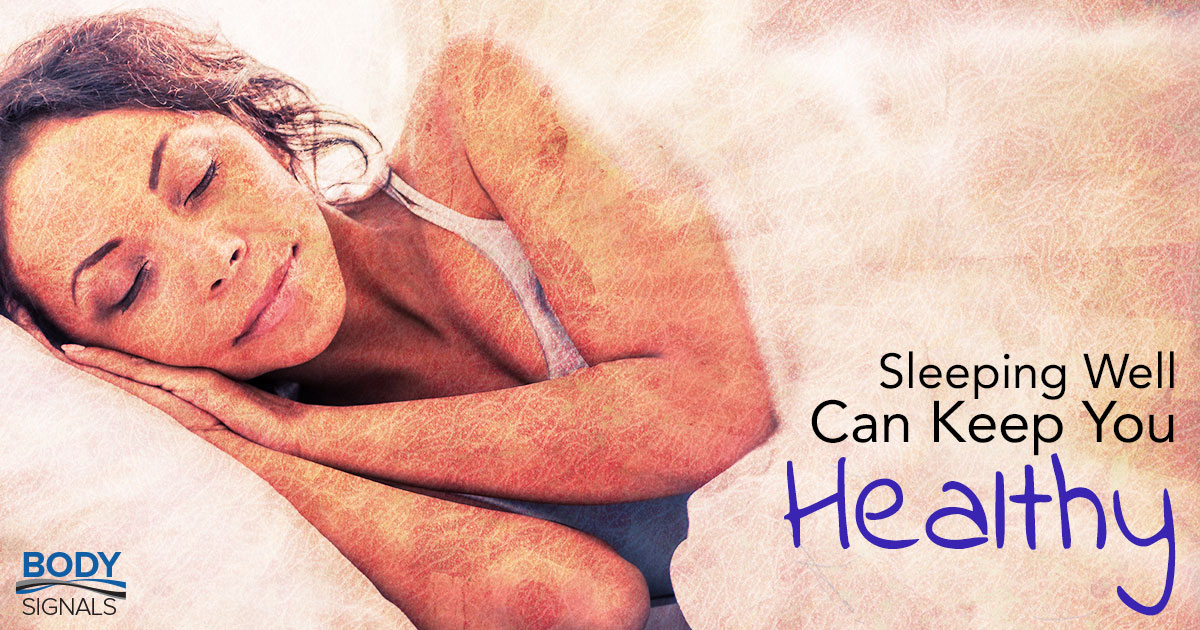
New research has shown that not only can a good night’s sleep keep you mentally sharp, but it can also help you stay healthy by strengthening your immune system. For years physicians have believed that sleep supports the healing process, and now new evidence has been discovered that indicates sleep also plays a role in regulating your immune function. Your immune system is the complex network of cells, tissues, and organs that protect your body from disease, so keeping that system functioning at its highest level is very important to your overall health and wellness.
Why it Matters:
While you’re asleep, your central nervous system is in constant communication with your immune system. Many immune system functions operate on a 24 hour cycle, just like your sleep schedule. In fact, your T-cells, which are some of the most important immune cells, are very, very active while you’re asleep. Everyone may not require the same amount of sleep, but the research is clear: getting a good night’s sleep will help bolster your immune system.
Your body uses sleep as its time to rest and recover.
Sleep patterns are tightly linked to your immune function.
Chronic sleep issues promote inflammation and pain.
Next Steps:
Sleeping well has been proven to be an essential part of staying healthy. Sleep disorders, such as sleep apnea, can make it extremely difficult to get a good night’s sleep and leave you feeling tired and sleepy all day. If you have experienced difficulty sleeping, let us know. We have an upcoming workshop where we’ll be discussing not only the causes of many of these issues, but also the action steps you can take to FINALLY get a great night of sleep!
Science Source:
Sleep and immune function. European Journal of Physiology. 2012
One of the most common questions we get from patients is: “What’s the best sleeping position?” Considering you spend nearly one-third of your life sleeping, this is an important question to ask! Top researchers have found one of the best positions to sleep is on your side with your head supported, shoulders centered, and a pillow between your legs. This allows for the best alignment of your spine and reduces the pressure on your neck, low back, hips, and legs – all of which leads to a more restful night of sleep.
Why it Matters:
Sleeping is the time where your body can maximize rest and recovery. Not only can a lack of sleep cause grogginess the next day, but chronic sleep issues can lead to depression, insomnia, and even make aches and pains worse! If you have ever woken up with a “crick” in your neck, you know how taxing an awkward sleeping position can be on your spine. Maintaining a neutral position and keeping your spine in alignment overnight is an essential part of waking up energized and ready to conquer the day.
Chronic sleep disturbances have been linked to depression and many common pain syndromes.
Maintaining proper spinal alignment at night can decrease your aches and pains.
Sleeping on your side with your head and legs supported is the best sleep position for your spine.
Next Steps:
Tonight, when you lie in bed, take a look and make sure your nose and belly button are in alignment. If they are, it’s a good sign your spine is in both an optimal and comfortable sleep posture. Then, take a small pillow and place it between your knees to give your legs and hips that proper added support. Following these quick tips will help you get into the best position to have a great night’s sleep.
Hip osteoarthritis is a condition that can cause stiffness that limits joint range of motion. Over time, certain hip movements become limited, usually causing pain and alteration of normal biomechanics. Your muscles must therefore work harder during movement, generating a feeling of muscle tension.To date, the exact causes of osteoarthritis have not been fully identified. It is completely normal to have a mild level of osteoarthritis with age. However, the more advanced stages of osteoarthritis can affect the ability to carry out daily and physical activities. An exacerbation of symptoms usually occurs during a period when the level of physical activity has been drastically increased. Direct trauma to the hip can increase the symptoms of osteoarthritis.
▬▬▬▬▬
Structures involved
At the hip, the joint affected by osteoarthritis is the acetabulofemoral joint, formed by the p elvic bone and the femur bone. It is mainly cartilage damage combined with the presence, in some cases, of slight bone spurs in the joint that appear to be responsible for the restriction of movement. Over time, some muscles in the hip area may become tighter to compensate for the joint restriction.
▬▬▬▬▬
Signs & Symptoms that you may experience
Each person will react differently to osteoarthritis and management will depend on its stage. Hip osteoarthritis can produce, but is not limited to, local pain in the groin area, edema and stiffness in certain hip movements. Repetitive hip movements during walking or other sports activities, prolonged standing and sleeping with direct pressure may cause pain.
▬▬▬▬▬
Developments
Osteoarthritis of the hip is a progressive condition that cannot be cured, which means that the range of motion may decrease over time. An active lifestyle and a rehabilitation plan may however slow the progression of this condition and make it easier to manage the symptoms.1
Relative rest is a good way to prevent your symptoms from getting worse. A few days of rest while reducing activities that cause significant pain m ay be necessary, but it is very important to avoid deconditioning. A quick return to your daily activities, light cardiovascular exercises that do not cause an increase in pain, joint mobilization exercises and hip muscles strengthening exercises will allow for better recovery.
Rehabilitation
Follow your therapist’s advice. This will help you manage the various stages of the healing process and increase the odds of success. Your therapist will accompany you during your rehabilitation program in order to improve your hip joint range of motion, regain flexibility, muscle strength and endurance, and functional state.
According to the principles of hip osteoarthritis rehabilitation, improving joint range of motion should be an integral part of the treatment plan. A program to improve joint range of motion and flexibility, as well as specific muscle strengthening is common to control the symptoms of hip osteoarthritis.
▶ WHAT TO AVOID
Do not rely solely on a passive treatment approach. Each phase of the rehabilitation process is important. Patients who actively participate in their treatment plan tend to recover more quickly. Keep in mind that pain is not always a good indicator of joint or tissue damage. A significant level of pain does not necessarily imply a more advanced stage. As soon as you feel better and the pain is well under control, introduce, in collaboration with your therapist, light mobility and strengthening exercises based on your tolerance. Remember that exercise is an excellent way to manage pain associated with osteoarthritis.
A herniated disc refers to a disc lesion in the spine, which can cause local symptoms and can sometimes radiate to the legs or arms depending on the location of the lesion. This condition can occur gradually or as a result of a false movement. The hernia is usually located in the neck or lower back. It sometimes appears in the thoracic region in the middle of the back.The intervertebral discs may be damaged due to poor lifting technique, repetitive intense activity or excessive body weight. A combination of several factors can contribute to the development of a herniated disc.With age, the discs lose their gelatinous property, decreasing the size of the disc and the space between the vertebrae. Therefore, the spine becomes less mobile and may become more prone to injury.
▬▬▬▬▬
Structures involved
The spine is made up of 24 vertebrae, each separated by an intervertebral disc, a small cushion that acts as a shock absorber during spinal movement. These discs consist of a fibrous ring called the annulus fibrosis w ith a gelatinous substance in the center called the nucleus. In a herniated disc, the nucleus pushes through the fibrous ring, exerting pressure on the nerves of the spine.
▬▬▬▬▬
Signs & Symptoms that you may experience
Symptoms vary according to the pressure applied to the nerves and can vary greatly from one person to another. When nerves are irritated, a sensation of pain, numbness and/or weakness in the arms or legs may be felt. A herniated disc in the lower back often leads to irritation of the sciatic nerve, causing acute pain radiating towards the leg. A herniated disc in the neck causes pain in the neck and upper shoulders and may radiate towards the arm.
▬▬▬▬▬
Recovery
Your rehabilitation plan, health profile, fitness level and nutritional status affect the recovery time. I n most cases, you can expect a full recovery from a herniated disc. As a general rule, this condition may take several
months to fully recover. In cases where the herniated disc is long-standing, the pain may sometimes resurface with no real cause or identifiable false movement and then subside with a return to an active lifestyle.
Relative rest is a good way to prevent your condition from getting worse. A few days of rest while reducing activitiesthatcausesignificantp ainmaybenecessary,butitisveryimportanttoavoiddeconditioning.A quick return to your daily activities, light cardiovascular exercises that do not cause an increase in pain and exercises to strengthen the stabilizers in your neck or back, depending on the area affected by the hernia, will allow for a better recovery.
Rehabilitation
Follow your therapist’s advice. This will help you manage the various stages of the healing process and increase the odds of successful rehabilitation. Your therapist will accompany you during your personalized rehabilitation program to restore your joint range of motion, muscle strength and endurance, and functional state.
According to the principles of herniated disc rehabilitation, an active approach including the practice of physical activity, regaining a healthy body weight and the use of safe load-lifting principles are important elements for a functional recovery. A progressive training program over a period of a few weeks is quite common. Following that, maintaining an active lifestyle usually helps prevent the pain from returning.
▶ WHAT TO AVOID
Do not rely solely on a passive treatment approach. Each phase of the rehabilitation process is important. Patients who actively participate in their treatment plan tend to recover more quickly. Remember that pain is not always a good indicator of tissue damage. As soon as you feel better and the pain is well under control, introduce, in collaboration with your therapist, cardiovascular and strength-building exercises based on your tolerance. Remember that exercise is an excellent way to manage pain related to herniated discs.
Safety first. Not only is “do no harm” part of the oath that doctors take, but it’s also a pretty good principle for all of us to live by. No matter how safe you are, there are times when you get hurt or injured, and finding a healthcare option that is safe, provides excellent results, and has high patient satisfaction can be tricky. Or is it? In 2007, SPINE (one of the worlds most respected research journals) looked at data from over 50,000 Chiropractic adjustments given to nearly 20,000 patients, and they found Chiropractic care to be incredibly safe and effective.
Why it Matters:
Awkward sleeping positions, poor posture, and long hours at a computer can all lead to neck pain. By staying active, taking periodic breaks to stretch throughout the day, and setting up your workstation to minimize the stress on your spine, you can dramatically reduce the likelihood you will encounter a bout of neck pain. It’s great to know that if you do end up experiencing neck pain, Chiropractic adjustments are one of the safest and most effective options to help get you back on track.
Research has shown Chiropractic care to be extremely safe.
SPINE examined nearly 20,000 patients and found zero complications.
Up to 85% of people with acute neck pain found relief with Chiropractic adjustments.
Next Steps:
Believe it or not, many people are nervous to start Chiropractic care. The truth is that Chiropractic care is safer than many medications and has far less risk than surgery. Sharing research like this with your friends and family is a great idea. It will inspire them to make a smart decision using the Research That Matters!
Science Source:
Spinal Manipulation, Medication, or Home Exercise With Advice for Acute and Subacute Neck Pain- A Randomized Trial. Annals of Internal Medicine, Volume 156, 2012
Safety of Chiropractic Manipulation of the Cervical Spine. SPINE, Volume 32, 2007
Evidence-Based Guidelines for the Chiropractic Treatment of Adults with Neck Pain. Journal of Manipulative and Physiological Therapeutics. Volume 37. 2014
Risk of Vertebrobasilar Stroke and Chiropractic Care. SPINE, Volume 33. 2008





 Aberdeen Chiropractic