What Exactly is a “Minor” Injury?

Minor Injury Care In Winnipeg

Whether you are stepping awkwardly off a curb, tweaking your lower back on the golf course, or rolling an ankle during a weekend hockey game, sudden physical setbacks happen. When they do, you are often left wondering: Is this an emergency, or is it something I can just walk off?

At River East Minor Injury Clinic, we aim to bridge the gap between standard home care and the hospital emergency room. To help you make the best decision for your health, let us break down exactly what constitutes a “minor” injury and explore the key differences between two of the most common issues we treat: sprains and strains.

Defining a “Minor” Injury

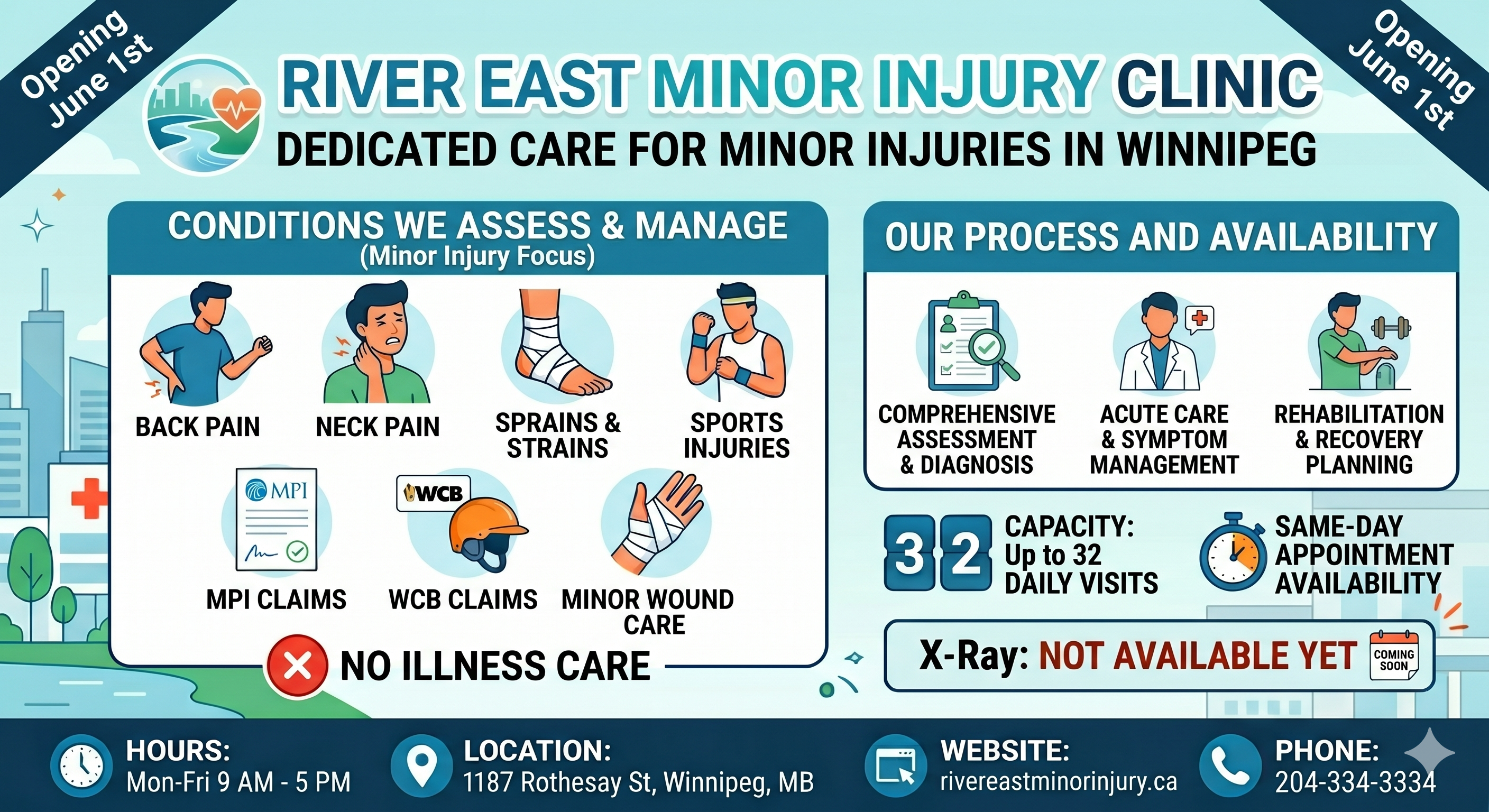
In the medical field, a minor injury refers to a non-life-threatening physical trauma that involves the musculoskeletal system—meaning your bones, joints, muscles, ligaments, and tendons. These are the acute injuries that cause immediate pain and limit your mobility, but do not require complex emergency interventions like surgery or advanced trauma care.

Examples of minor injuries include:

  • Sprains and strains
  • Minor fractures (possibly broken bones that have not pierced the skin)
  • Sports-related joint injuries
  • Workplace or Motor Vehicle Accidents

What is NOT a minor injury? It is equally important to understand what a minor injury clinic does not handle. We are exclusively dedicated to physical injuries. We do not treat illnesses. If you are experiencing symptoms like a fever, cough, cold, flu, or an infection, you should seek care from your primary care provider, an urgent care centre, or a minor illness clinic.

Sprains vs. Strains: What is the Difference?

People often use the words “sprain” and “strain” interchangeably, but they actually refer to damage to two entirely different types of soft tissue in the body.

The Sprain (Ligament Damage)

A sprain occurs when you stretch or tear a ligament. Ligaments are the tough, fibrous bands of tissue that connect bone to bone, acting as the stabilizing anchors for your joints.

  • How it happens: Sprains typically occur from sudden twisting motions, pivoting, or landing awkwardly. The classic example is a rolled ankle, but wrist and knee sprains are also incredibly common.
  • Symptoms: You will generally experience immediate pain, localized swelling, bruising, and a noticeable restricted range of motion. You might even hear a “pop” at the moment of injury.

The Strain (Muscle or Tendon Damage)

A strain, on the other hand, involves the stretching or tearing of a muscle or a tendon. Tendons are the thick cords of tissue that connect your muscles to your bones.

  • How it happens: Strains are often the result of sudden, heavy lifting, overstretching, or explosive movements. Pulling a hamstring while sprinting or throwing out your lower back while doing yard work are classic strains.
  • Symptoms: Strains are characterized by muscle spasms, cramping, weakness in the affected area, swelling, and sharp pain when attempting to move the muscle.

Why You Shouldn’t “Just Walk It Off”

When a sprain or strain happens, the standard advice is often to apply ice and rest. While the R.I.C.E. method (Rest, Ice, Compression, Elevation) is a great first step, trying to tough out a musculoskeletal injury without professional assessment can lead to long-term issues.

Without a proper diagnosis, you might be walking on a minor fracture disguised as a sprain, or you might develop compensatory movement habits that lead to chronic joint instability. Getting a prompt, professional assessment allows you to understand the exact nature of the damage and begin a targeted recovery plan immediately.

Same Day or Next Day Care

River East Minor Injury Clinic was designed to provide you with rapid, professional care on your schedule.

Our Nurse Practitioner is here to assess, diagnose, and treat your sprains and strains efficiently. We offer scheduled same-day and next-day appointments, meaning you get the focused care you need exactly when you need it, with zero walk-in waiting.

Ready to start your recovery? 📍 Find us at: 1191 Rothesay Street, Winnipeg

⏰ Hours: Monday to Friday, 9:00 AM – 5:00 PM

💻 Book online: Secure your appointment today at http://www.rivereastminorinjury.ca

The Benefits of Personal Training Over DIY Fitness

In the realm of fitness, there are countless resources available for those who wish to take control of their health and fitness journey. From online workout videos to fitness apps and books, the do-it-yourself (DIY) approach to fitness has never been more accessible. However, while it is possible to achieve results on your own, there are significant benefits to working with a personal trainer that can enhance your experience and outcomes. Here are some key reasons why personal training might be a better option than going it alone.

1. Personalized Workout Plans

One of the most significant advantages of working with a personal trainer is the customization of your fitness plan. Personal trainers assess your current fitness level, consider any health issues, and tailor workouts to meet your specific goals. Whether you aim to lose weight, build muscle, improve endurance, or rehabilitate an injury, a personalized plan ensures that your efforts are efficient and effective. In contrast, DIY fitness often involves generic plans that might not be suitable for your unique needs, potentially leading to frustration or injury.

2. Motivation and Accountability

Staying motivated can be challenging, especially when working out alone. Personal trainers provide the motivation and encouragement needed to push through tough workouts. They help you set realistic goals and celebrate your achievements, keeping you engaged and committed. Additionally, having a scheduled session with a trainer creates a sense of accountability. It’s harder to skip workouts when someone is waiting for you at the gym, ensuring consistency and progress.

3. Proper Technique and Injury Prevention

Proper technique is crucial in any exercise regimen to prevent injuries and maximize effectiveness. Personal trainers are skilled in teaching correct form and providing adjustments to ensure you perform exercises safely. They can identify and correct bad habits that you might not even be aware of. In a DIY approach, improper technique can lead to injuries, setbacks, and decreased motivation. A trainer’s expertise helps mitigate these risks, allowing you to progress safely.

4. Variety and Creativity in Workouts

Boredom is a common issue with self-directed fitness routines. It’s easy to fall into a repetitive pattern, which can lead to plateauing and decreased enthusiasm. Personal trainers keep workouts varied and interesting by incorporating new exercises and equipment. This not only keeps you engaged but also challenges different muscle groups, leading to better overall fitness. Trainers often use creative methods to make workouts fun, ensuring that you look forward to each session.

5. Nutritional Guidance

Fitness is not just about exercise; nutrition plays a critical role in achieving your goals. Many personal trainers offer basic nutritional advice and help you develop healthier eating habits. They can provide guidance on portion sizes, food choices, and meal timing to complement your workouts. While DIY fitness enthusiasts can find nutrition information online, it’s often generalized and may not address individual needs. A trainer’s personalized approach can help you make better dietary choices that enhance your fitness results.

6. Efficient Use of Time

Personal trainers design workouts that maximize efficiency, making the most out of your time at the gym. They structure sessions to target multiple muscle groups and incorporate high-intensity exercises that provide a comprehensive workout in less time. This is particularly beneficial for those with busy schedules. DIY fitness plans may not be as efficient, often leading to longer workouts with less impact.

7. Support and Encouragement

The journey to fitness can be challenging, and having a supportive figure can make a significant difference. Personal trainers not only provide physical guidance but also emotional support. They understand the ups and downs of the fitness journey and offer encouragement and empathy. This support system can be invaluable, especially during tough times when self-motivation wanes.

Conclusion

While the DIY approach to fitness has its merits, the benefits of personal training are substantial. Personalized plans, motivation, proper technique, variety, nutritional guidance, efficient use of time, and emotional support are just a few reasons why working with a personal trainer can elevate your fitness journey. At River East Chiropractic, we offer comprehensive personal training services designed to meet your individual needs. Our trainers are committed to helping you achieve your goals safely and effectively, providing the support and expertise you need to thrive. Consider investing in personal training to unlock your full potential and enjoy a healthier, more active lifestyle.

The Interplay of Pain and Mobility in Elderly Fall Risk

Chiropractic: Chronic Pain May Increase Fall Risk for Seniors!

The ramifications of falls among elderly individuals extend far beyond the physical injury itself, often encroaching upon independence and diminishing overall quality of life. Traditionally, impaired motor function has been pinpointed as a primary risk factor for falls among the elderly. However, a recent report published in Aging Clinical and Experimental Research in March 2015 has unveiled a startling revelation: older adults with ostensibly normal motor function are not immune to the perils of falls, particularly when grappling with chronic musculoskeletal pain across multiple body sites.

This finding challenges conventional wisdom and underscores the intricate interplay between pain and mobility in the context of fall risk among the elderly. Chronic musculoskeletal pain, pervasive among aging populations, introduces a formidable obstacle to mobility and stability, predisposing individuals to the hazards of falls despite outwardly intact motor function.

The implications of this report reverberate throughout the realms of geriatric healthcare and fall prevention. Healthcare providers must adopt a holistic approach to fall risk assessment, incorporating not only measures of motor function but also comprehensive evaluations of pain and musculoskeletal health. By identifying and addressing chronic pain as a modifiable risk factor, clinicians can mitigate the likelihood of falls and safeguard the independence and well-being of elderly patients.

Furthermore, this research underscores the imperative for multidisciplinary interventions aimed at enhancing mobility, managing pain, and fortifying musculoskeletal health among aging populations. Through targeted strategies encompassing physical therapy, pain management, and lifestyle modifications, healthcare professionals can empower older adults to navigate their golden years with confidence and vitality, minimizing the specter of falls and preserving their autonomy and quality of life.