Why do so many suffer with CTS?

According to the literature, carpal Tunnel Syndrome (CTS) is one of the most prevalent upper extremity complaints. In fact, it IS the most common “compression neuropathy” (of which there are many) and affects 3-6% of adults in the general population. Additionally, CTS can affect BOTH hands in up to 50% of patients with the condition!

The CAUSE of CTS is often unknown and typically comes on gradually, making it difficult to determine a definite cause or specific “date of onset” for CTS.

Symptoms such as numbness, tingling, loss of dexterity, loss of strength (like pinch or grip), and the need to shake the hand or flick the fingers to restore sensation are ALL VERY COMMON CTS SYMPTOMS. The REASON for these symptoms boils down to one thing: The median nerve in the wrist gets pinched! The cause/s can include:

1)  Repetitive motion from either work or hobbies like assembly line work or playing a musical instrument can cause swelling within the carpal tunnel, placing extra pressure on the median nerve as it passes through.

2)  Obesity can contribute to CTS due to extra fluids or fatty deposits that can build up within the carpal tunnel.

3)  Pregnancy: Elevated levels of the hormones estrogen and progesterone can cause the body to retain fluids and increase pressure in the carpal tunnel.

4) Arthritis: Osteoarthritis can lead to CTS (such as when a spur forms inside the tunnel). Rheumatoid arthritis can lead to an autoimmune response and antibodies that end up attacking the cartilage of the joints in the wrist, which can lead to CTS.

5)  Hormone-related conditions: In diabetes mellitus, the blood becomes thicker due to high sugar levels (like syrup) and can’t pass through the small blood vessels, resulting in “neuropathy,” which can make CTS more likely. In hypothyroid, low thyroid function results in “myxedema,” a specific type of swelling that makes CTS more likely to occur.

6)  Trauma: A wrist fracture could cause the carpal tunnel to “collapse” or change in shape resulting in less space for the nerve to travel through.

7)  Mass lesions: A “ganglionic cyst” is a good example. This is where joint fluid leaks out and forms a “bump” on the INSIDE the carpal tunnel, which reduces space and increases pressure in this anatomical structure.

8)  Amyloidosis: This is a rare condition where a protein substance called “amyloid” builds up in any tissue or organ. If this occurs in the wrist, it can “pinch” the median nerve as it passes through.

9)  Sarcoidosis: This is the growth of small collections of inflammatory cells called “granulomas,” which can accumulate in different parts of the body. If it occurs in the wrist, pinching can occur.

10)  Multiple Myeloma: This is a type of cancer that affects the bone marrow, and inflammation in the wrist can occur creating the pressure increase on the median nerve that can lead to CTS.

11)  Leukemia: This too is a type of cancer that involves the white blood cells, and CTS can result from its effects on the tissues in the wrist.

12)  Anatomy: The size and shape of the carpal tunnel is hereditary, and some of us have a smaller tunnel than others. If CTS is present in multiple family members, this “genetic” factor may play a role.

There are other conditions that can “mimic” CTS, but doctors of chiropractic are trained to perform an accurate history and examination so treatment can be directed in the proper manner!

Mind = Blown

Carpal tunnel syndrome (CTS) is a very common condition. According to a report by the Bureau of Labor Statistics (BLS), CTS ranks SECOND among the major disabling diseases and illnesses in ALL private industries. The BLS states that workers with CTS may eventually have to give up their livelihood. They cite one study in which almost half of all CTS patients changed their jobs within 30 months following their diagnosis. Due to the controversy surrounding the issue of CTS and worker’s compensation, workers do not always receive compensation benefits.

The KEY to long-term cost containment associated with CTS is EARLY DIAGNOSIS and PREVENTION! The challenge is getting the worker to identify early symptoms and NOT feel intimidated to report them, which could then lead to prompt care and possibly job modifications, resulting in the best chance of preventing a more complicated and far more costly problem.

Because of the many factors that contribute to and/or cause CTS, there is similarly no one way to prevent it from happening. Treating any/all underlying medical condition(s) is important. Using simple common sense can go a long way to help minimize some of the risk factors that predispose a person to work-related CTS and other cumulative trauma disorders (CTDs).

For example, watching and mimicking veteran workers can be a great guide as to how to maximize efficient work methods while minimizing unnecessary stresses and strains. Other preventative “tricks” include learning how to adjust the work area, handle tools, or perform tasks that minimize hand/wrist strain. Maintaining proper posture and exercise programs to strengthen the fingers, hands, wrists, forearms, shoulders, and neck may also help prevent CTS.

Many companies have taken action to help prevent repetitive stress injuries. In one study, 84% of the companies surveyed reported that they were modifying equipment, tasks, and processes as part of a prevention effort; nearly 85% analyzed their workstations and jobs; and 79% purchased more ergonomic equipment. Unfortunately, there is NO EVIDENCE that any of these methods can completely protect a worker against CTS. Often, the best approach is to relocate the worker to a less repetitive job, but this is not always an option.

Doctors of chiropractic can observe the worker through a video or during a factory tour/visit and often identify ergonomic problems that can result in a low-cost, easy modification. Simple modifications coupled with quality care, patient education, and cooperation from BOTH the worker and the employer can typically help yield the best outcome for the CTS patient.

fireworks

Carpal Tunnel Basics

Here it is: carpal tunnel syndrome (CTS) in a nutshell!

WHAT: CTS is caused by an injury to the median nerve (MN) as it travels through the wrist.

WHERE: The eight small carpal bones and a ligament form a tunnel in which tendons and nerves pass through to reach the hand.

HOW: The MN gets pinched/irritated from repetitive stress.

WHY: The tunnel is tight as it includes the MN and nine rapidly moving muscle tendons!

PROGRESS: CTS usually starts slow and often progresses over weeks, months, even years.

SYMPTOMS: Pain, numbness, tingling, and/or weakness of the hand, sparing the little finger.

PROGNOSIS: CTS is easier to treat shortly after it starts, and waiting too long to seek care may lead to worse outcomes.

RISK FACTORS: 1) family history (genetics); 2) women are more likely to suffer from CTS than men; 3) age over 50; 4) manual jobs; 5) pregnancy; 6) conditions like diabetes, hypothyroid, rheumatoid arthritis (RA), osteoarthritis, autoimmune diseases (includes RA, certain types of thyroid disease), gout, kidney disease (especially dialysis patients), Down syndrome, amyloidosis, acromegaly, tumors on the median nerve; 7) medications (those that affect the immune system such as interleukin-2, possibly corticosteroids), anti-clotting drugs such as warfarin, hormone replacement, BCPs; 8) obesity; 9) smoking; 10) alcohol abuse; and 11) trauma/injuries (fractures, tendonitis).

TREATMENT: Ideally, treatment should begin as soon as possible after symptoms first start, but this RARELY occurs due its slow and gradual onset. Non-surgical care includes anti-inflammatory care (ice, anti-inflammatory nutrients—ginger, turmeric, bioflavonoids; NSAIDs like ibuprofen), wrist splinting (primarily at night), corticosteroid injections, job/ergonomic modifications, exercises (yoga, stretching, strengthening, and aerobic fitness), low level laser therapy, ice, acupuncture, and chiropractic care. Chiropractic care includes MANY of the above PLUS manual therapies applied to the neck, shoulder, arm, wrist, and hand.

Nutshell

Do You Have CTS?

Carpal tunnel syndrome (CTS) can be an extremely painful and activity-limiting condition. It affects many people of all ages and genders, though women are affected more often than men. But how do you know if what you are suffering from is truly CTS or if it’s another condition that’s producing the symptoms in your hand or wrist?

Carpal tunnel syndrome occurs when the median nerve is compressed as it passes through the wrist. However, the median nerve travels out of the neck, through the shoulder, elbow, and forearm before it passes through the wrist and into the hand. Pinching of the median nerve ANYWHERE along its course can give rise to the signs and symptoms of CTS including numbness, tingling, and/or pain into the hand and index, third, and thumb-side half of the fourth digits, and sometimes the thumb. If the pinch is significant enough, weakness can also occur. Sometimes the median nerve can become compressed at both the wrist and other body sites as it travels from the spinal cord to your hand, that’s why it’s important for a doctor to check for impingements along the entire course of the nerve.

But compression of the median nerve isn’t the only thing that can produce symptoms in the hand. Here are a couple of the more common conditions that are often confused with CTS:

1)  Ulnar neuropathy: This is pinching of the ulnar nerve (at the neck, shoulder, elbow, or wrist) but this gives rise to a similar numbness/tingling BUT into the pinky-side of the fourth and the fifth fingers (not the thumb-side of the hand). The most common pinch location is either at the neck or the inner elbow, the latter of which is called “cubital tunnel syndrome” or CuTS.

2)  Tendonitis: There are a total of nine tendons that pass through the carpal tunnel that help us grip or make a fist. Similarly, there are five main tendons on the back side of the hand that allow us to open our hands and spread our fingers. ANY of these tendons can get strained or torn, which results in swelling and pain as well as limited function BUT there is usually NO NUMBNESS/TINGLING!

3)  DeQuervain’s disease: This is really a tendonitis of an extensor tendon of the thumb and its synovial sheath that lubricates it resulting in a “tenosynovitis.” This creates pain with thumb movements, especially if you grasp your thumb in the palm of your hand and then bend your wrist sideways towards the pinky-side of the hand.

Chiropractors are well-trained to diagnose and treat patients with CTS. And if you don’t have CTS but another condition listed above, they can offer treatment (or a referral, if necessary) to help resolve it so you can return to your normal activities as soon as possible.

DOn't know

Carpal Tunnel Syndrome #3

This week, we will conclude our three-part series on important facts regarding carpal tunnel syndrome (CTS).

CTS TREATMENT OPTIONS (continued): Aside from the carpal tunnel, there are several places where the median nerve can become compressed as it travels from the neck, down through the shoulder, through tight muscular areas of the upper arm and forearm, and finally through the carpal tunnel at the wrist. In order to achieve good, long-lasting results, treatment must focus on relieving compression at any point along the course of the nerve. This is why chiropractic works SO WELL as it addresses ALL of these areas using manual adjustments, muscle release techniques, and even physical therapy modalities.

CTS PREVENTION: Because there are multiple causes of CTS, prevention must be tailored to each person. For example, if the patient has diabetes mellitus, maintaining a proper blood sugar level is very important because the blood becomes thicker as the sugar levels increase and it simply cannot pass through our small blood vessels (capillaries), especially those located in the feet and hands. This can eventually lead to the need for amputation due to poor circulation and contribute to the numbness associated with diabetic neuropathy.

Similarly, low thyroid function results in a type of swelling called myxedema that can cause or worsen CTS, and keeping the thyroid hormone balanced in the bloodstream is very important. Managing other conditions that create inflammation or swelling, such as rheumatoid and other types of arthritis, will also help prevent CTS from developing or worsening.

Carpal tunnel syndrome can also occur during pregnancy due to the hormonal shifts similar for those taking birth control pills. The PRICE treatment options presented last month can be very helpful for the pregnant mother and represent important non-medication self-care approaches.

Certain occupations that require fast, repetitive work and/or firm gripping can result in carpal tunnel syndrome because of the friction that results in swelling that occurs when the muscle tendons inside the carpal tunnel rub excessively fast together (kind of like starting a fire with two sticks). Modifying the work task until the swelling is controlled is VERY important, as discussed last month.

Other preventative measures include exercises that keep the muscles and tendons in the forearm and inside the carpal tunnel stretched so that the tendons easily slide inside their respective muscle tendon sheaths. This is accomplished by placing the palm side of the hand (elbow straight) on a wall with the fingers pointing downwards while reaching across with the opposite hand and pulling the thumb back until you feel a good firm stretch. Hold this position for 5-10 seconds or until the forearm muscles feel like they are relaxing. Repeat this multiple times a day.

We realize you have a choice in whom you consider for your health care provision and we sincerely appreciate your trust in choosing our service for those needs.  If you, a friend, or family member requires care for Carpal Tunnel Syndrome, we would be honored to render our services.

Carpal Tunnel

Carpal Tunnel Syndrome #2

Healthcare providers tend to agree that in non-emergency situations, patients with conditions like Carpal Tunnel Syndrome (CTS) should try non-surgical treatments before consulting with a surgeon. The “PRICE” concept, that is Protect, Rest, Ice, Compress, & Elevate can be applied to most injuries, including CTS, especially in the acute/inflammatory stage. However, many of these principles also apply in the chronic stage (more than three months) of CTS.

PROTECT: For the CTS patient, many doctors commonly prescribe a wrist cock-up splint to be worn overnight, which may surprise some of you! During the day, depending on the type of work you do, a wrist splint can actually get in the way and result in increased symptoms, and at times, cause bruising at both ends of the splint (mid-forearm & mid-hand). The primary reason to use the splint at night is that one cannot control the position of their wrist during sleep, and it can often wind up bent. This increases the pressure inside the carpal tunnel up to six to eight times more than normal, potentially causing enough pain and tingling to disturb sleep. The splint guarantees a neutral wrist position, which significantly improves sleep quality and allows healing to occur.

REST: The use of a splint allows the swollen median nerve to heal. However, in order to allow the wrist to rest so inflammation can subside and the condition can fully heal, patients often need to modify their daily activities, at least for a short time. This may require job restrictions, especially if the occupation involves a fast repetitive motion type of tasks and/or forceful gripping.

ICE: The use of an “ice cup”—or an ice cube held with a washcloth to protect the fingertips from getting cold—is by far the most effective approach. Rub the ice directly on the skin over the carpal tunnel so that you experience the four stages of cooling: Cold, Burning, Aching, and Numb (C-BAN). This usually takes about four minutes, and it’s important to stop when numbness occurs, as the next stage of cooling is frostbite. This can be repeated multiple times a day and is often as effective as cortisone shots with fewer side effects (and less pain!).

COMPRESS: The wrist cock-up splint can offer some compression, but an elastic carpal tunnel wrist band will not usually interfere with most activities of daily living. Some versions include a thumb loop to keep the wrist band in place, but that may get in the way. A version without the thumb loop also works very well.

EXERCISE: Exercises performed at home and work can significantly help manage the condition. (Note: For injuries like a sprained ankle, E typically stands for ELEVATE, though it’s not practical for the CTS patient.)

Tune in next month for the unique techniques that chiropractic offers to the non-surgical care of CTS as well as the importance of preventative measures and research.

We realize you have a choice in whom you consider for your health care provision and we sincerely appreciate your trust in choosing our service for those needs.  If you, a friend, or family member requires care for Carpal Tunnel Syndrome, we would be honored to render our services.


480px-Carpal_Tunnel_Syndrome

What is CTS?

If tingling/numbness primarily affects your thumb, index, third, and ring fingers, it very well could be carpal tunnel syndrome, or CTS. Chances are you’ve probably had this condition for months or even longer but it’s been more of a nuisance than a “major problem” and therefore, you probably haven’t “bothered” having it checked out. Let’s take a look at some “facts” about CTS!

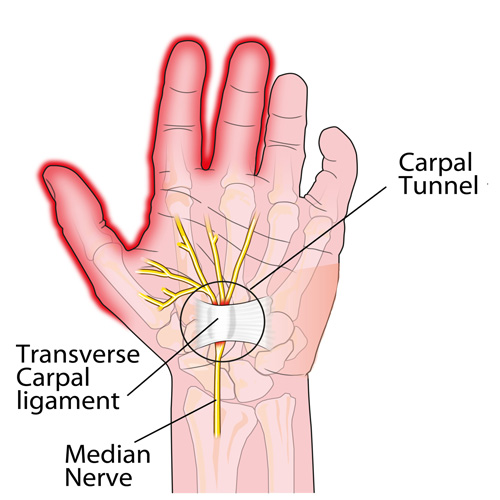
WHAT IS CTS? CTS is basically a pinched nerve (the median nerve) that occurs on the palm side of the wrist that innervates the three middle fingers and the thumb on the palm side. This nerve starts in the neck, runs through the shoulder to enter the arm, and travels down the palm side forearm through the carpal tunnel. The carpal tunnel is made up by eight small bones (called “carpal bones”) that form the roof and walls of the tunnel. The floor of the tunnel is a ligament called the transverse carpal ligament. The median nerve lies immediately on the floor, and deeper inside the tunnel are nine tendons that connect the muscles of our forearm to the fingers, which allow us to make a fist and grip. When swelling occurs inside the tunnel, the nerve is pinched against the floor (ligament) and symptoms occur.
SYMPTOMS OF CTS: Symptoms typically start gradually with tingling, numbness, burning, itching, or a “half-sleep” feeling in the palm of the hand, thumb, and middle three fingers. The fingers can feel swollen and weak, though “swelling” is usually NOT visible. CTS can occur in one or both hands, but it is usually worse in the dominant hand. Initially, you may only notice symptoms at night or in the morning. As CTS worsens, sleep interruptions, grip weakness, difficulty distinguishing hot from cold, increased pain, pain radiating up the arm, and more may occur.
CAUSES OF CTS: There are many causes of CTS that often occur in combination: 1) Heredity or genetics — being born with a smaller wrist than others; 2) Trauma — a fall on the arm/hand (sprain or fracture); 3)  Overuse of the arms/hands (like repetitive line work, serving tables, or using a computer), 4) Hormonal causes — during menstruation, with pregnancy, during menopause, diabetes, hypothyroid, overactive pituitary gland; 5) Rheumatoid arthritis; 6) Fluid retention; 7) Cysts, tumors, or spurs inside the tunnel; 8) Vibrating tools, 9) Hobbies such as knitting, sewing, crocheting; 10) sports; or 11) an “Insidious” or unknown cause!
CTS RISK FACTORS: 1) Gender: Women are three times more likely to develop CTS, possibly because they generally have a smaller carpal tunnel than men, in addition to hormonal differences; 2) Diabetes or other metabolic disorders; 3) Adults, especially >50 years old; 4) Job demands.
CTS DIAGNOSIS: Your doctor of chiropractic will review your patient history and then evaluate the neck, shoulder, arm, and hand, as ALL can be involved in producing CTS-like symptoms. He/she may also order blood tests (to check for diabetes, thyroid levels, rheumatoid arthritis, etc.) and/or an EMG/NCV (electromyogram/nerve conduction studies) to test for nerve damage.
We will FINISH THIS interesting discussion next month covering: Treatment, prevention, and research.
We realize you have a choice in whom you consider for your health care provision and we sincerely appreciate your trust in choosing our service for those needs.  If you, a friend, or family member requires care for Carpal Tunnel Syndrome, we would be honored to render our services.
480px-Carpal_Tunnel_Syndrome


CTS Exercises?

CTS Stretch

Carpal Tunnel Syndrome (CTS) is the leading cause of numbness to the middle three fingers and thumb and affects millions of Americans each year. There are MANY potential causes of CTS, and these causes can be unclear or multi-factorial. We have discussed the importance of night splints and what chiropractic can do for CTS in the recent past. This month, let’s look at what YOU can do for CTS.
“Self-help” concepts are VERY important as they empower YOU to gain control of your condition’s signs and symptoms, thus placing less reliance on those of us who manage (in this case) CTS. There is a time for “PRICE” or, Protect, Rest, Ice, Compress, Elevate, such as when most activities make symptoms worse. This is the time for splinting, reducing activities of daily living (which sometimes includes work restrictions), and the use of ice cupping or massage. Patients should initiate movement or exercise-based approaches as soon as such activities can be tolerated. Here are four different exercises you can do:
1. Fist / “Bear Claw” / Open Wide Hand: This is a three-step exercise, and you can start or stop on any of the three “steps.” A. FIST:  Make a fist and squeeze as tightly as tolerated; B. BEAR CLAW: Starting from the fist position (A), open only the palm of the hand (keep your thumb and fingers bent but straighten the big knuckle joints at the base of the fingers); C. OPEN WIDE: Straighten and spread ALL your finger joints by opening up your hand as much as possible and feel for a good stretch in the palm. HOLD each position for one to five seconds (vary the “speed” of moving between the three positions – fast, medium, and slow; emphasize what feels best if you have a preference). Repeat five to ten times or until your hands feel looser.
2. “Church Steeple”: Place your hands together in front of you (“prayer position”) touching the pads of the thumbs and all four fingertips together and spread your fingers as wide as possible. Next, separate your palms as far as you can while applying pressure against your finger/thumb tips and repeat. Alter the speed and number of repetitions until your hands feel stretched out.
3. “Shake and Flick”: Simply shake your hands as if you just washed them and you’re shaking the water off to “air dry” them. Again, alter the speed and reps until they feel loosened up.
4. Forearm Stretches: Place one arm out in front, elbow straight, and fingers pointed straight, palm up (first set). Reach with the opposite hand and pull the fingers, hand, and wrist down and back towards you until you feel a strong “pull” in your forearm muscles. Hold until the forearm muscles feels stretched (5-10 seconds). Repeat this with the palm facing down for the second set to stretch the opposite (extensor) forearm muscles.
Do these on each side two to three times each (even the “good” side) EVERY HOUR (or as often as possible). Think about what you do on a daily basis and if you work in a repetitive manner (on the job or a hobby at home), try to do these exercises DURING THE REPETITIVE ACTIVITY to help keep your symptoms from getting out of control. If you can alter the position or speed of a work or avocational activity, do so for long-term prevention purposes!
If you cannot gain control of your CTS condition, you may need additional treatment options of which chiropractic offers a safe, non-surgical approach.
We realize you have a choice in whom you consider for your health care provision and we sincerely appreciate your trust in choosing our service for those needs.  If you, a friend, or family member requires care for Carpal Tunnel Syndrome, we would be honored to render our services.

Non-surgical Options

CTS SUrgery

Continuing with our information on Carpal Tunnel Syndrome, today we will look at non-surgical treatment approaches for carpal tunnel syndrome (CTS) aim to remove pressure on the median nerve where it’s pinched. In a recent review of the literature published on “passive modalities” (non-surgical treatment approaches) for CTS, researchers reviewed studies published between 1990 and 2015 for information on which non-surgical treatment approaches work best. Topping the list is the use of various types of night splints – wrist braces worn at night to prevent bending of the wrist during sleep. The evidence found that night splints were less effective than surgery in the short-term (up to six months) but more effective over the long-term (at 12 and 18 months)!
They did not find studies with a “low risk of bias” (no randomized controlled trial-types of studies) regarding other passive modalities such as ultrasound and electrical stim and hence, they conclude that better quality studies must be conducted before conclusions can be made regarding most of the passive modalities frequently utilized in the management of CTS.
A 2010 study found mobilization treatments and exercises (tendon gliding & nerve gliding) were helpful WHEN patients complied with the treatments and the recommended exercises. Manual therapies, or “hands-on” treatments, are a feature of chiropractic care. Chiropractic treatment for patients with CTS also includes night bracing in addition to manipulation, mobilization, exercise training, nutrition, and ergonomic / workstation modifications, and whole body health awareness.
Doctors of chiropractic understand these non-surgical approaches have limitations. This is why they work with allied healthcare providers when pharmaceutical and/or surgical intervention is appropriate. They may also frequently consult with neurologists for tests such as EMG/NCV (an electrical test that measures the degree of nerve damage) to better understand the patient’s condition. In short, chiropractic offers a multi-modal approach of care, and chiropractors will work with others in the patient’s best interest.
We realize you have a choice in whom you consider for your health care provision and we sincerely appreciate your trust in choosing our service for those needs.  If you, a friend, or family member requires care for Carpal Tunnel Syndrome, we would be honored to render our services.

What is CTS?

480px-Carpal_Tunnel_Syndrome

Carpal tunnel syndrome (CTS) is a very common condition. According to a report by the Bureau of Labor Statistics (BLS), CTS ranks SECOND among the major disabling diseases and illnesses in ALL private industries. The BLS states that workers with CTS may eventually have to give up their livelihood. They cite one study in which almost half of all CTS patients changed their jobs within 30 months following their diagnosis. Due to the controversy surrounding the issue of CTS and worker’s compensation, workers do not always receive compensation benefits.
The KEY to long-term cost containment associated with CTS is EARLY DIAGNOSIS and PREVENTION! The challenge is getting the worker to identify early symptoms and NOT feel intimidated to report them, which could then lead to prompt care and possibly job modifications, resulting in the best chance of preventing a more complicated and far more costly problem.
Because of the many factors that contribute to and/or cause CTS, there is similarly no one way to prevent it from happening. Treating any/all underlying medical condition(s) is important. Using simple common sense can go a long way to help minimize some of the risk factors that predispose a person to work-related CTS and other cumulative trauma disorders (CTDs).
For example, watching and mimicking veteran workers can be a great guide as to how to maximize efficient work methods while minimizing unnecessary stresses and strains. Other preventative “tricks” include learning how to adjust the work area, handle tools, or perform tasks that minimize hand/wrist strain. Maintaining proper posture and exercise programs to strengthen the fingers, hands, wrists, forearms, shoulders, and neck may also help prevent CTS.
Many companies have taken action to help prevent repetitive stress injuries. In one study, 84% of the companies surveyed reported that they were modifying equipment, tasks, and processes as part of a prevention effort; nearly 85% analyzed their workstations and jobs; and 79% purchased more ergonomic equipment. Unfortunately, there is NO EVIDENCE that any of these methods can completely protect a worker against CTS. Often, the best approach is to relocate the worker to a less repetitive job, but this is not always an option.
Doctors of chiropractic can observe the worker through a video or during a factory tour/visit and often identify ergonomic problems that can result in a low-cost, easy modification. Simple modifications coupled with quality care, patient education, and cooperation from BOTH the worker and the employer can typically help yield the best outcome for the CTS patient.