CTS Exercises?

CTS Stretch

Carpal Tunnel Syndrome (CTS) is the leading cause of numbness to the middle three fingers and thumb and affects millions of Americans each year. There are MANY potential causes of CTS, and these causes can be unclear or multi-factorial. We have discussed the importance of night splints and what chiropractic can do for CTS in the recent past. This month, let’s look at what YOU can do for CTS.
“Self-help” concepts are VERY important as they empower YOU to gain control of your condition’s signs and symptoms, thus placing less reliance on those of us who manage (in this case) CTS. There is a time for “PRICE” or, Protect, Rest, Ice, Compress, Elevate, such as when most activities make symptoms worse. This is the time for splinting, reducing activities of daily living (which sometimes includes work restrictions), and the use of ice cupping or massage. Patients should initiate movement or exercise-based approaches as soon as such activities can be tolerated. Here are four different exercises you can do:
1. Fist / “Bear Claw” / Open Wide Hand: This is a three-step exercise, and you can start or stop on any of the three “steps.” A. FIST:  Make a fist and squeeze as tightly as tolerated; B. BEAR CLAW: Starting from the fist position (A), open only the palm of the hand (keep your thumb and fingers bent but straighten the big knuckle joints at the base of the fingers); C. OPEN WIDE: Straighten and spread ALL your finger joints by opening up your hand as much as possible and feel for a good stretch in the palm. HOLD each position for one to five seconds (vary the “speed” of moving between the three positions – fast, medium, and slow; emphasize what feels best if you have a preference). Repeat five to ten times or until your hands feel looser.
2. “Church Steeple”: Place your hands together in front of you (“prayer position”) touching the pads of the thumbs and all four fingertips together and spread your fingers as wide as possible. Next, separate your palms as far as you can while applying pressure against your finger/thumb tips and repeat. Alter the speed and number of repetitions until your hands feel stretched out.
3. “Shake and Flick”: Simply shake your hands as if you just washed them and you’re shaking the water off to “air dry” them. Again, alter the speed and reps until they feel loosened up.
4. Forearm Stretches: Place one arm out in front, elbow straight, and fingers pointed straight, palm up (first set). Reach with the opposite hand and pull the fingers, hand, and wrist down and back towards you until you feel a strong “pull” in your forearm muscles. Hold until the forearm muscles feels stretched (5-10 seconds). Repeat this with the palm facing down for the second set to stretch the opposite (extensor) forearm muscles.
Do these on each side two to three times each (even the “good” side) EVERY HOUR (or as often as possible). Think about what you do on a daily basis and if you work in a repetitive manner (on the job or a hobby at home), try to do these exercises DURING THE REPETITIVE ACTIVITY to help keep your symptoms from getting out of control. If you can alter the position or speed of a work or avocational activity, do so for long-term prevention purposes!
If you cannot gain control of your CTS condition, you may need additional treatment options of which chiropractic offers a safe, non-surgical approach.
We realize you have a choice in whom you consider for your health care provision and we sincerely appreciate your trust in choosing our service for those needs.  If you, a friend, or family member requires care for Carpal Tunnel Syndrome, we would be honored to render our services.

Positive Expectations in Whiplash Patients Help with Recovery

443


“High expectations are the key to everything”

– Sam Walton

Now a new study found that this belief may apply to your health as well: Whiplash patients who have a positive expectation to improve tend to recover better and report less pain than those who harbor negative beliefs like fearing movement and re-injury.

If you or someone you know has been involved in accident, call our office today. Check out THIS VIDEO to learn more about resolving neck pain from auto accidents.

Relieve Tension Headaches with Chiropractic Care: A Natural Solution


Photo by Sergey Makashin on Pexels.com

Tension headaches are a common ailment that many people experience at some point in their lives. Characterized by a dull, aching pain and a feeling of tightness or pressure across the forehead, sides, or back of the head, tension headaches can significantly impact daily life. While over-the-counter medications can provide temporary relief, chiropractic care offers a natural, non-invasive solution to address the root causes of tension headaches and provide lasting relief.

Understanding Tension Headaches

Tension headaches, also known as stress headaches, are typically caused by muscle contractions in the head and neck regions. These contractions can be triggered by various factors, including:

  • Stress: Emotional stress can cause muscle tension, leading to headaches.
  • Poor Posture: Sitting or standing for long periods with improper posture can strain neck and shoulder muscles.
  • Muscle Strain: Overuse of the muscles in the neck and shoulders, often due to repetitive activities, can lead to tension headaches.
  • Eye Strain: Extended screen time or reading without breaks can cause eye and muscle strain.
  • Fatigue: Lack of sleep and general fatigue can contribute to muscle tension and headaches.

How Chiropractic Care Can Help

Chiropractic care focuses on diagnosing and treating musculoskeletal disorders, particularly those involving the spine. Chiropractors use a variety of techniques to help relieve tension headaches by addressing their underlying causes. Here are some ways chiropractic care can benefit those suffering from tension headaches:

  1. Spinal Adjustments:
    • Spinal adjustments, or manipulations, help correct misalignments in the spine. These misalignments can cause muscle tension and nerve irritation, contributing to headaches. By realigning the spine, chiropractors can reduce tension and improve overall spinal health.
  2. Muscle Relaxation:
    • Chiropractors use various techniques, such as massage, trigger point therapy, and myofascial release, to relax tight muscles in the neck and shoulders. These treatments help reduce muscle tension and improve blood flow, alleviating headache symptoms.
  3. Posture Correction:
    • Poor posture is a common cause of tension headaches. Chiropractors assess your posture and provide guidance on how to maintain proper alignment throughout the day. They may recommend ergonomic changes at work or home to reduce strain on your muscles.
  4. Stress Management:
    • Stress is a significant trigger for tension headaches. Chiropractors often provide advice on stress management techniques, such as relaxation exercises, mindfulness, and breathing exercises, to help reduce overall stress levels and prevent headaches.
  5. Exercise and Stretching:
    • Regular exercise and stretching can help maintain muscle flexibility and strength, reducing the likelihood of tension headaches. Chiropractors can develop personalized exercise and stretching routines to address your specific needs.
  6. Lifestyle and Nutritional Advice:
    • Chiropractors offer holistic care, which includes advice on lifestyle and nutrition. They may suggest dietary changes or supplements to support overall health and reduce headache frequency.

Benefits of Chiropractic Care for Tension Headaches

Opting for chiropractic care to manage tension headaches comes with several benefits:

  • Natural and Non-Invasive: Chiropractic care provides a drug-free, non-surgical approach to headache relief.
  • Addresses Root Causes: Instead of just masking symptoms, chiropractic treatments aim to address the underlying causes of tension headaches.
  • Improves Overall Health: Chiropractic care not only helps with headaches but also promotes overall spinal health and well-being.
  • Reduces Reliance on Medication: Regular chiropractic treatments can reduce the need for over-the-counter or prescription pain medications.
  • Enhances Quality of Life: With reduced headache frequency and severity, you can enjoy a better quality of life and improved daily functioning.

River East Chiropractic: Your Partner in Headache Relief

At River East Chiropractic, we understand how debilitating tension headaches can be. Our experienced chiropractors are dedicated to helping you find relief through personalized, comprehensive care. Our facility offers a range of services, including chiropractic care, acupuncture, massage, occupational therapy, Pilates, and a full gym. Our holistic approach ensures that all aspects of your health are addressed to provide lasting relief from tension headaches.

Don’t let tension headaches control your life. Visit River East Chiropractic today and discover how our natural, effective treatments can help you achieve a headache-free life. Our team is here to support you every step of the way, ensuring you stay healthy, active, and pain-free.

Put the shovel down and read this!

Your low back consists of 5 individual vertebrae stacked on top of each other. Flexible cushions called “discs” live between each set of vertebrae. A disc is made up of two basic components. The inner disc, called the “nucleus”, is like a ball of jelly about the size of a marble. This jelly is held in place by the outer part of the disc called the “annulus”, which is a tough ligament that wraps around the inner nucleus much like a ribbon wrapping around your finger.
Your low back relies on discs and other ligaments for support. “Discogenic Low Back Pain” develops when these tissues are placed under excessive stress, much like a rope that frays when it is stretched beyond its normal capacity. Most commonly, disc pain is not the result of any single event, but rather from repeated overloading. Your lumbar discs generally manage small isolated stressors quite well, but repetitive challenges lead to injury in much the same way that constantly bending a piece of copper wire will cause it to break. Examples of these stressors include: bad postures, sedentary lifestyles, poor fitting workstations, repetitive movements, improper lifting, or being overweight.


Approximately one third of adults will experience pain from a lumbar disc at some point in their lifetime. The condition is more common in men. Most lumbar disc problems occur at one of the two lowest discs- L5 or L4. Smokers and people who are generally inactive have a higher risk of lumbar disc problems. Certain occupations may place you at a greater risk, especially if you spend extended periods of time sitting or driving. People who are tall or overweight have increased risk of disc problems.

Symptoms from disc pain may begin abruptly but more commonly develop gradually. Symptoms may range from dull discomfort to surprisingly debilitating pain that becomes sharper when you move. Rest may relieve your symptoms but often leads to stiffness. The pain is generally centered in your lower back but can spread towards your hips or thighs. Be sure to tell your doctor if your pain extends beyond your knee, or if you have weakness in your lower extremities or a fever.

Repeated injuries cause your normal healthy elastic tissue to be replaced with less elastic “scar tissue.” Over time, discs may dehydrate and thin. This process can lead to ongoing pain and even arthritis. Patients who elect to forego treatment and “just deal with it” develop chronic low back pain more than 60% of the time. Seeking early and appropriate treatment like the type provided in our office is critical.

Depending on the severity of your injury, you may need to limit your activity for a while, especially bending, twisting, and lifting, or movements that cause pain. Bed rest is not in your best interest. You should remain active and return to normal activities as your symptoms allow. Light aerobic exercise (i.e. walking, swimming, etc) has been shown to help back pain sufferers. The short-term use of a lumbar support belt may be helpful. Sitting makes your back temporarily more vulnerable to sprains and strains from sudden or unexpected movements. Be sure to take “micro breaks” from workstations for 10 seconds every 20 minutes.

Pubalgia Pain

Pubalgia is pain in the central point of the pubis, the pubic symphysis, which develops mainly after overexertion during sports activities. Repeated microtraumas or excessive strain on the abdominal and hip adductor muscles can cause slight shearing of this joint and generate pain felt in the groin area.

Pubalgia can produce, but is not limited to, pain in the pubic area and towards the groin area, difficulty in tolerating weight bearing and impacts during walking and running.

Relative rest is a good way to protect yourself and prevent your pubalgia from getting worse, but it’s important to avoid overprotecting. A few days of rest by reducing activities that cause pain may be needed. A progressive return to your activities of daily living, light cardiovascular activities that do not cause pain, and strengthening exercises will allow for better recovery.

#Chiropractic #PainRelief #Healthyliving #LaserTherapy #Winnipeg #BackPain #NeckPain #Headache #Fitness #Athlete #Wellness

Contact us for treatment in Winnipeg

Find and Follow us on Twitter and Instagram!

Proper Lifting Techniques

Proper #lifting techniques are important to avoid injury and strain on the body. Whether you are lifting a heavy object at work or lifting weights at the gym, it is important to use proper lifting techniques to avoid injury and ensure that you are getting the most out of your workouts. Here are some tips for proper lifting methods:

  1. Use your #legs: When lifting an object, it is important to use your legs to do the majority of the work, rather than relying on your back. This will help to reduce strain on your back muscles and prevent injury. To lift an object properly, start by standing with your feet shoulder-width apart and pointing forward. Bend your knees and hinge forward from your hips, keeping your back straight. Grasp the object with a firm grip and lift using your leg muscles, keeping the object close to your body as you stand up.
  2. Keep a neutral spine: When lifting an object, it is important to maintain a neutral spine position to avoid strain on your back muscles. A neutral spine position is one in which your spine is naturally aligned, with the small of your back slightly curved inwards. To maintain a neutral spine position when lifting, keep your shoulders back and down, and avoid rounding your back or leaning too far forward.
  3. Avoid twisting: Twisting while lifting an object can put additional strain on your back muscles and increase the risk of injury. To avoid twisting, turn your entire body in the direction you want to go rather than twisting at the waist.
  4. Use proper grip: It is important to use a proper grip when lifting an object to avoid straining your hands and wrists. A proper grip is one in which your thumb is on top of the object, with your fingers wrapped around the sides. Avoid gripping the object with just your fingers, as this can lead to hand and wrist strain.
  5. Take breaks: If you are lifting heavy objects or doing a lot of lifting in a short period of time, it is important to take breaks to rest and stretch. This will help to prevent fatigue and reduce the risk of injury.
  6. Use proper lifting aids: If you are lifting an extremely heavy object, it is important to use proper lifting aids to reduce the strain on your body. Some examples of lifting aids include lifting belts, slings, and forklifts.

By following these tips for proper lifting techniques, you can help to reduce the risk of injury and ensure that you are getting the most out of your workouts. Remember, if you are lifting an object that is too heavy for you to handle safely, it is important to seek assistance or use proper lifting aids. It is always better to err on the side of caution to avoid injury.

What is Whiplash?

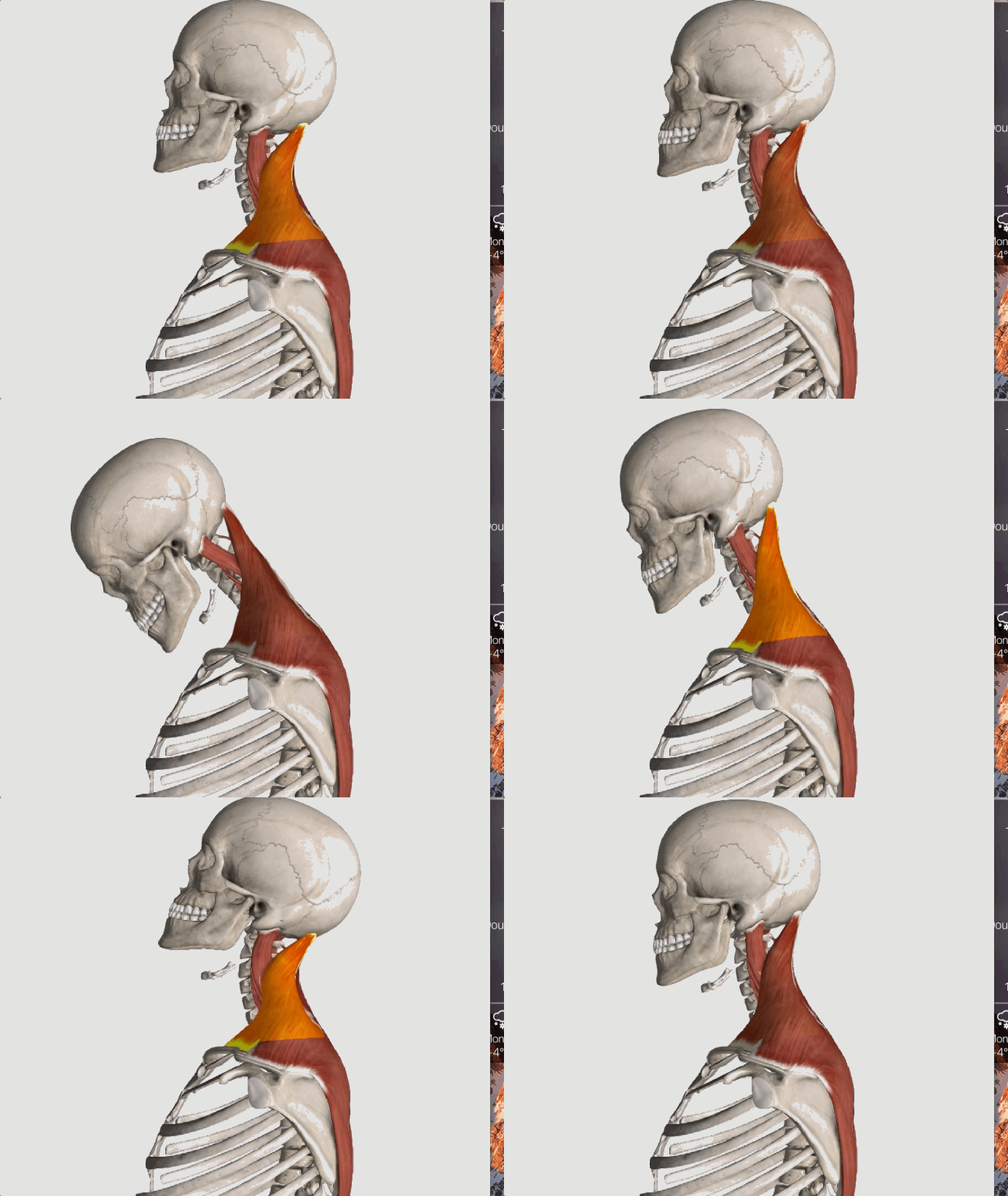
Up Trap Ext

Whiplash is an injury to the soft-tissues of the neck often referred to as a sprain or strain. Because there are a unique set of symptoms associated with whiplash, doctors and researchers commonly use the term “whiplash associated disorders” or WAD to describe the condition.

WAD commonly occurs as a result of a car crash, but it can also result from a slip and fall, sports injury, a personal injury (such as an assault), and other traumatic causes. The tissues commonly involved include muscle tendons (“strain”), ligaments and joint capsules (“sprains”), disk injuries (tears, herniation), as well as brain injury or concussion—even without hitting the head!

Symptoms vary widely but often include neck pain, stiffness, tender muscles and connective tissue (myofascial pain), headache, dizziness, sensations such as burning, prickly, tingling, numbness, muscle weakness, and referred pain to the shoulder blade, mid-back, arm, head, or face. If concussion occurs, additional symptoms include cognitive problems, concentration loss, poor memory, anxiety/depression, nervousness/irritability, sleep disturbance, fatigue, and more!

Whiplash associated disorders can be broken down into three categories: WAD I includes symptoms without any significant examination findings; WAD II includes loss of cervical range of motion and evidence of soft-tissue damage; and WAD III includes WAD II elements with neurological loss—altered motor and/or sensory functions. There is a WAD IV which includes fracture, but this is less common and often excluded.

Treatment for WAD includes everything from doing nothing to intensive management from multiple disciplines—chiropractic, primary care, physical therapy, clinical psychology, pain management, and specialty services such as neurology, orthopedics, and more. The goal of treatment is to restore normal function and activity participation, as well as symptom management.

The prognosis of WAD is generally good as many will recover without residual problems within days to weeks, with most people recovering around three months after the injury. Unfortunately, some are not so lucky and have continued neck pain, stiffness, headache, and some develop post-concussive syndrome. The latter can affect cognition, memory, vision, and other brain functions. Generally speaking, the higher the WAD category, the worse the prognosis, although each case MUST be managed by its own unique characteristics. If the injury includes neurological loss (muscle strength and/or sensory dysfunction like numbness, tingling, burning, pressure), the prognosis is often worse.

Chiropractic care for the WAD patient can include manipulation, mobilization, and home-based exercises, as well as the use of anti-inflammatory herbs (ginger, turmeric, proteolysis enzymes (bromelain, papain), devil’s claw, boswellia extract, rutin, bioflavonoid, vitamin D, coenzyme Q10, etc.) and dietary modifications aimed at reducing inflammation and promoting healing.

* 83% of those patients involved in an MVA will suffer whiplash injury and 50% will be symptomatic at 1 year.
* 90% of patients with neurologic signs at onset may be symptomatic at 1 year.
* 25- 80% of patients who suffer a whiplash injury will experience late-onset dizziness
* Clinicians should be observant for radiographic signs of instability, including interspinous widening, vertebral subluxation, vertebral compression fracture, and loss of cervical lordosis.
* Horizontal displacement of greater than 3.5 mm or angular displacement of more than 11 degrees on flexion/extension views suggests instability

Whiplash and Your Posture

WRD 2.gif

Posture assessment is a key component of the chiropractic examination, and the posture of the head and neck is especially important for a patient recovering from a whiplash injury. Forward head carriage describes a state in which the head sits more forward on the shoulders than it should. In order for the muscles in the neck and shoulders to keep the head upright, they must work harder. This added strain can increase one’s risk for neck pain and headaches, which is why retraining posture is a key component to the management of neck pain and headaches in patients with or without a history of whiplash.

Forward head carriage also increases the distance between the back of the head and the headrest in the seated position, especially when the seat is reclined. In a rear-end collision, a gap greater than a half an inch between the head rest and the back of the head increases the probability of injury due to the greater distance the head can hyperextend as it rebounds backwards into the headrest.  This makes posture correction of forward head carriage an important aspect of treatment from both a preventative and curative perspective.

So this begs the question, can forward head carriage be corrected?  The simple answer is “yes!” One study evaluated the effects of a 16-week resistance and stretching program designed to address forward head posture and protracted shoulder positioning.

Researchers conducted the study in two separate secondary schools with 130 adolescents aged 15–17 years with forward head and protracted shoulder posture. The control group participated in a regular physical education (PE) program while the experimental group attended the same PE classes with the addition of specific exercises for posture correction. The research ream measured the teens’ shoulder head posture from the side using two different validated methods and tracked symptoms using a questionnaire. The results revealed a significant improvement in the shoulder and cervical angle in the experimental group that did not occur in the control group.

The conclusion of the study strongly supports that a 16-week resistance and stretching program is effective in decreasing forward head and protracted shoulder posture in adolescents.  This would suggest that a program such as this should be strongly considered in the regular curriculum of PE courses since this is such a common problem.

Doctors of chiropractic are trained to evaluate and manage forward head posture with shoulder protraction. This can prove beneficial in both the prevention as well as management of signs and symptoms associated with a whiplash injury.

What Causes Low Back Pain?

236

Low back pain (LBP) can arise from disks, nerves, joints, and the surrounding soft tissues.
To simplify the task of determining “What is causing my LBP?” the Quebec Task Force recommends that LBP be divided into three main categories: 1) Mechanical LBP; 2) Nerve root related back pain; and 3) Pathology or fracture. We will address the first two, as they are most commonly managed by chiropractors.
Making the proper diagnosis points your doctor in the right direction regarding treatment. It avoids time wasted by treating an unrelated condition, which runs the risk of increased chances of a poor and/or prolonged recovery. Low back pain is no exception! The “correct” diagnosis allows treatment to be focused and specific so that it will yield the best results.
Mechanical low back pain is the most commonly seen type of back pain, and it encompasses pain that arises from sprains, strains, facet and sacroiliac (SI) syndromes, and more. The main difference between this and nerve root-related LBP is the ABSENCE of a pinched nerve. Hence, pain typically does NOT radiate, and if it does, it rarely goes beyond the knee and normally does not cause weakness in the leg.
The mechanism of injury for both types of LBP can occur when a person does too much, maintains an awkward position for too long, or over bends, lifts, and/or twists. However, LBP can also occur “insidiously” or for seemingly no reason at all. However, in most cases, if one thinks hard enough, they can identify an event or a series of “micro-traumas” extending back in time that may be the “cause” of their current low back pain issues.
Nerve root-related LBP is less common but it is often more severe—as the pain associated with a pinched nerve is often very sharp, can radiate down a leg often to the foot, and cause numbness, tingling, and muscle weakness. The location of the weakness depends on which nerve is pinched. Think of the nerve as a wire to a light and the switch of the nerve is located in the back where it exits the spine. When the switch is turned on (the nerve is pinched), and the “light” turns on—possibly in the outer foot, middle foot, inner foot, or front, back or side of the thigh. In fact, there are seven nerves that innervate or “run” into our leg, so usually, a very specific location “lights up” in the limb.
Determining the cause of your low back pain helps your doctor of chiropractic determine which treatments may work best to alleviate your pain as well as where such treatments can be focused.

Do I have a tension headache? Or Migranes?

Cervicogenic

Most likely, everyone reading this article has had a headache at one time or another. The American Headache Society reports that nearly 40% of the population suffers from episodic headaches each year while 3% have chronic tension-type headaches. The United States Department of Health and Human Services estimates that 29.5 million Americans experience migraines, but tension headaches are more common than migraines at a frequency of 5 to 1. Knowing the difference between the two is important, as the proper diagnosis can guide treatment in the right direction.

TENSION HEADACHES: These typically result in a steady ache and tightness located in the neck, particularly at the base of the skull, which can irritate the upper cervical nerve roots resulting in radiating pain and/or numbness into the head. At times, the pain can reach the eyes but often stops at the top of the head. Common triggers include stress, muscle strain, or anxiety.

MIGRAINE HEADACHES: Migraines are often much more intense, severe, and sometimes incapacitating. They usually remain on one side of the head and are associated with nausea and/or vomiting. An “aura”, or a pre-headache warning, often comes with symptoms such as a bright flashing light, ringing or noise in the ears, a visual floater, and more. For migraine headaches, there is often a strong family history, which indicates genetics may play a role in their origin.

There are many causes for headaches. Commonly, they include lack of sleep and/or stress and they can also result from a recent injury—such as a car accident, and/or a sports injury—especially when accompanied by a concussion.

Certain things can “trigger” a migraine including caffeine, chocolate, citrus fruits, cured meats, dehydration, depression, diet (skipping meals), dried fish, dried fruit, exercise (excessive), eyestrain, fatigue (extreme), food additives (nitrites, nitrates, MSG), lights (bright, flickering, glare), menstruation, some medications, noise, nuts, odors, onions, altered sleep, stress, watching TV, red wine/alcohol, weather, etc.

Posture is also a very important consideration. A forward head carriage is not only related to headaches, but also neck and back pain. We’ve previously pointed out that every inch (2.54 cm) the average 12 pound head (5.44 kg) shifts forwards adds an EXTRA ten pounds (4.5 kg) of load on the neck and upper back muscles to keep the head upright.

So, what can be done for people who suffer from headaches? First, research shows chiropractic care is highly effective for patients with both types of headaches. Spinal manipulation, deep tissue release techniques, and nutritional counseling are common approaches utilized by chiropractors. Patients are also advised to use some of these self-management strategies at home as part of their treatment plan: the use of ice, self-trigger point therapy, exercise (especially strengthening the deep neck flexors), and nutritional supplements.